
Icons of Europe 2
Budapest | Bratislava | Vienna | Dürnstein | Linz | Passau | Regensburg | Nuremberg | Bamberg | Würzburg | Miltenberg | Rüdesheim | Cologne | Amsterdam More...
(Prices correct as of today’s date, are updated daily, are subject to change and represent genuine availability at time of update).
Cruise only holidays are financially protected by ABTA. Fly cruise holidays are financially protected by TUI River Cruises under ATOL number 2524
Please click here to check the essential travel requirements before booking this cruise.
Call our cruise experts now and customise your cruise with flights, hotels, land tours and more
Prices based on 2 people sharing. Cruise only price does not include flights. Fly-cruise price may vary by chosen UK airport.
Prices based on 1 solo passenger. Cruise only price does not include flights. Fly-cruise price may vary by chosen UK airport.
Prices based on 3 people sharing. Cruise only price does not include flights. Fly-cruise price may vary by chosen UK airport.
Prices based on 4 people sharing. Cruise only price does not include flights. Fly-cruise price may vary by chosen UK airport.
THE
RIVER VOYAGES DIFFERENCE
Our sister brand RiverVoyages is Europe’s leading expert in river cruise holidays. Click here to view this itinerary in full and speak to our team of river cruise specialists, here to help you plan your perfect cruise along the world’s most scenic waterways. With access to exclusive offers and savings, we’re ready to help you plan every detail of your next river cruise holiday.
Budapest
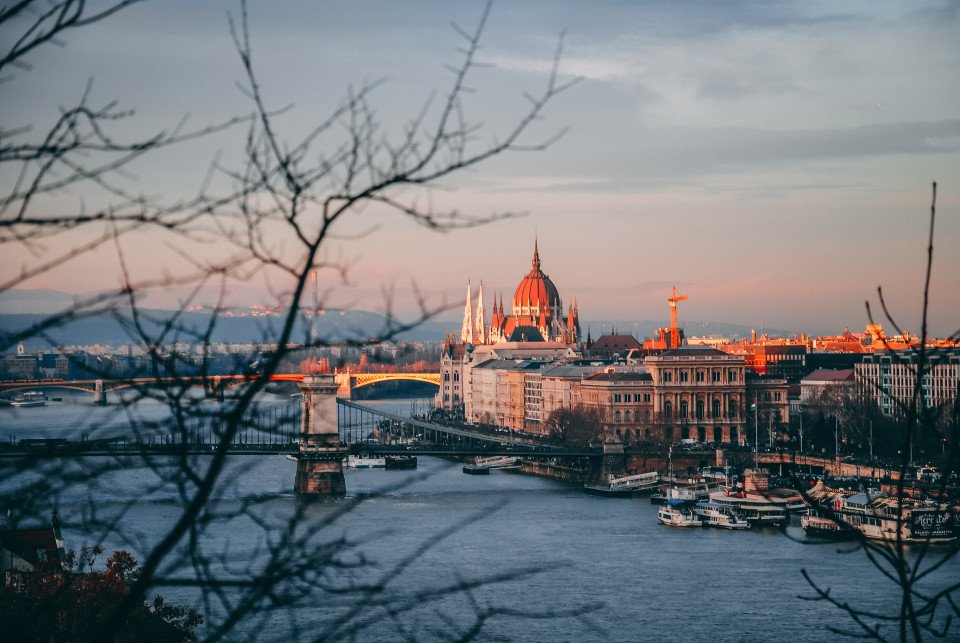
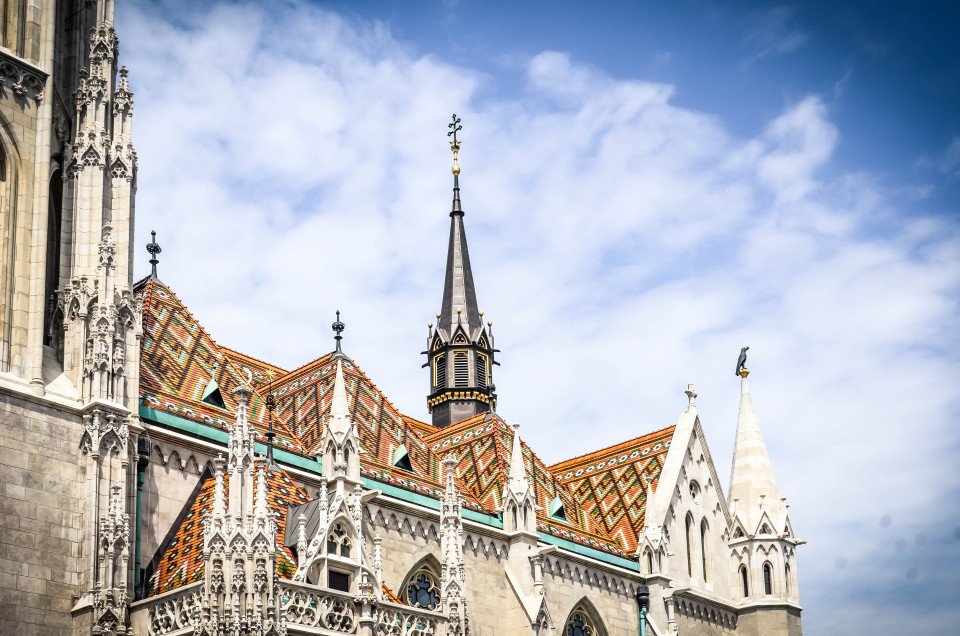
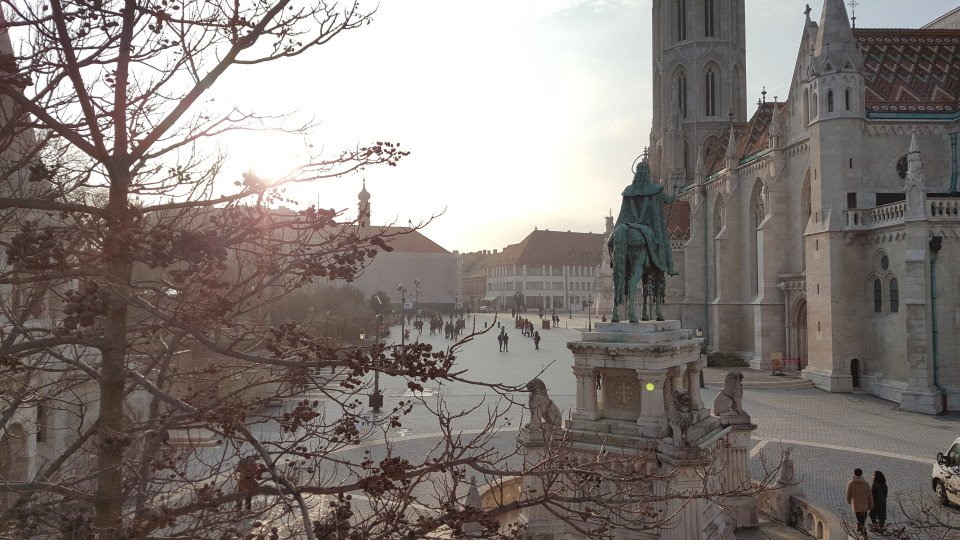
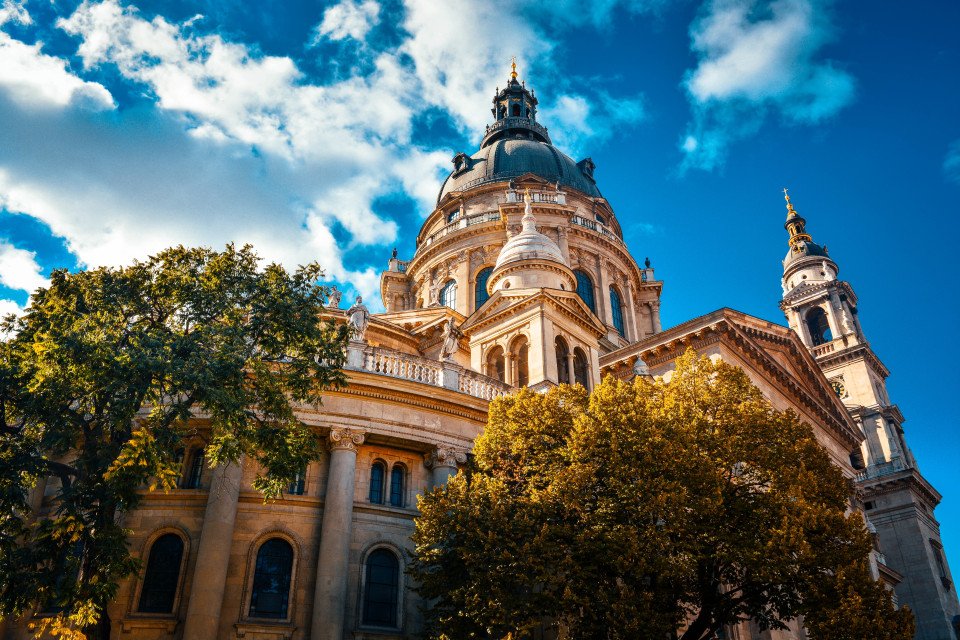
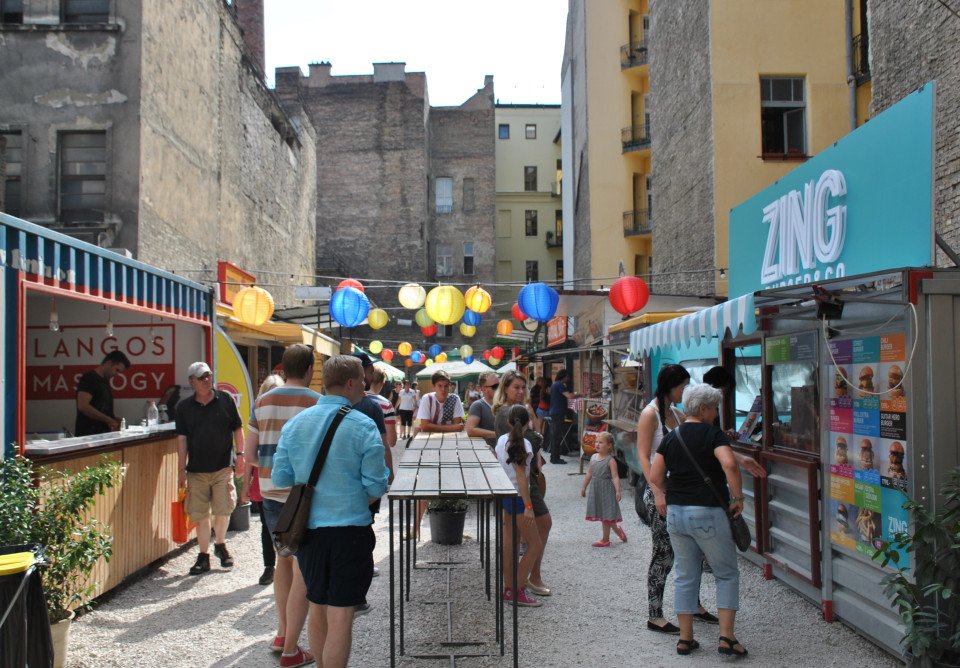
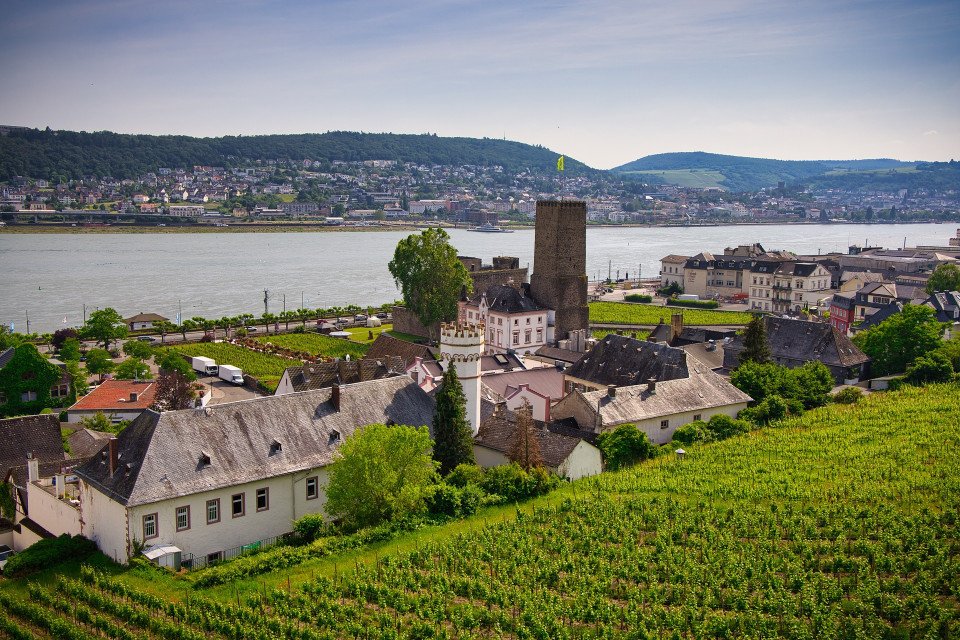
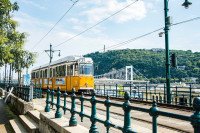
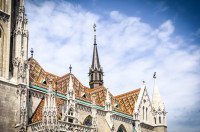
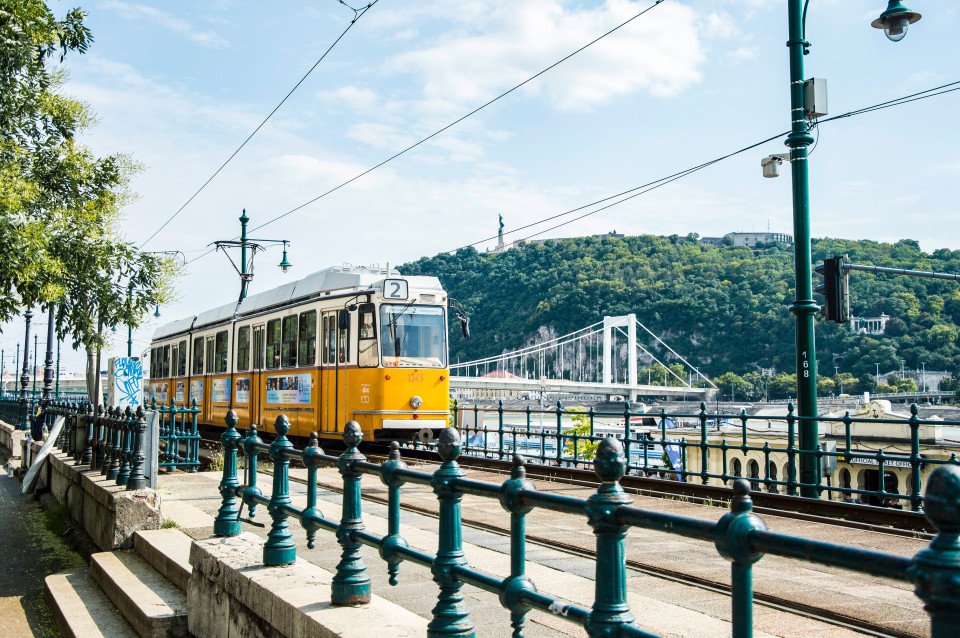
Budapest is the capital city of Hungary and is located over the River Danube. It is one of the largest cities in the European Union and much of its historical sites have been awarded UNESCO World Heritage Site status. Originally formed in 1873 by the joining of Buda, Pest and Old Buda, the... Budapest is the capital city of Hungary and is located over the River Danube. It is one of the largest cities in the European Union and much of its historical sites have been awarded UNESCO World Heritage Site status. Originally formed in 1873 by the joining of Buda, Pest and Old Buda, the city suffered heavy destruction during World War II and was rebuilt into the country's political, cultural and commercial hub it is now. Bridges and railways connect the city over the Danube, including the six small islands situated on the river themselves. Some of Budapest’s UNESCO World Heritage sites include Chain Bridge, Budapest Parliament, the striking Matthias church and the iconic Royal Palace visible from every location within Budapest City. The Castle Hills district architecture represents over a thousand years of the city's history with examples of Roman, Turkish, Gothic, Renaissance and Art Nouveau styles. Budapest also has a rich Jewish heritage and is home to the largest synagogue in Europe. The city has an abundance of restaurants offering international cuisines, as well as traditional Hungarian dishes ,including goulash soup, a very popular lunchtime dish. Hungarians enjoy their coffee so a traditional cafe is never hard to find. Read More
Bratislava
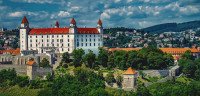
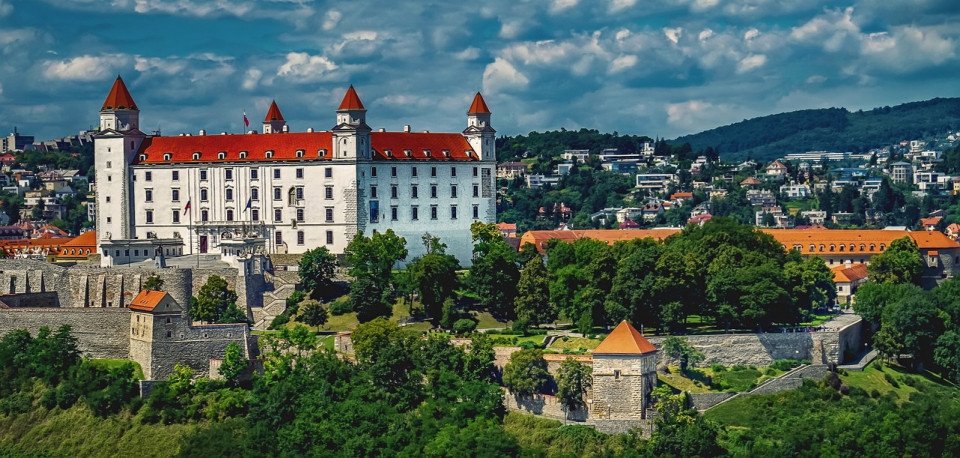
Bratislava is the capital city of Slovakia and is located along the Danube a river on the borders of Austria and Hungary. The city is surrounded by the Little Carpathians Mountains and vineyards as well as its iconic reconstructed Bratislava Castle overlooking Old Town. The castle offers a... Bratislava is the capital city of Slovakia and is located along the Danube a river on the borders of Austria and Hungary. The city is surrounded by the Little Carpathians Mountains and vineyards as well as its iconic reconstructed Bratislava Castle overlooking Old Town. The castle offers a picturesque view of the city, the neighbouring countries and is home to the Museum of History. Bratislava offers a blend of historic and modern attractions including the Old Town Hall, now home to the Bratislava City Museum, the UFO Bridge, Martin’s Cathedral, Michael’s Gate and Blue Church St Elizabeth’s. Bratislava is home to one of the oldest city parks in Central Europe and is popular with walkers, runners and cyclists as is the city forest park and foothills of the Carpathian Mountains. The city is popular for its locally brewed beers and has many micro-breweries and underground beer cellars. The local cuisine of Bratislava is an eclectic influence of European cultures including Slovak, Hungarian, Austrian and German and serves as a reminder of the history of this cosmopolitan city. However, visitors will find an array of offerings to suit all tastes with lunch being the main meal of the day and roast goose with lokse considered a signature dish of the area. Read More
Vienna
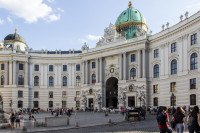
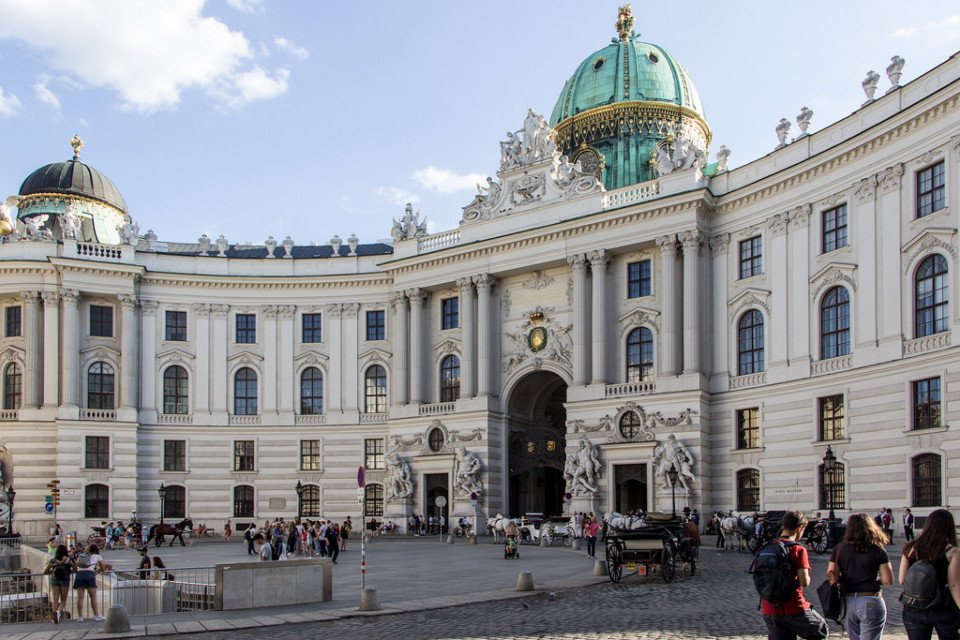
Vienna is the capital and largest city of Austria. Located on the Danube River in the East of the country, the city is renowned for its strong music heritage and rich culture, and is the largest German speaking city in the world, outside of Berlin. In 2001, Vienna was designated a UNESCO W... Vienna is the capital and largest city of Austria. Located on the Danube River in the East of the country, the city is renowned for its strong music heritage and rich culture, and is the largest German speaking city in the world, outside of Berlin. In 2001, Vienna was designated a UNESCO World Heritage Site and boasts magnificent architecture. The city is home to over 27 castles and 150 palaces including the symbolic Gothic St Stephen’s Cathedral and the iconic Schönbrunn Palace. Art and music are in abundance and all tastes are catered for. Live music venues offer everything from Rock to Opera. Enjoy world class performances at Vienna State Opera and experience the epicentre of international concert life at Musikverein. Modern and historical art can be found in indoor and outdoor spaces around the city, and a visit to the famous Kunsthistorisches Museum (KHM) is highly recommended. Enjoy views of the city from the Danube Tower and the Giant Ferris Wheel, then relax in the ample cosy coffee houses, cafes, bars and restaurants where traditional and international cuisines are served, as well as the locally produced wines. Read More
Dürnstein
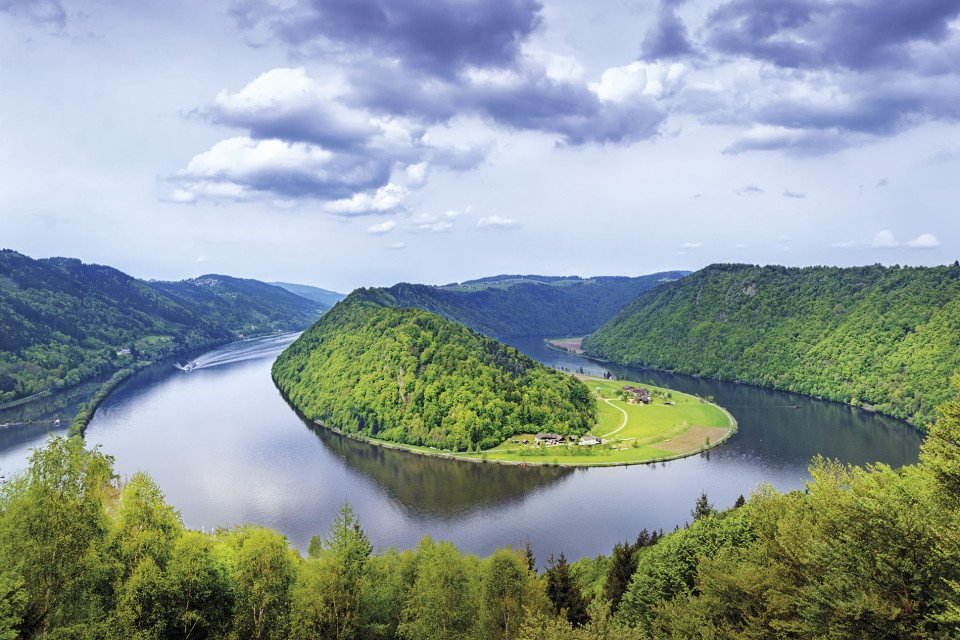
Dürnstein is a town located in the Northeast of Austria, situated on the Danube river. It is part of the UNESCO World Heritage site and wine region of Wachauer. It is a popular destination for wine lovers as many wineries offer accommodation. In addition to wine tasting and vineyard tours,... Dürnstein is a town located in the Northeast of Austria, situated on the Danube river. It is part of the UNESCO World Heritage site and wine region of Wachauer. It is a popular destination for wine lovers as many wineries offer accommodation. In addition to wine tasting and vineyard tours, visitors will find exploring the area on foot is easy and enjoyable. Take one of the many beautiful hiking trails across ancient rocks and admire the impressive views across the Danube valley. Children will enjoy exploring the outdoors of Dürnstein too, with outdoor playgrounds and theme trails available to keep them entertained. In addition, children and adults will enjoy Austria’s only outdoor biological swimming pool, Kuenringerbad, with an average temperature of 23 degrees celsius. Enjoy views of the town from overhead helicopter tours, leisurely river excursions, or hike up into the mountains and explore some of Dürnstein’s ruins. The mountains offer the ruins of Dürnstein castle and city wall as well as beautiful flora and fauna to spot. Read More
Linz
Linz is a city in northern Austria located on both banks of the Danube River and is a short distance from Salzburg and Vienna. Linz has been awarded UNESCO City of Media Arts status and prides itself on offering a broad spectrum of events, activities and cultural institutions. Enjoy popula... Linz is a city in northern Austria located on both banks of the Danube River and is a short distance from Salzburg and Vienna. Linz has been awarded UNESCO City of Media Arts status and prides itself on offering a broad spectrum of events, activities and cultural institutions. Enjoy popular open air concert such as Klassik am Dom and extravagant street performances, which attract large crowds and popular international artists. Art galleries and centres are in abundance around the city as well as many museums housing international collections and depictions of the history and heritage of Linz. The architecture of the city also plays an important role in Linz’s cultural heritage with Main Square, Old Town and Mariendom Cathedral being some key attractions. Families will enjoy a trip to Postlingberg, located high up in the mountains and featuring a zoo, the Grottenbahn and spectacular views of the river and city below. Read More
Passau
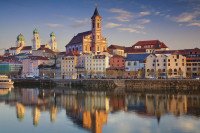
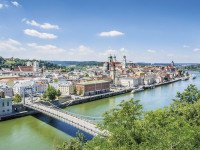
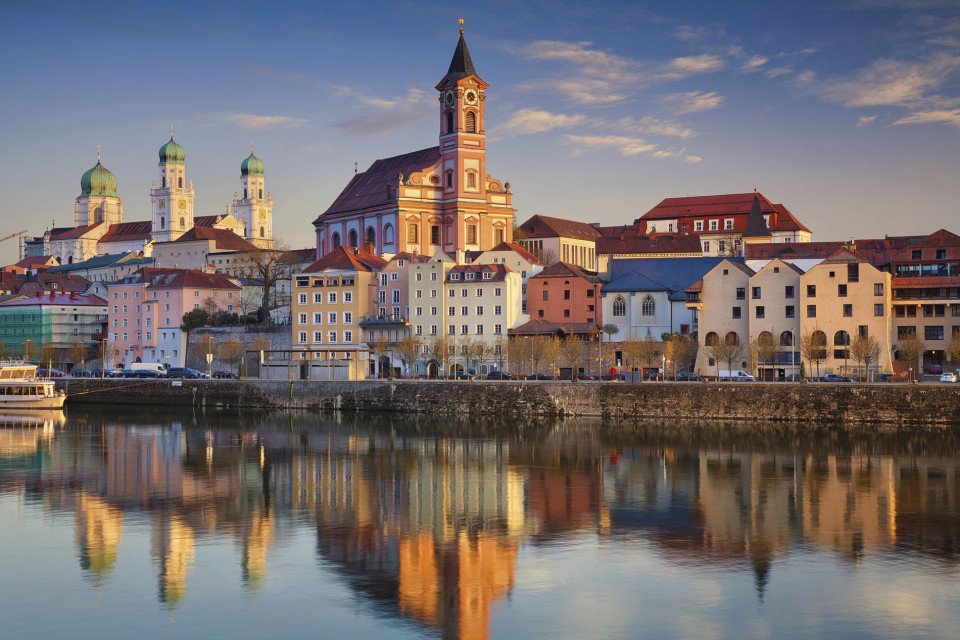
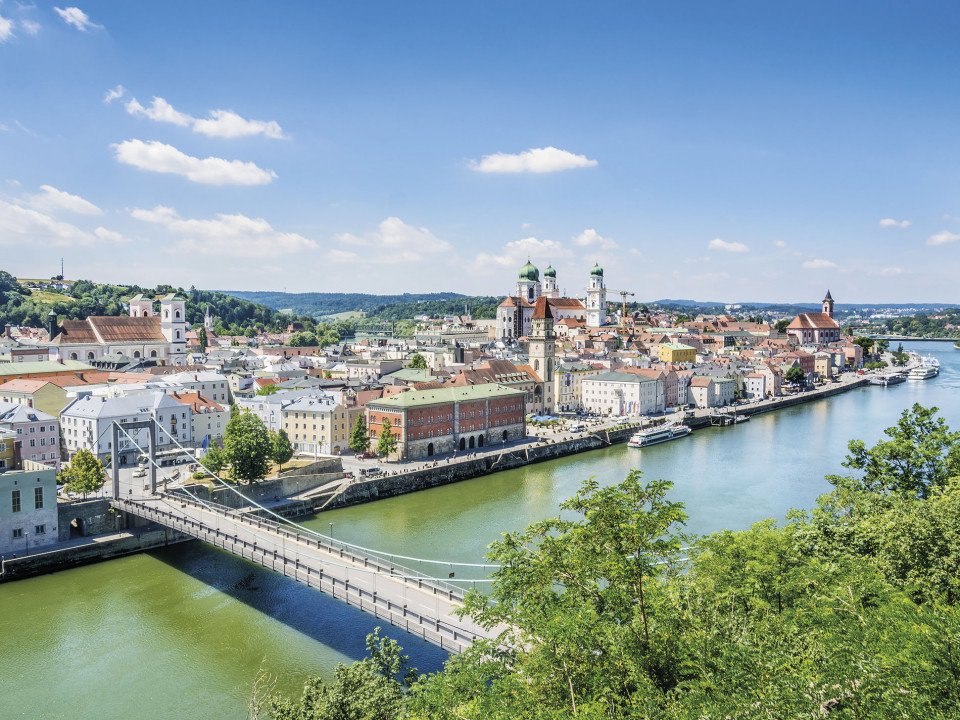
Passau is a German city located in the Southeast of Germany on the Austrian border. It is situated at the confluence of the rivers Danube, Inn and Ilz. The Three Rivers City, as it’s also known, is unique for its three contrasting currents of blue, green and black. Old Town of Passau is ho... Passau is a German city located in the Southeast of Germany on the Austrian border. It is situated at the confluence of the rivers Danube, Inn and Ilz. The Three Rivers City, as it’s also known, is unique for its three contrasting currents of blue, green and black. Old Town of Passau is home to towering buildings of striking architecture: the majestic fortress Veste Oberhaus, the Pilgrimage Church Mariahilf and St Stephen's Cathedral. Many of Passau’s attractions can be found in this area, including the New Bishop’s Residence, the Gothic Town Hall, as well as many churches and museums. Visitors can stroll along the riverfront promenades and romantic lanes whilst enjoying the picturesque landscape. For modern art, The Museum of Modern Art and Glass Museum Passau are recommended as they offer something a bit different. Theatre and cabaret are a popular evening pastime, with performances at the former Prince Bishopric Theatre or some lively cabaret and Jazz at the Scharfrichterhaus. Visitors will also find many traditional local Bavarian and Austrian cafes and restaurants offering a cosy atmosphere with home cooked food from local produce. Read More
Regensburg
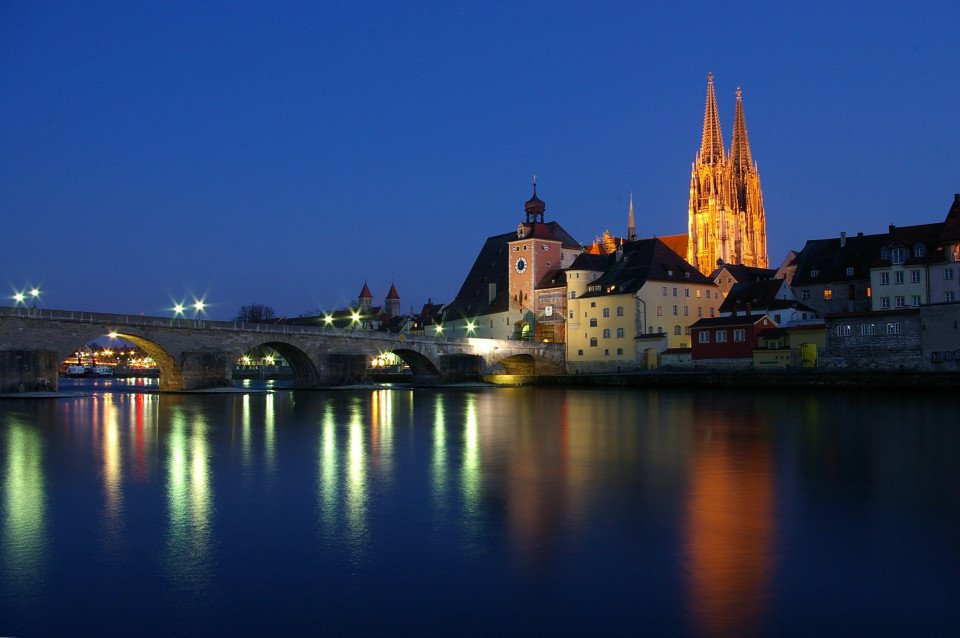
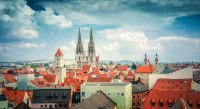
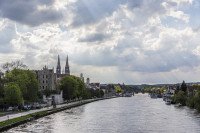
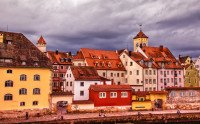
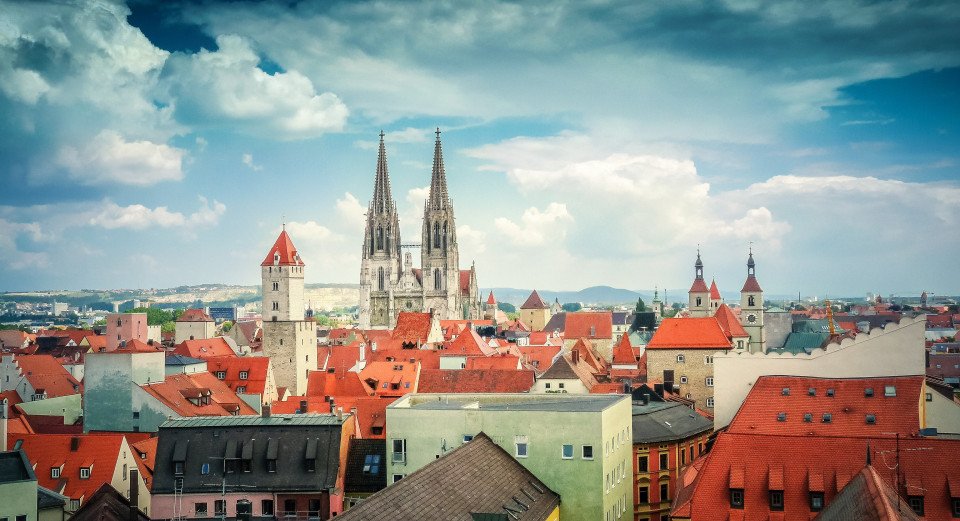
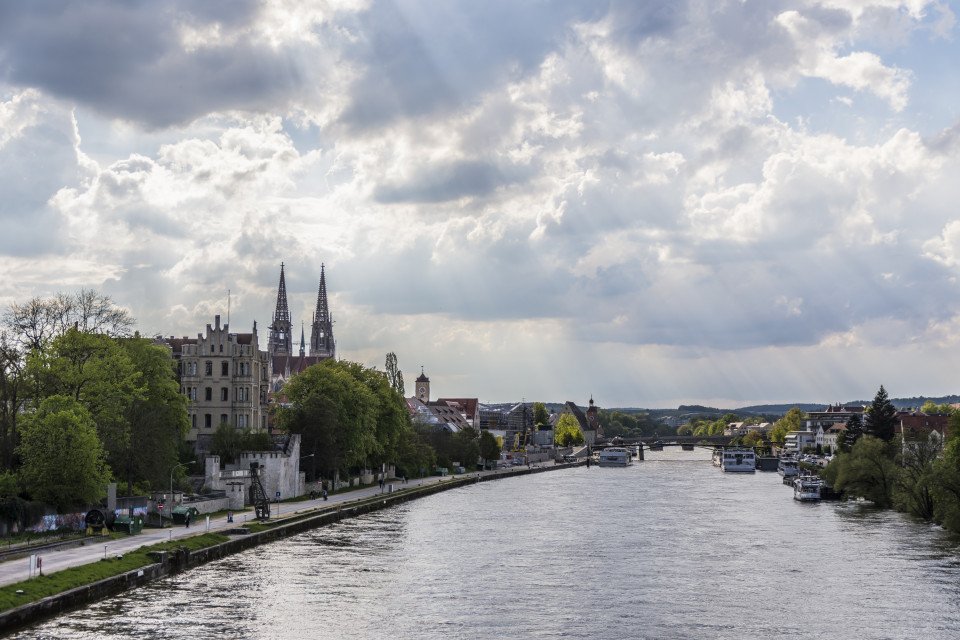
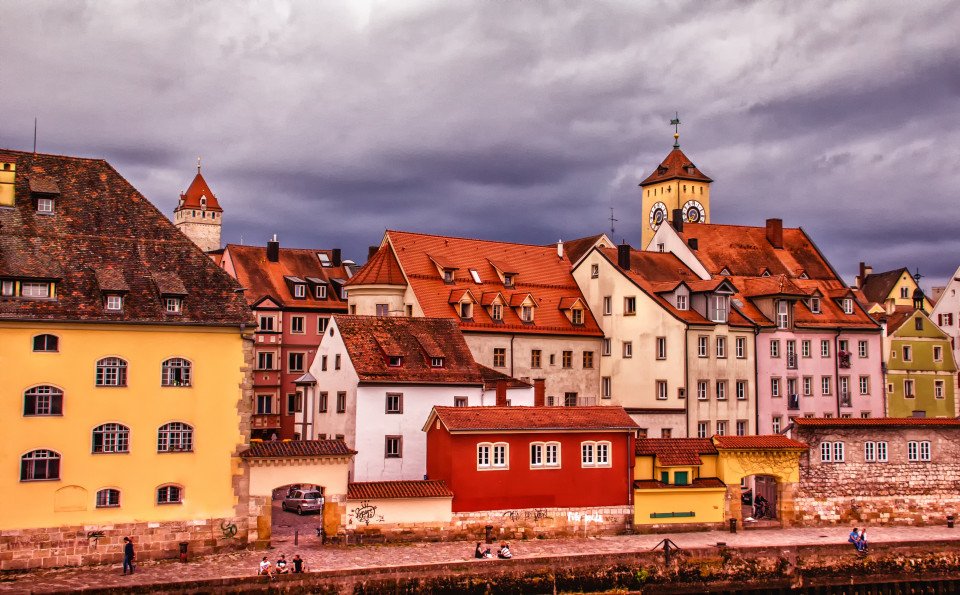
Regensburg is a medieval city of Bavaria in southeast Germany. It is situated on the northern point of the Danube River at its confluence with the Regen and Naab rivers. The city is famous for its iconic 12th Century stone bridge and sixteen arches, crossing the Danube into Old Town and is... Regensburg is a medieval city of Bavaria in southeast Germany. It is situated on the northern point of the Danube River at its confluence with the Regen and Naab rivers. The city is famous for its iconic 12th Century stone bridge and sixteen arches, crossing the Danube into Old Town and is the oldest preserved bridge in Germany. Regensburg is also noted for its 13th Century Regensburg Cathedral and Gothic twin spires that feature prominently on the city’s skyline. Recently awarded UNESCO World Heritage status, the city is home to many preserved sites. Visit the the 2nd Century Porta Praetoria which served as the north gate to a Roman camp and St Peter’s Cathedral, with its French Gothic architecture. Also the 18th Century Thurn and Taxis Palace and the Old Town Hall, which is now home to the Imperial Diet Museum, are also worth a visit. Regensburg benefits from lots of parks and gardens for visitors to relax in, as well as walks and cycle paths along the banks of the rivers. Read More
Nuremberg
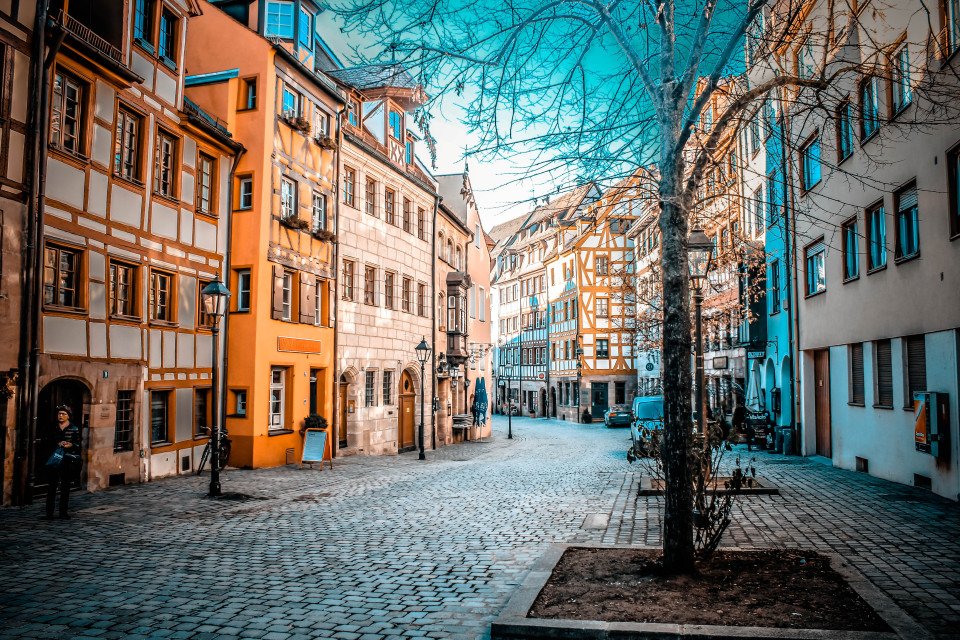
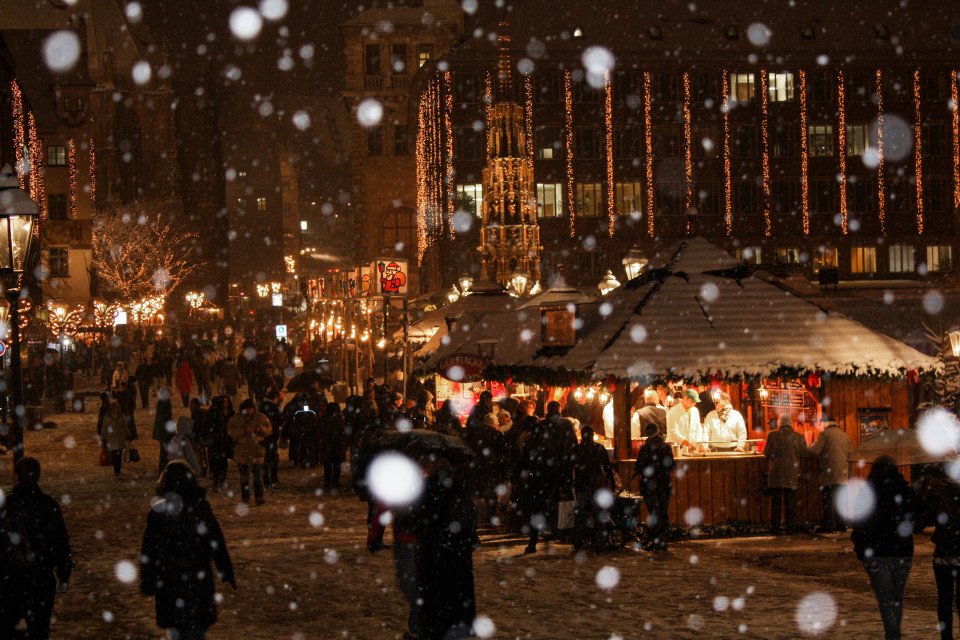
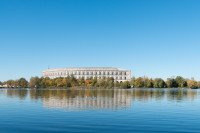
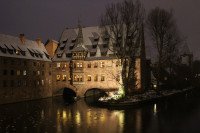
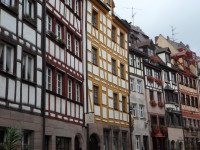
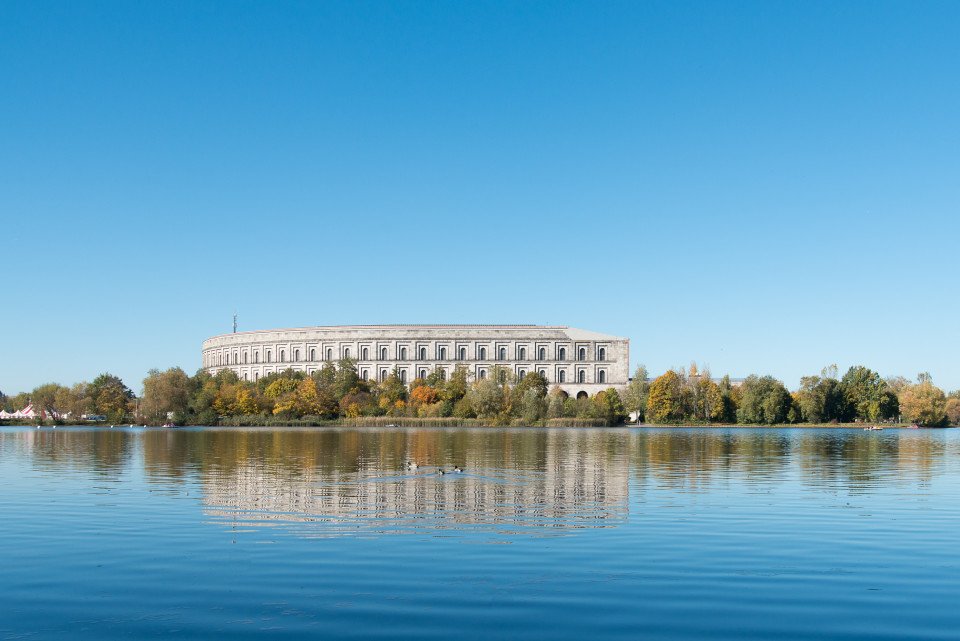
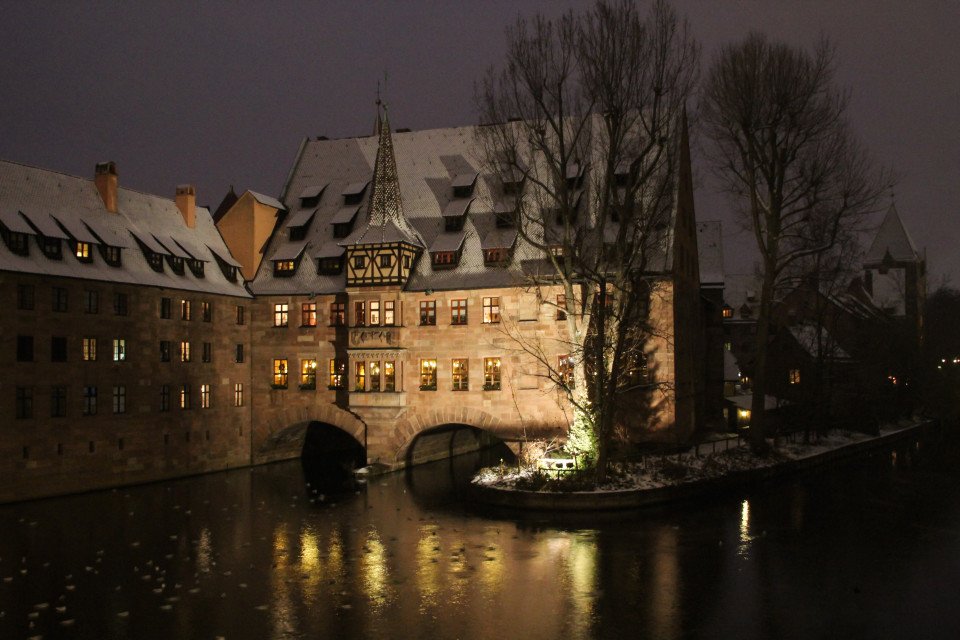
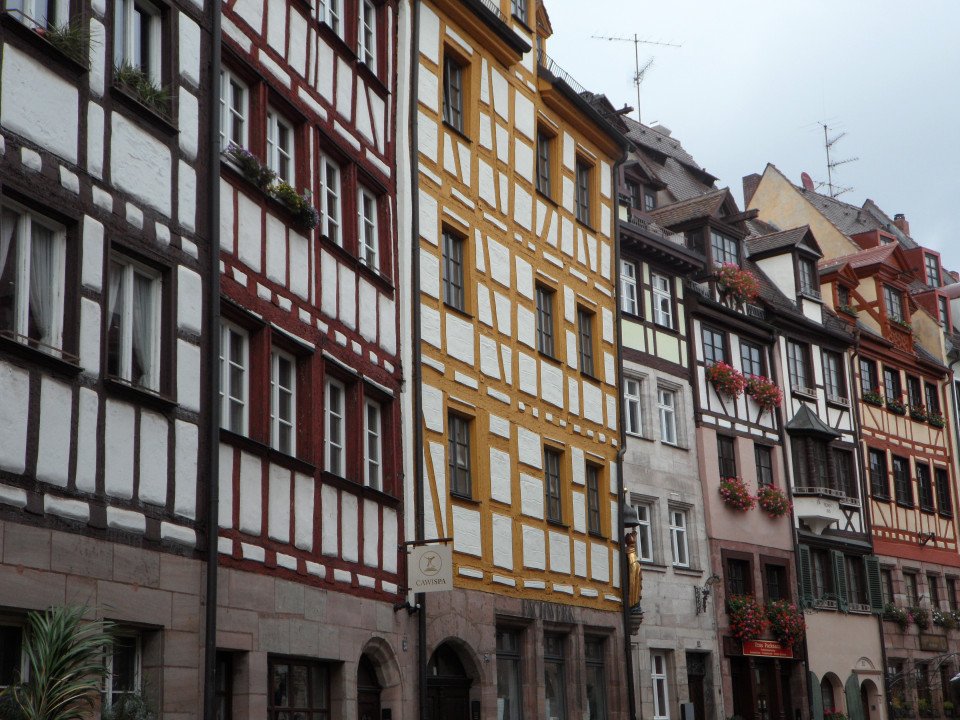
Nuremberg is a medieval city located in northern Bavaria in Germany. It is Bavaria's second largest city and is noted for its iconic red roofed buildings and medieval architecture. The imperial Castle overlooks Nuremberg and was one of the most important fortifications of the Roman Empire.... Nuremberg is a medieval city located in northern Bavaria in Germany. It is Bavaria's second largest city and is noted for its iconic red roofed buildings and medieval architecture. The imperial Castle overlooks Nuremberg and was one of the most important fortifications of the Roman Empire. For more significant cultural history, the Germanisches Nationalmuseum, one of the largest cultural history museums in the German speaking world, offers visitors exhibitions from Prehistoric all the way to present day. Walking tours around the city offer an enjoyable and active way to learn of Nuremberg’s history and culture. Through Old Town, discover fountains, wells, churches, and art treasures, as well as learning of the colourful past and cosmopolitan present of the city and its people. Nuremberg is also home to one of the oldest Christmas markets in Germany, the Nuremberg Christkindlesmarkt, where visitors can purchase traditional handmade decorations and enjoy the famous gingerbread, mulled wine, and grilled sausage from over one hundred and eighty wooden stalls. Read More
Bamberg
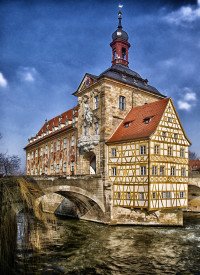
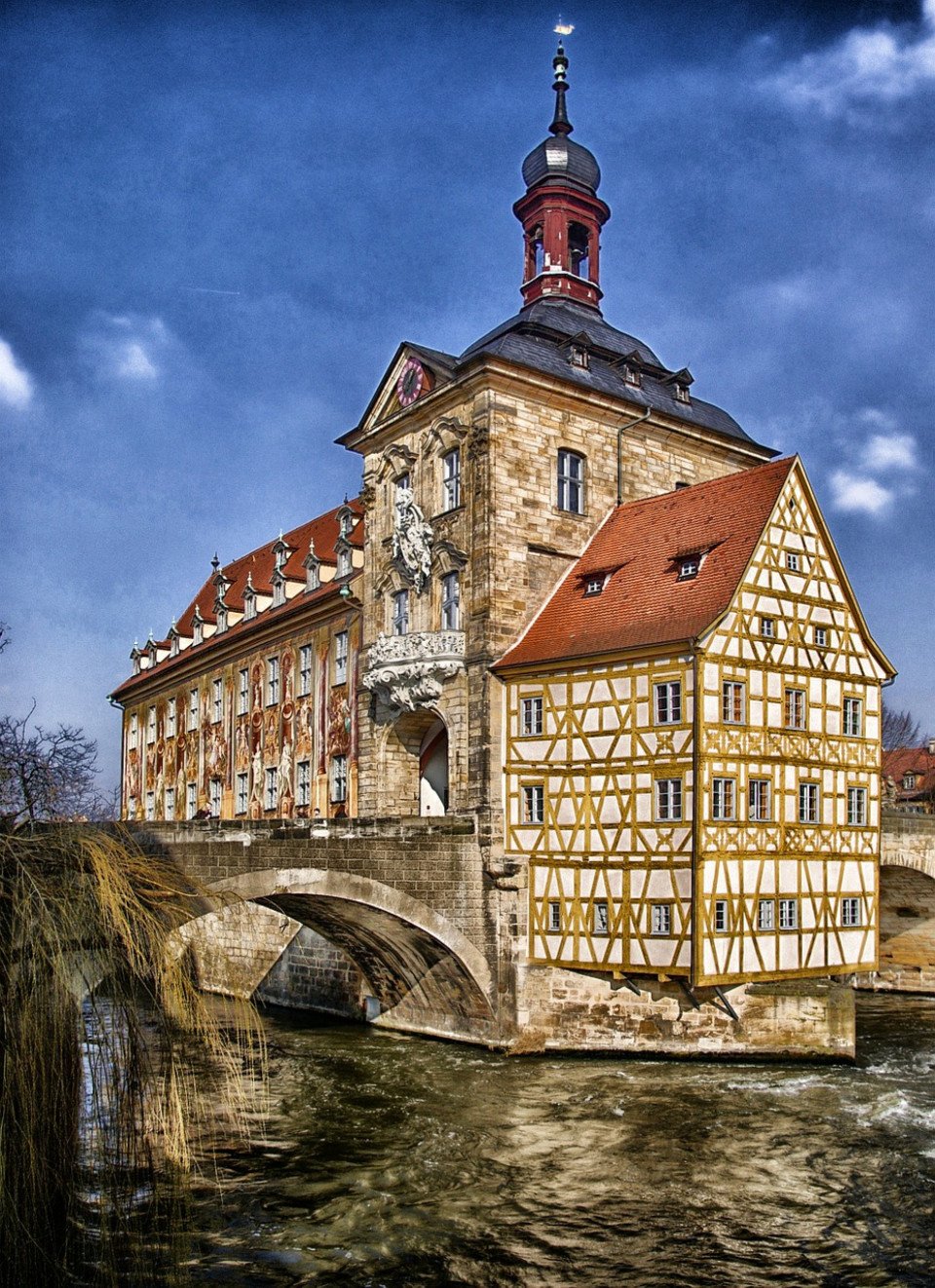
Bamberg is a German town located over a landscape of seven hills and the confluence of Regnitz and Main rivers. The town is a UNESCO World Heritage Centre with Old Town home to structures dating back to the 11th century. An iconic landmark to visit in Bamberg is the town hall Altes Rathaus... Bamberg is a German town located over a landscape of seven hills and the confluence of Regnitz and Main rivers. The town is a UNESCO World Heritage Centre with Old Town home to structures dating back to the 11th century. An iconic landmark to visit in Bamberg is the town hall Altes Rathaus, located on an island in the Regnitz and covered in murals. Bamberg Cathedral, with its four towers and numerous stone carvings, is a striking example of Romanesque architecture. Head to the Market Gardeners District and visit the historical houses where centuries ago the town gardeners would grow and export produce such as onions, seeds and liquorice. In the town centre and heart of Little Venice, the rivers and arched bridges connecting the island city are reminiscent of Venice, with a lively atmosphere and modern shops set in historical surroundings. After a day shopping, head to one of the many Brewery pubs for some popular German beer. Bamberg is famous for its beer and is where its name originated from, with the town being populated by nine traditional breweries. Read More
Würzburg
Würzburg is a city in Bavaria in southern Germany. It is located on the River Main and is famous for its lavish baroque architecture and Franconian wine. The Residence Palace is a UNESCO World Heritage Site and is highly recommended. It is a well known example of Baroque architecture with... Würzburg is a city in Bavaria in southern Germany. It is located on the River Main and is famous for its lavish baroque architecture and Franconian wine. The Residence Palace is a UNESCO World Heritage Site and is highly recommended. It is a well known example of Baroque architecture with its acclaimed staircase, impressive frescos and imperial hall. Other impressive sites in Würzburg include the towering fortress of Festung Marienberg, the Alt Mainbrücke old bridge, which offers ideal views of the Marienberg, Dom St. Kilian cathedral and the many churches of Würzburg including the Romanesque Neumünster. Many of these sites have their own museums for visitors to learn of the history or view unique collections. Other museums of interest are the Mineralogical Museum, exhibiting the world of minerals and stones, and the Botanical Gardens, with various greenhouses and outdoor areas to enjoy. Wine lovers will find an abundance of wineries in Würzburg, offering cellar tours and wine tasting as well as traditional Bavarian cuisines and hospitality. Enjoy wine soup, Gerupfter (cheese spread) and Sauerbraten (braised beef in wine) in a friendly traditional wine tavern. Read More
Miltenberg
Miltenberg is a city located in Bavaria and Southern part of Germany. Located on the banks of the river Maine the city grew from its medieval roots through Viniculture, wine trade, fishery, and general river traffic, into the established and preserved town of today. Visit the Museum Stadt... Miltenberg is a city located in Bavaria and Southern part of Germany. Located on the banks of the river Maine the city grew from its medieval roots through Viniculture, wine trade, fishery, and general river traffic, into the established and preserved town of today. Visit the Museum Stadt Miltenberg, housed in the half timbered house called the Alte Amtskellerei (The Provost’s Office) and discover the town’s history through collections depicting culture back to the Romans. A visit to castle Miltenberg is also recommended. The castle dates back to the 11th century and is now owned by the city administration. With the castle in need of rehabilitation, the Museum Burg Miltenberg was opened to exhibit classic icons and contemporary art in a historical and significant setting. The keep of the castle, which reaches twenty seven metres high, offers picturesque views of the Main Valley below and is the perfect setting to relax and enjoy some refreshments. Read More
Rüdesheim
Cologne
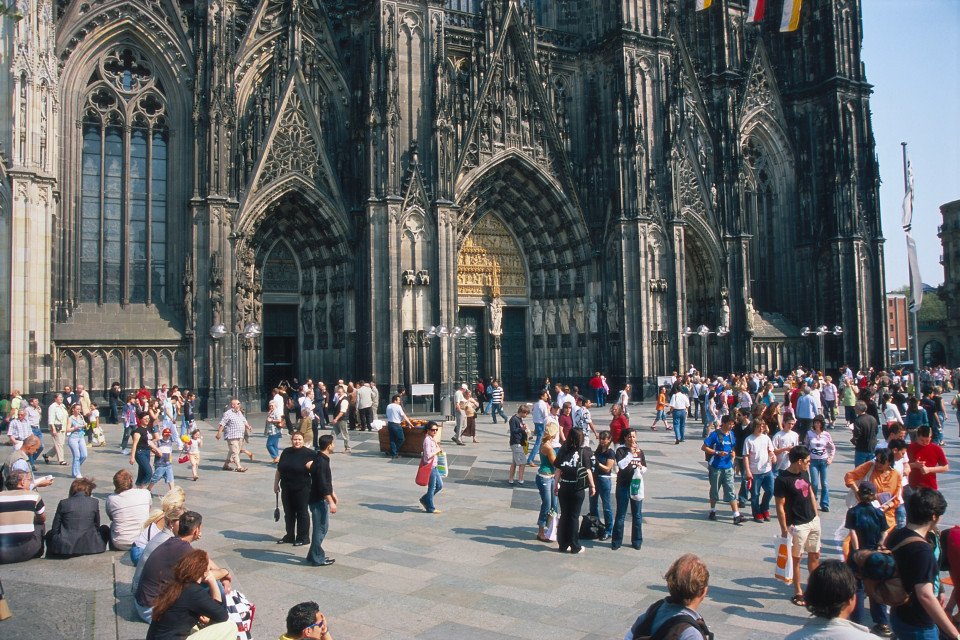
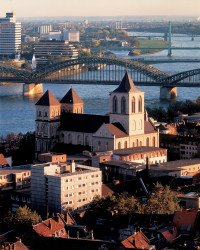
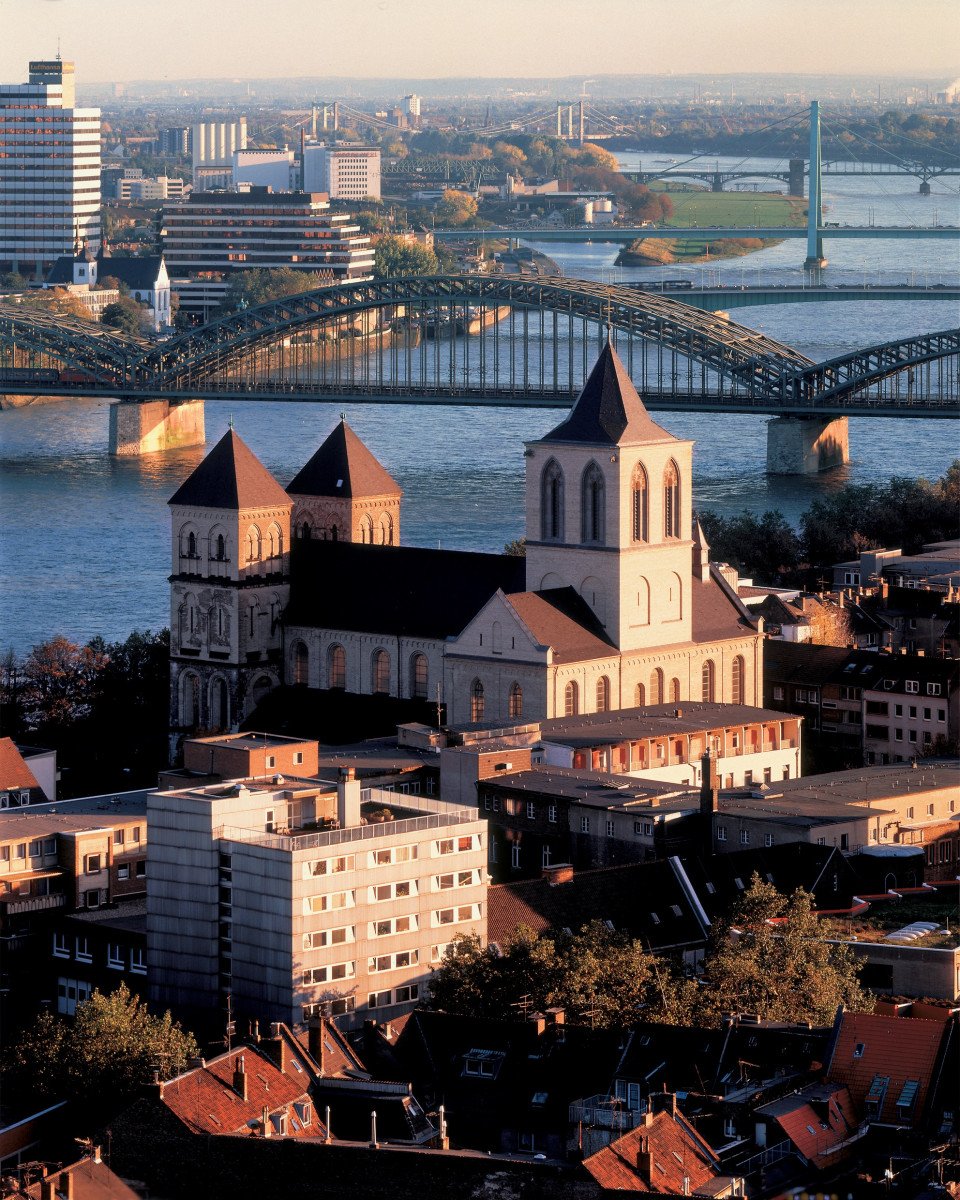
Cologne is a city in western Germany located across the Rhine river. It is the oldest in Germany, dating back 2000 years and is considered the region’s cultural hub. The city is known for its iconic landmark of the twin-spired Cologne Cathedral set against the reconstructed Old Town buildi... Cologne is a city in western Germany located across the Rhine river. It is the oldest in Germany, dating back 2000 years and is considered the region’s cultural hub. The city is known for its iconic landmark of the twin-spired Cologne Cathedral set against the reconstructed Old Town buildings. When in Old Town, visit the historic Old Town Hall and the Roman Church Great St Martin, or take time out and sit at one of the traditional breweries and enjoy the scenery around you. Historical sites such as the Roman Dionysus mosaic and the medieval Overstolzenhaus are worth a visit too. Another iconic sight in Cologne is at Hohenzollern Bridge. Here, local and tourist couples affix padlocks to the railings of the bridge and swear their loyalty to each other, they then throw the key into the Rhein to ensure everlasting love. Cologne is home to over 30 stages providing cabaret, free ensembles, theatre and dance and also celebrates its openly gay culture. Read More
Amsterdam
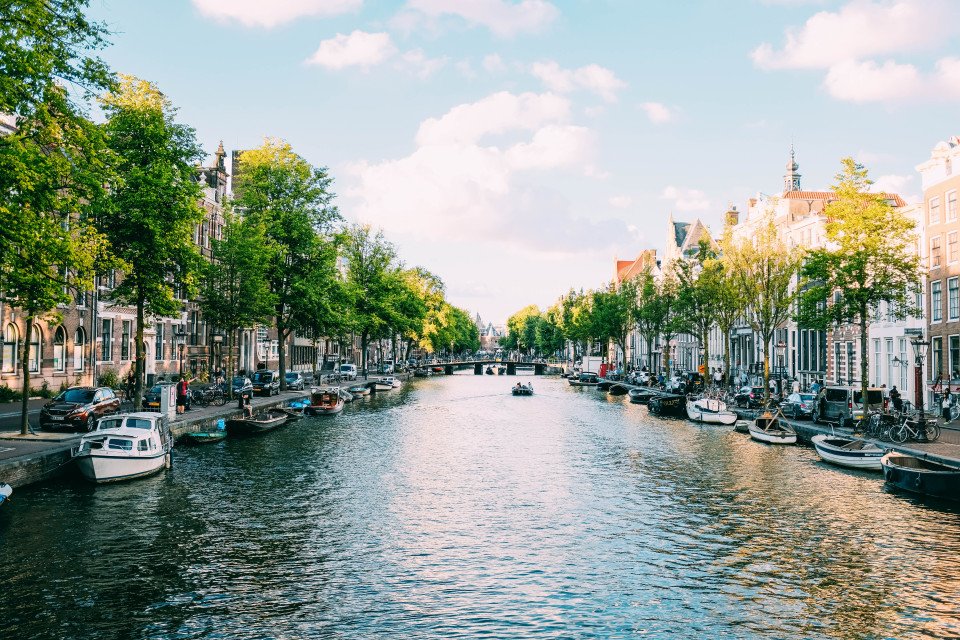
Amsterdam combines the unrivaled beauty of the 17th-century Golden Age city center with plenty of museums and art of the highest order, not to mention a remarkably laid-back atmosphere. It all comes together to make this one of the world's most appealing and offbeat metropolises in the wor... Amsterdam combines the unrivaled beauty of the 17th-century Golden Age city center with plenty of museums and art of the highest order, not to mention a remarkably laid-back atmosphere. It all comes together to make this one of the world's most appealing and offbeat metropolises in the world. Built on a latticework of concentric canals like an aquatic rainbow, Amsterdam is known as the City of Canals—but it's no Venice, content to live on moonlight serenades and former glory. Quite the contrary: on nearly every street here you'll find old and new side by side—quiet corners where time seems to be holding its breath next to streets like neon-lit Kalverstraat, and Red Light ladies strutting by the city's oldest church. Indeed, Amsterdam has as many lovely facets as a 40-carat diamond polished by one of the city's gem cutters. It's certainly a metropolis, but a rather small and very accessible one. Locals tend to refer to it as a big village, albeit one that happens to pack the cultural wallop of a major world destination. There are scores of concerts every day, numerous museums, summertime festivals, and, of course, a legendary year-round party scene. It's pretty much impossible to resist Amsterdam's charms. With 7,000 registered monuments, most of which began as the residences and warehouses of humble merchants, set on 160 man-made canals, and traversed by 1,500 or so bridges, Amsterdam has the largest historical inner city in Europe. Its famous circle of waterways, the grachtengordel, was a 17th-century urban expansion plan for the rich and is a lasting testament to the city’s Golden Age. This town is endearing because of its kinder, gentler nature—but a reputation for championing sex, drugs, and rock ’n’ roll does not alone account for Amsterdam's being one of the most popular destinations in Europe: consider that within a single square mile the city harbors some of the greatest achievements in Western art, from Rembrandt to Van Gogh. Not to mention that this is one of Europe's great walking cities, with so many of its treasures in the untouted details: tiny alleyways barely visible on the map, hidden garden courtyards, shop windows, floating houseboats, hidden hofjes(courtyards with almshouses), sudden vistas of church spires, and gabled roofs that look like so many unframed paintings. And don’t forget that the joy lies in details: elaborate gables and witty gable stones denoting the trade of a previous owner. Keep in mind that those XXX symbols you see all over town are not a mark of the city's triple-X reputation. They're part of Amsterdam's official coat of arms—three St. Andrew's crosses, believed to represent the three dangers that have traditionally plagued the city: flood, fire, and pestilence. The coat's motto ("Valiant, determined, compassionate") was introduced in 1947 by Queen Wilhelmina in remembrance of the 1941 February Strike in Amsterdam—the first time in Europe that non-Jewish people protested against the persecution of Jews by the Nazi regime. Read More
Budapest
Budapest
Bratislava
Vienna
Dürnstein
Linz
Passau
Regensburg
Nuremberg
Bamberg
Würzburg
Miltenberg
Rüdesheim
Cologne
Amsterdam
Amsterdam
Budapest
Budapest
Budapest is the capital city of Hungary and is located over the River Danube. It is one of the largest cities in the European Union and much of its historical sites have been awarded UNESCO World Heritage Site status. Originally formed in 1873 by the joining of Buda, Pest and Old Buda, the... Budapest is the capital city of Hungary and is located over the River Danube. It is one of the largest cities in the European Union and much of its historical sites have been awarded UNESCO World Heritage Site status. Originally formed in 1873 by the joining of Buda, Pest and Old Buda, the city suffered heavy destruction during World War II and was rebuilt into the country's political, cultural and commercial hub it is now. Bridges and railways connect the city over the Danube, including the six small islands situated on the river themselves. Some of Budapest’s UNESCO World Heritage sites include Chain Bridge, Budapest Parliament, the striking Matthias church and the iconic Royal Palace visible from every location within Budapest City. The Castle Hills district architecture represents over a thousand years of the city's history with examples of Roman, Turkish, Gothic, Renaissance and Art Nouveau styles. Budapest also has a rich Jewish heritage and is home to the largest synagogue in Europe. The city has an abundance of restaurants offering international cuisines, as well as traditional Hungarian dishes ,including goulash soup, a very popular lunchtime dish. Hungarians enjoy their coffee so a traditional cafe is never hard to find. Read More
Budapest
Budapest
Budapest is the capital city of Hungary and is located over the River Danube. It is one of the largest cities in the European Union and much of its historical sites have been awarded UNESCO World Heritage Site status. Originally formed in 1873 by the joining of Buda, Pest and Old Buda, the... Budapest is the capital city of Hungary and is located over the River Danube. It is one of the largest cities in the European Union and much of its historical sites have been awarded UNESCO World Heritage Site status. Originally formed in 1873 by the joining of Buda, Pest and Old Buda, the city suffered heavy destruction during World War II and was rebuilt into the country's political, cultural and commercial hub it is now. Bridges and railways connect the city over the Danube, including the six small islands situated on the river themselves. Some of Budapest’s UNESCO World Heritage sites include Chain Bridge, Budapest Parliament, the striking Matthias church and the iconic Royal Palace visible from every location within Budapest City. The Castle Hills district architecture represents over a thousand years of the city's history with examples of Roman, Turkish, Gothic, Renaissance and Art Nouveau styles. Budapest also has a rich Jewish heritage and is home to the largest synagogue in Europe. The city has an abundance of restaurants offering international cuisines, as well as traditional Hungarian dishes ,including goulash soup, a very popular lunchtime dish. Hungarians enjoy their coffee so a traditional cafe is never hard to find. Read More
Bratislava
Bratislava
Bratislava is the capital city of Slovakia and is located along the Danube a river on the borders of Austria and Hungary. The city is surrounded by the Little Carpathians Mountains and vineyards as well as its iconic reconstructed Bratislava Castle overlooking Old Town. The castle offers a... Bratislava is the capital city of Slovakia and is located along the Danube a river on the borders of Austria and Hungary. The city is surrounded by the Little Carpathians Mountains and vineyards as well as its iconic reconstructed Bratislava Castle overlooking Old Town. The castle offers a picturesque view of the city, the neighbouring countries and is home to the Museum of History. Bratislava offers a blend of historic and modern attractions including the Old Town Hall, now home to the Bratislava City Museum, the UFO Bridge, Martin’s Cathedral, Michael’s Gate and Blue Church St Elizabeth’s. Bratislava is home to one of the oldest city parks in Central Europe and is popular with walkers, runners and cyclists as is the city forest park and foothills of the Carpathian Mountains. The city is popular for its locally brewed beers and has many micro-breweries and underground beer cellars. The local cuisine of Bratislava is an eclectic influence of European cultures including Slovak, Hungarian, Austrian and German and serves as a reminder of the history of this cosmopolitan city. However, visitors will find an array of offerings to suit all tastes with lunch being the main meal of the day and roast goose with lokse considered a signature dish of the area. Read More
Vienna
Vienna
Vienna is the capital and largest city of Austria. Located on the Danube River in the East of the country, the city is renowned for its strong music heritage and rich culture, and is the largest German speaking city in the world, outside of Berlin. In 2001, Vienna was designated a UNESCO W... Vienna is the capital and largest city of Austria. Located on the Danube River in the East of the country, the city is renowned for its strong music heritage and rich culture, and is the largest German speaking city in the world, outside of Berlin. In 2001, Vienna was designated a UNESCO World Heritage Site and boasts magnificent architecture. The city is home to over 27 castles and 150 palaces including the symbolic Gothic St Stephen’s Cathedral and the iconic Schönbrunn Palace. Art and music are in abundance and all tastes are catered for. Live music venues offer everything from Rock to Opera. Enjoy world class performances at Vienna State Opera and experience the epicentre of international concert life at Musikverein. Modern and historical art can be found in indoor and outdoor spaces around the city, and a visit to the famous Kunsthistorisches Museum (KHM) is highly recommended. Enjoy views of the city from the Danube Tower and the Giant Ferris Wheel, then relax in the ample cosy coffee houses, cafes, bars and restaurants where traditional and international cuisines are served, as well as the locally produced wines. Read More
Dürnstein
Dürnstein
Dürnstein is a town located in the Northeast of Austria, situated on the Danube river. It is part of the UNESCO World Heritage site and wine region of Wachauer. It is a popular destination for wine lovers as many wineries offer accommodation. In addition to wine tasting and vineyard tours,... Dürnstein is a town located in the Northeast of Austria, situated on the Danube river. It is part of the UNESCO World Heritage site and wine region of Wachauer. It is a popular destination for wine lovers as many wineries offer accommodation. In addition to wine tasting and vineyard tours, visitors will find exploring the area on foot is easy and enjoyable. Take one of the many beautiful hiking trails across ancient rocks and admire the impressive views across the Danube valley. Children will enjoy exploring the outdoors of Dürnstein too, with outdoor playgrounds and theme trails available to keep them entertained. In addition, children and adults will enjoy Austria’s only outdoor biological swimming pool, Kuenringerbad, with an average temperature of 23 degrees celsius. Enjoy views of the town from overhead helicopter tours, leisurely river excursions, or hike up into the mountains and explore some of Dürnstein’s ruins. The mountains offer the ruins of Dürnstein castle and city wall as well as beautiful flora and fauna to spot. Read More
Linz
Linz
Linz is a city in northern Austria located on both banks of the Danube River and is a short distance from Salzburg and Vienna. Linz has been awarded UNESCO City of Media Arts status and prides itself on offering a broad spectrum of events, activities and cultural institutions. Enjoy popula... Linz is a city in northern Austria located on both banks of the Danube River and is a short distance from Salzburg and Vienna. Linz has been awarded UNESCO City of Media Arts status and prides itself on offering a broad spectrum of events, activities and cultural institutions. Enjoy popular open air concert such as Klassik am Dom and extravagant street performances, which attract large crowds and popular international artists. Art galleries and centres are in abundance around the city as well as many museums housing international collections and depictions of the history and heritage of Linz. The architecture of the city also plays an important role in Linz’s cultural heritage with Main Square, Old Town and Mariendom Cathedral being some key attractions. Families will enjoy a trip to Postlingberg, located high up in the mountains and featuring a zoo, the Grottenbahn and spectacular views of the river and city below. Read More
Passau
Passau
Passau is a German city located in the Southeast of Germany on the Austrian border. It is situated at the confluence of the rivers Danube, Inn and Ilz. The Three Rivers City, as it’s also known, is unique for its three contrasting currents of blue, green and black. Old Town of Passau is ho... Passau is a German city located in the Southeast of Germany on the Austrian border. It is situated at the confluence of the rivers Danube, Inn and Ilz. The Three Rivers City, as it’s also known, is unique for its three contrasting currents of blue, green and black. Old Town of Passau is home to towering buildings of striking architecture: the majestic fortress Veste Oberhaus, the Pilgrimage Church Mariahilf and St Stephen's Cathedral. Many of Passau’s attractions can be found in this area, including the New Bishop’s Residence, the Gothic Town Hall, as well as many churches and museums. Visitors can stroll along the riverfront promenades and romantic lanes whilst enjoying the picturesque landscape. For modern art, The Museum of Modern Art and Glass Museum Passau are recommended as they offer something a bit different. Theatre and cabaret are a popular evening pastime, with performances at the former Prince Bishopric Theatre or some lively cabaret and Jazz at the Scharfrichterhaus. Visitors will also find many traditional local Bavarian and Austrian cafes and restaurants offering a cosy atmosphere with home cooked food from local produce. Read More
Regensburg
Regensburg
Regensburg is a medieval city of Bavaria in southeast Germany. It is situated on the northern point of the Danube River at its confluence with the Regen and Naab rivers. The city is famous for its iconic 12th Century stone bridge and sixteen arches, crossing the Danube into Old Town and is... Regensburg is a medieval city of Bavaria in southeast Germany. It is situated on the northern point of the Danube River at its confluence with the Regen and Naab rivers. The city is famous for its iconic 12th Century stone bridge and sixteen arches, crossing the Danube into Old Town and is the oldest preserved bridge in Germany. Regensburg is also noted for its 13th Century Regensburg Cathedral and Gothic twin spires that feature prominently on the city’s skyline. Recently awarded UNESCO World Heritage status, the city is home to many preserved sites. Visit the the 2nd Century Porta Praetoria which served as the north gate to a Roman camp and St Peter’s Cathedral, with its French Gothic architecture. Also the 18th Century Thurn and Taxis Palace and the Old Town Hall, which is now home to the Imperial Diet Museum, are also worth a visit. Regensburg benefits from lots of parks and gardens for visitors to relax in, as well as walks and cycle paths along the banks of the rivers. Read More
Nuremberg
Nuremberg
Nuremberg is a medieval city located in northern Bavaria in Germany. It is Bavaria's second largest city and is noted for its iconic red roofed buildings and medieval architecture. The imperial Castle overlooks Nuremberg and was one of the most important fortifications of the Roman Empire.... Nuremberg is a medieval city located in northern Bavaria in Germany. It is Bavaria's second largest city and is noted for its iconic red roofed buildings and medieval architecture. The imperial Castle overlooks Nuremberg and was one of the most important fortifications of the Roman Empire. For more significant cultural history, the Germanisches Nationalmuseum, one of the largest cultural history museums in the German speaking world, offers visitors exhibitions from Prehistoric all the way to present day. Walking tours around the city offer an enjoyable and active way to learn of Nuremberg’s history and culture. Through Old Town, discover fountains, wells, churches, and art treasures, as well as learning of the colourful past and cosmopolitan present of the city and its people. Nuremberg is also home to one of the oldest Christmas markets in Germany, the Nuremberg Christkindlesmarkt, where visitors can purchase traditional handmade decorations and enjoy the famous gingerbread, mulled wine, and grilled sausage from over one hundred and eighty wooden stalls. Read More
Bamberg
Bamberg
Bamberg is a German town located over a landscape of seven hills and the confluence of Regnitz and Main rivers. The town is a UNESCO World Heritage Centre with Old Town home to structures dating back to the 11th century. An iconic landmark to visit in Bamberg is the town hall Altes Rathaus... Bamberg is a German town located over a landscape of seven hills and the confluence of Regnitz and Main rivers. The town is a UNESCO World Heritage Centre with Old Town home to structures dating back to the 11th century. An iconic landmark to visit in Bamberg is the town hall Altes Rathaus, located on an island in the Regnitz and covered in murals. Bamberg Cathedral, with its four towers and numerous stone carvings, is a striking example of Romanesque architecture. Head to the Market Gardeners District and visit the historical houses where centuries ago the town gardeners would grow and export produce such as onions, seeds and liquorice. In the town centre and heart of Little Venice, the rivers and arched bridges connecting the island city are reminiscent of Venice, with a lively atmosphere and modern shops set in historical surroundings. After a day shopping, head to one of the many Brewery pubs for some popular German beer. Bamberg is famous for its beer and is where its name originated from, with the town being populated by nine traditional breweries. Read More
Würzburg
Würzburg
Würzburg is a city in Bavaria in southern Germany. It is located on the River Main and is famous for its lavish baroque architecture and Franconian wine. The Residence Palace is a UNESCO World Heritage Site and is highly recommended. It is a well known example of Baroque architecture with... Würzburg is a city in Bavaria in southern Germany. It is located on the River Main and is famous for its lavish baroque architecture and Franconian wine. The Residence Palace is a UNESCO World Heritage Site and is highly recommended. It is a well known example of Baroque architecture with its acclaimed staircase, impressive frescos and imperial hall. Other impressive sites in Würzburg include the towering fortress of Festung Marienberg, the Alt Mainbrücke old bridge, which offers ideal views of the Marienberg, Dom St. Kilian cathedral and the many churches of Würzburg including the Romanesque Neumünster. Many of these sites have their own museums for visitors to learn of the history or view unique collections. Other museums of interest are the Mineralogical Museum, exhibiting the world of minerals and stones, and the Botanical Gardens, with various greenhouses and outdoor areas to enjoy. Wine lovers will find an abundance of wineries in Würzburg, offering cellar tours and wine tasting as well as traditional Bavarian cuisines and hospitality. Enjoy wine soup, Gerupfter (cheese spread) and Sauerbraten (braised beef in wine) in a friendly traditional wine tavern. Read More
Miltenberg
Miltenberg
Miltenberg is a city located in Bavaria and Southern part of Germany. Located on the banks of the river Maine the city grew from its medieval roots through Viniculture, wine trade, fishery, and general river traffic, into the established and preserved town of today. Visit the Museum Stadt... Miltenberg is a city located in Bavaria and Southern part of Germany. Located on the banks of the river Maine the city grew from its medieval roots through Viniculture, wine trade, fishery, and general river traffic, into the established and preserved town of today. Visit the Museum Stadt Miltenberg, housed in the half timbered house called the Alte Amtskellerei (The Provost’s Office) and discover the town’s history through collections depicting culture back to the Romans. A visit to castle Miltenberg is also recommended. The castle dates back to the 11th century and is now owned by the city administration. With the castle in need of rehabilitation, the Museum Burg Miltenberg was opened to exhibit classic icons and contemporary art in a historical and significant setting. The keep of the castle, which reaches twenty seven metres high, offers picturesque views of the Main Valley below and is the perfect setting to relax and enjoy some refreshments. Read More
Rüdesheim
Rüdesheim
Cologne
Cologne
Cologne is a city in western Germany located across the Rhine river. It is the oldest in Germany, dating back 2000 years and is considered the region’s cultural hub. The city is known for its iconic landmark of the twin-spired Cologne Cathedral set against the reconstructed Old Town buildi... Cologne is a city in western Germany located across the Rhine river. It is the oldest in Germany, dating back 2000 years and is considered the region’s cultural hub. The city is known for its iconic landmark of the twin-spired Cologne Cathedral set against the reconstructed Old Town buildings. When in Old Town, visit the historic Old Town Hall and the Roman Church Great St Martin, or take time out and sit at one of the traditional breweries and enjoy the scenery around you. Historical sites such as the Roman Dionysus mosaic and the medieval Overstolzenhaus are worth a visit too. Another iconic sight in Cologne is at Hohenzollern Bridge. Here, local and tourist couples affix padlocks to the railings of the bridge and swear their loyalty to each other, they then throw the key into the Rhein to ensure everlasting love. Cologne is home to over 30 stages providing cabaret, free ensembles, theatre and dance and also celebrates its openly gay culture. Read More
Amsterdam
Amsterdam
Amsterdam combines the unrivaled beauty of the 17th-century Golden Age city center with plenty of museums and art of the highest order, not to mention a remarkably laid-back atmosphere. It all comes together to make this one of the world's most appealing and offbeat metropolises in the wor... Amsterdam combines the unrivaled beauty of the 17th-century Golden Age city center with plenty of museums and art of the highest order, not to mention a remarkably laid-back atmosphere. It all comes together to make this one of the world's most appealing and offbeat metropolises in the world. Built on a latticework of concentric canals like an aquatic rainbow, Amsterdam is known as the City of Canals—but it's no Venice, content to live on moonlight serenades and former glory. Quite the contrary: on nearly every street here you'll find old and new side by side—quiet corners where time seems to be holding its breath next to streets like neon-lit Kalverstraat, and Red Light ladies strutting by the city's oldest church. Indeed, Amsterdam has as many lovely facets as a 40-carat diamond polished by one of the city's gem cutters. It's certainly a metropolis, but a rather small and very accessible one. Locals tend to refer to it as a big village, albeit one that happens to pack the cultural wallop of a major world destination. There are scores of concerts every day, numerous museums, summertime festivals, and, of course, a legendary year-round party scene. It's pretty much impossible to resist Amsterdam's charms. With 7,000 registered monuments, most of which began as the residences and warehouses of humble merchants, set on 160 man-made canals, and traversed by 1,500 or so bridges, Amsterdam has the largest historical inner city in Europe. Its famous circle of waterways, the grachtengordel, was a 17th-century urban expansion plan for the rich and is a lasting testament to the city’s Golden Age. This town is endearing because of its kinder, gentler nature—but a reputation for championing sex, drugs, and rock ’n’ roll does not alone account for Amsterdam's being one of the most popular destinations in Europe: consider that within a single square mile the city harbors some of the greatest achievements in Western art, from Rembrandt to Van Gogh. Not to mention that this is one of Europe's great walking cities, with so many of its treasures in the untouted details: tiny alleyways barely visible on the map, hidden garden courtyards, shop windows, floating houseboats, hidden hofjes(courtyards with almshouses), sudden vistas of church spires, and gabled roofs that look like so many unframed paintings. And don’t forget that the joy lies in details: elaborate gables and witty gable stones denoting the trade of a previous owner. Keep in mind that those XXX symbols you see all over town are not a mark of the city's triple-X reputation. They're part of Amsterdam's official coat of arms—three St. Andrew's crosses, believed to represent the three dangers that have traditionally plagued the city: flood, fire, and pestilence. The coat's motto ("Valiant, determined, compassionate") was introduced in 1947 by Queen Wilhelmina in remembrance of the 1941 February Strike in Amsterdam—the first time in Europe that non-Jewish people protested against the persecution of Jews by the Nazi regime. Read More
Amsterdam
Amsterdam
Amsterdam combines the unrivaled beauty of the 17th-century Golden Age city center with plenty of museums and art of the highest order, not to mention a remarkably laid-back atmosphere. It all comes together to make this one of the world's most appealing and offbeat metropolises in the wor... Amsterdam combines the unrivaled beauty of the 17th-century Golden Age city center with plenty of museums and art of the highest order, not to mention a remarkably laid-back atmosphere. It all comes together to make this one of the world's most appealing and offbeat metropolises in the world. Built on a latticework of concentric canals like an aquatic rainbow, Amsterdam is known as the City of Canals—but it's no Venice, content to live on moonlight serenades and former glory. Quite the contrary: on nearly every street here you'll find old and new side by side—quiet corners where time seems to be holding its breath next to streets like neon-lit Kalverstraat, and Red Light ladies strutting by the city's oldest church. Indeed, Amsterdam has as many lovely facets as a 40-carat diamond polished by one of the city's gem cutters. It's certainly a metropolis, but a rather small and very accessible one. Locals tend to refer to it as a big village, albeit one that happens to pack the cultural wallop of a major world destination. There are scores of concerts every day, numerous museums, summertime festivals, and, of course, a legendary year-round party scene. It's pretty much impossible to resist Amsterdam's charms. With 7,000 registered monuments, most of which began as the residences and warehouses of humble merchants, set on 160 man-made canals, and traversed by 1,500 or so bridges, Amsterdam has the largest historical inner city in Europe. Its famous circle of waterways, the grachtengordel, was a 17th-century urban expansion plan for the rich and is a lasting testament to the city’s Golden Age. This town is endearing because of its kinder, gentler nature—but a reputation for championing sex, drugs, and rock ’n’ roll does not alone account for Amsterdam's being one of the most popular destinations in Europe: consider that within a single square mile the city harbors some of the greatest achievements in Western art, from Rembrandt to Van Gogh. Not to mention that this is one of Europe's great walking cities, with so many of its treasures in the untouted details: tiny alleyways barely visible on the map, hidden garden courtyards, shop windows, floating houseboats, hidden hofjes(courtyards with almshouses), sudden vistas of church spires, and gabled roofs that look like so many unframed paintings. And don’t forget that the joy lies in details: elaborate gables and witty gable stones denoting the trade of a previous owner. Keep in mind that those XXX symbols you see all over town are not a mark of the city's triple-X reputation. They're part of Amsterdam's official coat of arms—three St. Andrew's crosses, believed to represent the three dangers that have traditionally plagued the city: flood, fire, and pestilence. The coat's motto ("Valiant, determined, compassionate") was introduced in 1947 by Queen Wilhelmina in remembrance of the 1941 February Strike in Amsterdam—the first time in Europe that non-Jewish people protested against the persecution of Jews by the Nazi regime. Read More
*This holiday is generally suitable for persons with reduced mobility. For customers with reduced mobility or any medical condition that may require special assistance or arrangements to be made, please notify your Cruise Concierge at the time of your enquiry, so that we can provide specific information as to the suitability of the holiday, as well as make suitable arrangements with the Holiday Provider on your behalf.
Budapest
Budapest
Bratislava
Vienna
Dürnstein
Linz
Passau
Regensburg
Nuremberg
Bamberg
Würzburg
Miltenberg
Rüdesheim
Cologne
Amsterdam
Amsterdam
*This holiday is generally suitable for persons with reduced mobility. For customers with reduced mobility or any medical condition that may require special assistance or arrangements to be made, please notify your Cruise Concierge at the time of your enquiry, so that we can provide specific information as to the suitability of the holiday, as well as make suitable arrangements with the Holiday Provider on your behalf.
Explore TUI Skyla
Verdastro
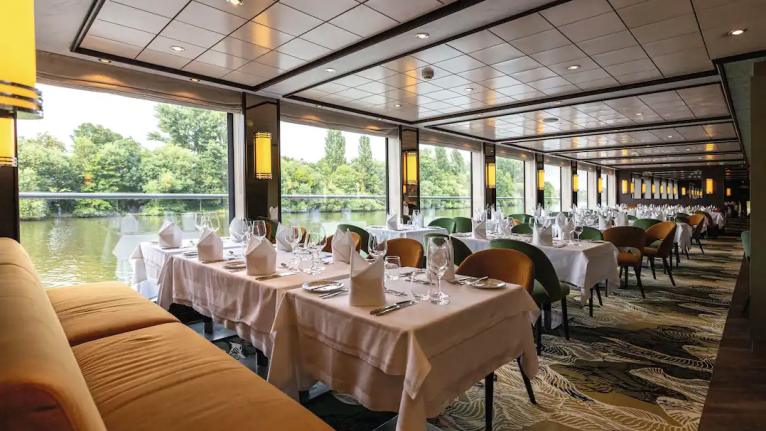
There’s an elegant green-and-gold colour scheme in our main restaurant, which serves breakfast, lunch and dinner. The menu changes daily, with fresh, seasonal food sourced from local suppliers. For dinner, there’s always a meat, fish, veggie and pasta dish. A buffet station puts on a pile-your-plate-high spread for breakfast. Meanwhile, lunch and dinner are an à la carte affair with waiter service. Seating-wise, you can pick from tables for two, or pull up a chair with friends on a table for four or six.
- Main restaurant, with waiter service
- Daily changing menu
- Six-course gala dinner once per cruise on sailings of five nights or more
Bistro
Things are a little more casual in Bistro, our second restaurant. It’s attached at the hip with Verdastro, giving you an extra dining option. Like Verdastro, it’s open for breakfast, lunch and dinner.
- More casual dining option
- Open for breakfast, lunch and dinner
- Buffet and à la carte options
Al Fresco Dining
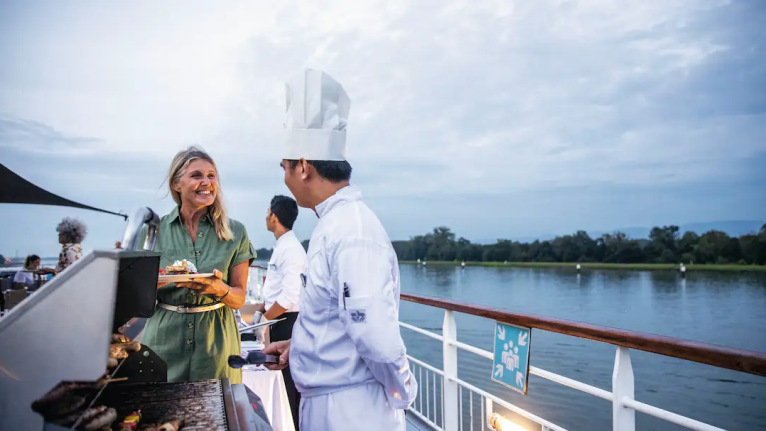
As well as sunbeds, the top deck’s laid out with tables and chairs. When the weather permits, we’ll put on outdoor events, like barbecues. You can get drinks up here, too.
- On selected itineraries
- Weather permitting
- Drinks available
Sightsee At Leisure
If exploring at your own pace sounds more your cup of tea, our tickets and attractions experiences are perfect. You can set off on your own and join in with things like food tasting tours, or see the destination on hop-on-and-off buses. If you’d rather just bag yourself a spot in a local café and watch the world go by, that’s great, too – our cruises allow for as much sightseeing as you like.
If you want to find out everything you need to know about the ports we visit, don’t miss our Cruise Experience Manager’s daily port talks. They’ll also tell you about some of the shore experiences available. Also, use the onboard app, Navigate. It’s got port maps on it – perfect for if you want to go off and explore alone.

Observatory
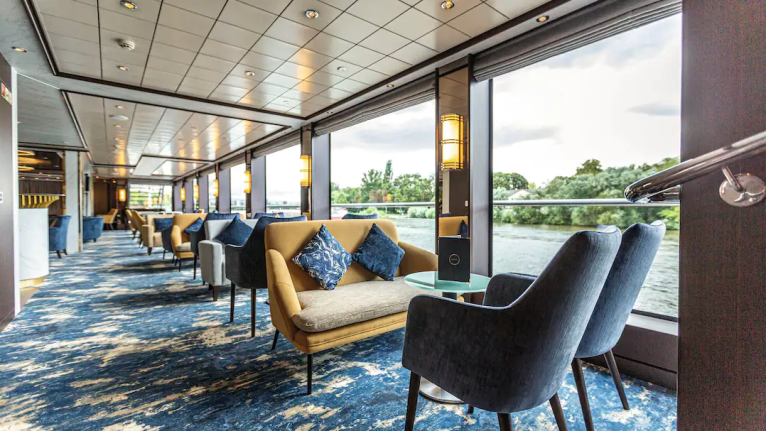
This lounge takes pride of place at the heart of our ships. As with all our venues, you can expect widescreen windows for admiring the panoramic views. You can get an even better look from the outdoor terrace, though – it’s a sheltered spot, kitted out with tables and chairs. It’s happy hour here every evening, with discounted drinks and complimentary canapés. After dark, Observatory hosts the nightly entertainment, where the entertainment team perform West End hits, pop classics and rock and roll anthems. Interactive quizzes, local guest acts and silent discos are all on the cards here, too.
- Hosts nightly entertainment
- Heart of the ship
- Al fresco terrace
Club Lounge
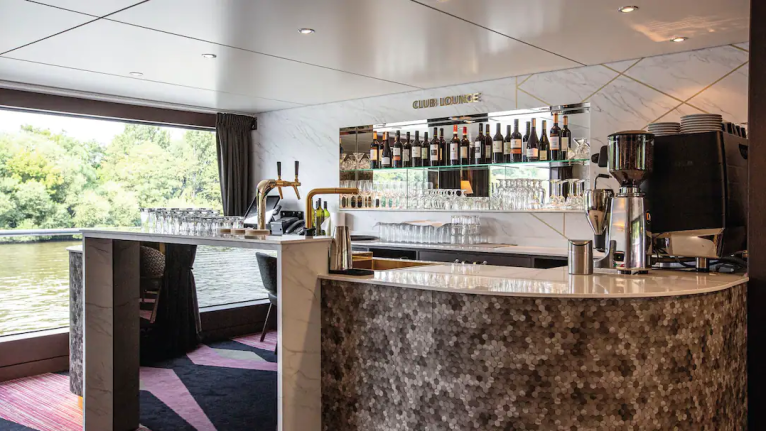
Coffee and cocktails are the cornerstones of this bar. Plush purple chairs, brass fittings and mirrored tables set a sophisticated scene. By day, you can sip a coffee* while taking in the views. At night, you can clink pre-dinner cocktails* in front of a roaring digital fireplace, before heading to one of the restaurants. Return after dinner if you fancy a quiet bar for after-dark drinks.
- Small, intimate lounge
- Premium coffees
- Perfect spot for pre-or-post-dinner cocktails
Top Deck
The views from the top deck are worth swooning over, but that’s not all it’s good for. It’s split into zones, with different areas for relaxation and activities. Plus, when you want to switch up the pace, there’s an area for activities, where deck games like minigolf, cornhole and shuffleboard take place. There’s a giant Connect 4 up here, too. You can check the full activity schedule once you’re onboard.
Atrium
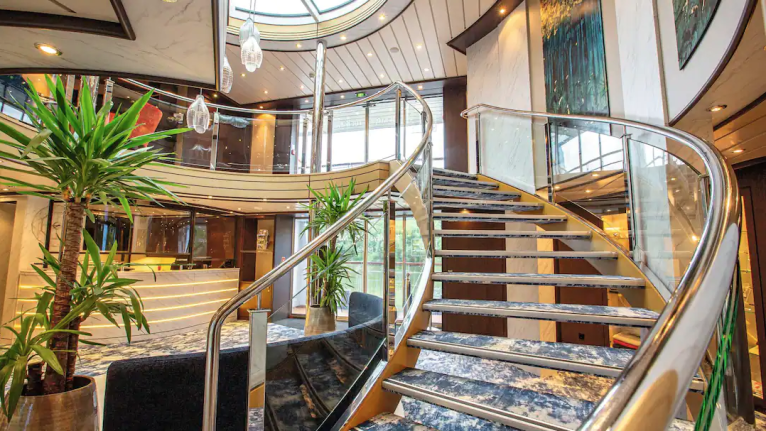
The Atrium is the main hub of our ships. It’s where you’ll find the Reception desk, as well as the Cruise Experience Manager, who can help with any questions and shore experience bookings. You can also retreat to the library, play board games, or stock up on souvenirs from the onboard shop. Outside of mealtimes, you can grab a complimentary tea or coffee from the self-service station here.
Wellness Area
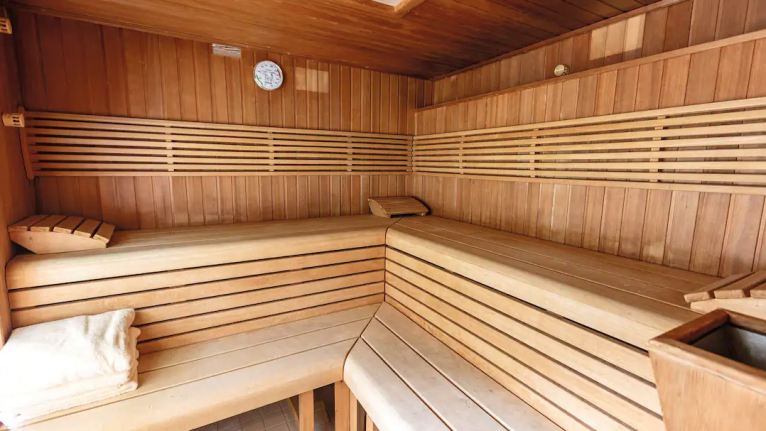
You can soothe any aching muscles in the Wellness Area. With a sauna and a whirlpool bath, it’s the perfect place to unwind after a day’s sightseeing.
Deck 4
- Lounge Area
- Relaxation Area
- Bridge
- Sun Deck
Deck 3
- Bistro
- Verdastro
- Club Lounge
- Observatory
- Terrace
- French Balcony Suite
- Superior French Balcony Cabins
- French Balcony Cabins
Deck 2
- Reception
- Wellness Area
- French Balcony Suite
- Superior French Balcony Cabins
- French Balcony Cabins
- Standard Cabins
- Single French Balcony Cabins
Deck 1
- Superior Cabins
- Standard Cabins
- Single Cabins


Deck 2 Standard Cabin
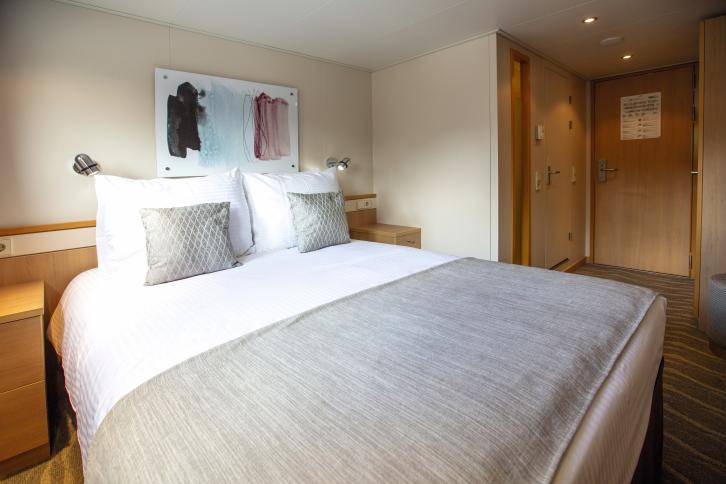
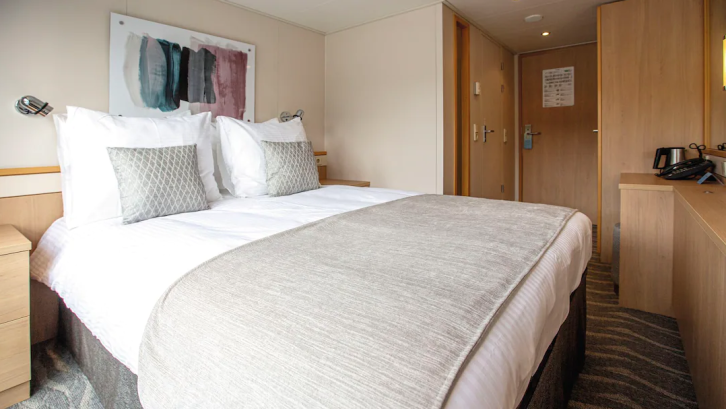
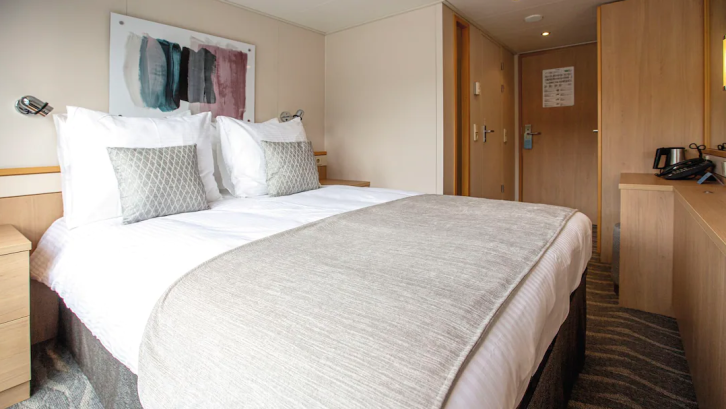
On Deck 2, the standard cabins have a floor to ceiling window, instead of a porthole. They’re still 12m² and come with a desk and a fixed double bed. You can also expect tea and coffee-making facilities, a flatscreen TV, and Molton Brown® toiletries.
Facilities
- Double
- Shower
- Toiletries Provided
- TV
- Wi-Fi (Additional Cost)
- Safe
- Hair Dryer
- Telephone
- Desk
Deck 1 Superior Cabin
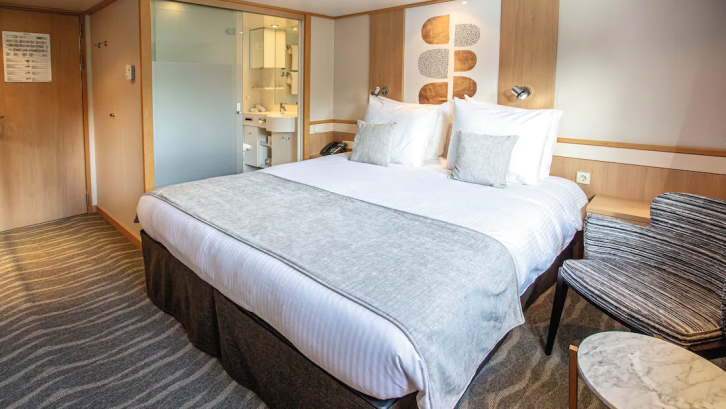
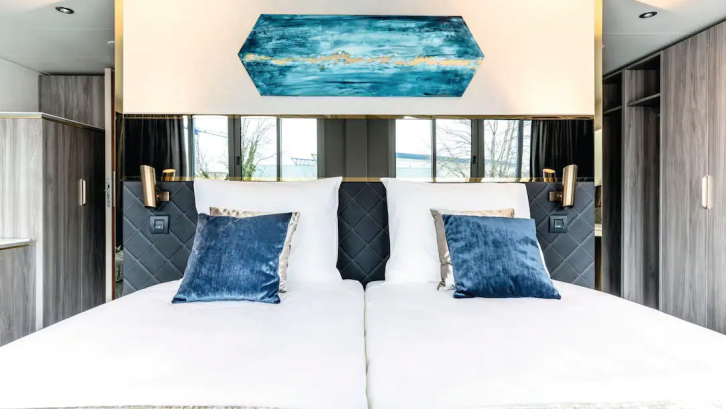
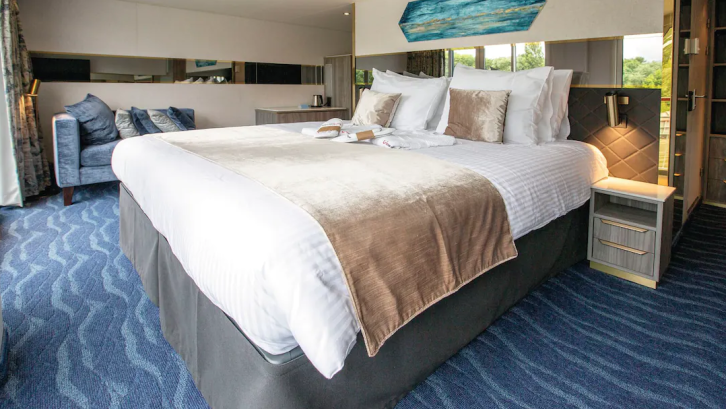
You’ll get a big helping of extra space with a 15m² superior cabin. They line up a king-size bed – which can be converted into two singles – along with a large dressing table and a lounge chair with a drinks table. You can also expect tea and coffee-making facilities, a flatscreen TV, and Molton Brown® toiletries. There’s a fridge, too, as well as a two large porthole windows.
FLOORPLANS
Facilities
- King or Twin Configuration
- Lounge Area
- Shower
- Toiletries Provided
- TV
- Safe
- Hair Dryer
- Telephone
- Desk
- Vanity Area
- Free Wi-Fi
Deck 1 Standard Cabin
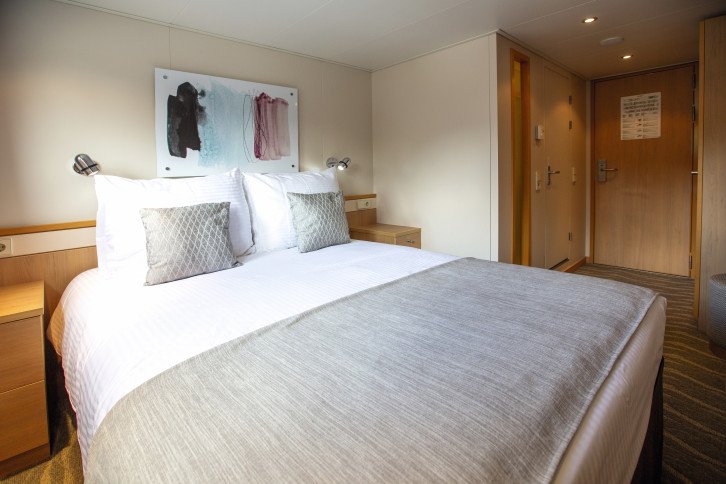
Our standard cabins measure up at 12m² and come with a desk and a fixed double bed. You can also expect tea and coffee-making facilities, a flatscreen TV, and Molton Brown® toiletries.
FLOORPLANS
Facilities
- Double
- Shower
- Toiletries Provided
- TV
- Safe
- Hair Dryer
- Telephone
- Desk
- Free Wi-Fi
Deck 1 Single Cabin
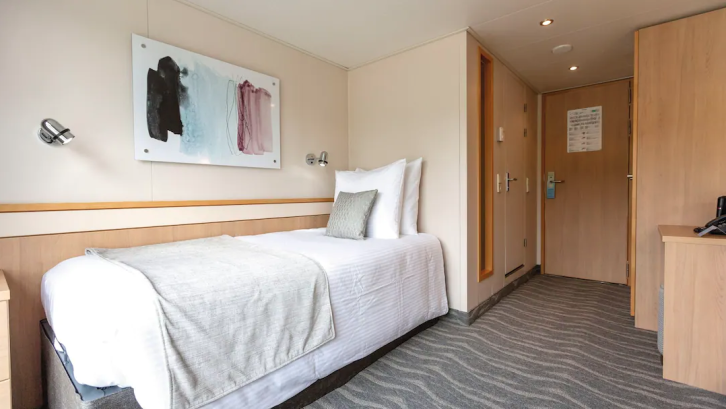
These single cabins are the same size as our standard cabins at 12m². Instead of a double bed, you’ll get a single, as well as a lounge chair.
FLOORPLANS
Facilities
- One Single Bed
- Lounge Area
- Shower
- Toiletries Provided
- TV
- Wi-Fi (Additional Cost)
- Safe
- Hair Dryer
- Telephone
- Desk


Deck 3 Superior French Balcony Cabin
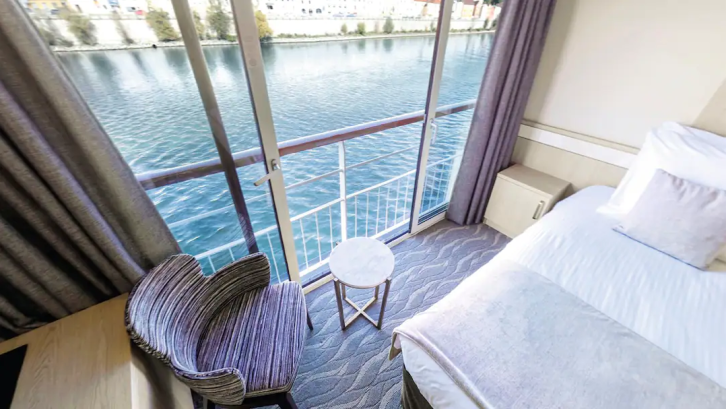
These cabins line up a king-size bed, which can be made into two singles, along with a large dressing table and a lounge chair with a drinks table. They’re 15m², with floor-to-ceiling glass doors that offer top-notch views of the river. You can also expect tea and coffee-making facilities, a flatscreen TV, a fridge, and Molton Brown® toiletries.
FLOORPLANS
Facilities
- King or Twin Configuration
- Lounge Area
- Shower
- Toiletries Provided
- TV
- Safe
- Hair Dryer
- Telephone
- Desk
- Vanity Area
- Free Wi-Fi
Deck 3 French Balcony Cabin
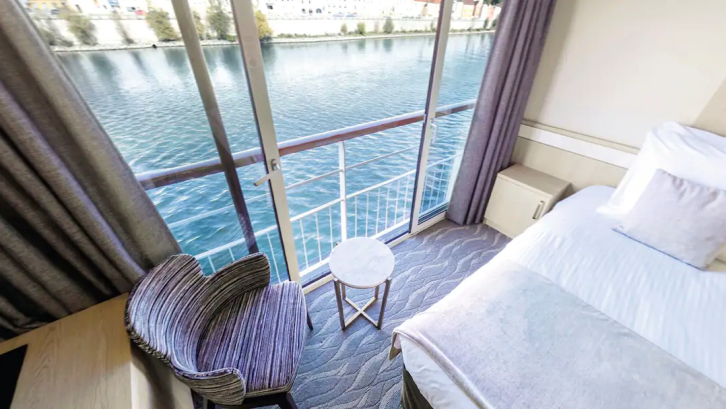
These cabins are the same size as all the standard cabins, at 12m², but they come with the added bonus of a French balcony. Floor-to-ceiling doors also make the views unmissable. Plus, there’s a desk and a fixed double bed. You can also expect tea and coffee-making facilities, a flatscreen TV, and Molton Brown® toiletries.
FLOORPLANS
Facilities
- Double
- Shower
- Toiletries Provided
- TV
- Safe
- Hair Dryer
- Telephone
- Desk
- Free Wi-Fi
Deck 2 Superior French Balcony Cabin
These cabins line up a king-size bed, which can be made into two singles, along with a large dressing table and a lounge chair with a drinks table. They’re 15m², with floor-to-ceiling glass doors that offer top-notch views of the river. You can also expect tea and coffee-making facilities, a flatscreen TV, a fridge, and Molton Brown® toiletries.
FLOORPLANS
Facilities
- King or Twin Configuration
- Lounge Area
- Shower
- Toiletries Provided
- TV
- Wi-Fi (Additional Cost)
- Safe
- Hair Dryer
- Telephone
- Desk
- Vanity Area
Deck 2 French Balcony Cabin
These cabins are the same size as all the standard cabins, at 12m², but they come with the added bonus of a French balcony. Floor-to-ceiling doors also make the views unmissable. Plus, there’s a desk and a fixed double bed. You can also expect tea and coffee-making facilities, a flatscreen TV, and Molton Brown® toiletries.
FLOORPLANS
Facilities
- Double
- Shower
- Toiletries Provided
- TV
- Wi-Fi (Additional Cost)
- Safe
- Hair Dryer
- Telephone
- Desk
Deck 2 French Balcony Single Cabin
These are like our standard single cabins, but instead of a porthole, you can take in the view from your own French balcony, which is complemented by floor-to-ceiling glass doors. That’s on top of a single bed, a desk and a lounge chair.
FLOORPLANS
Facilities
- One Single Bed
- Lounge Area
- Shower
- Toiletries Provided
- TV
- Wi-Fi (Additional Cost)
- Safe
- Hair Dryer
- Telephone
- Desk
Deck 3 French Balcony Suite Cabin
Treat yourself to a French balcony suite, so you can make the most of the views. At 24m², they’re a lot bigger than our other cabins, giving you extra space for a sofa, a coffee table, a fridge, a dressing area, and a larger bathroom. You’ll also get a desk and a king-size bed, which can be converted into two singles. What’s more, you can look forward to plush perks, like an amenities kit packed with Molton Brown® toiletries to take home, and use of a bathrobe and slippers. There’s also a flatscreen TV and USB ports. A Continental breakfast in bed each morning and nightly turn-down service is part of the package, too.
FLOORPLANS
Facilities
- King or Twin Configuration
- Lounge Area
- Shower
- Toiletries Provided
- TV
- Safe
- Hair Dryer
- Telephone
- Desk
- Vanity Area
- Free Wi-Fi
Deck 2 French Balcony Suite Cabin
Treat yourself to a French balcony suite, so you can make the most of the views. At 24m², they’re a lot bigger than our other cabins, giving you extra space for a sofa, a coffee table, a fridge, a dressing area, and a larger bathroom. You’ll also get a desk and a king-size bed, which can be converted into two singles. What’s more, you can look forward to plush perks, like an amenities kit packed with Molton Brown® toiletries to take home, and use of a bathrobe and slippers. There’s also a flatscreen TV and USB ports. A Continental breakfast in bed each morning and nightly turn-down service is part of the package, too.
FLOORPLANS
Facilities
- King or Twin Configuration
- Lounge Area
- Shower
- Toiletries Provided
- TV
- Safe
- Hair Dryer
- Telephone
- Desk
- Vanity Area
- Free Wi-Fi