Apex of the East Indies
Laem Chabang | Ko Kut | Sihanoukville | Phú Quốc | Ho Chi Minh City | Singapore | Semarang | Surabaya | Benoa, Bali | Moyo Island | Makassar | Derawan Islands | Boheydulang Island | Sandakan, Sabah | More...
(Prices correct as of today’s date, are updated daily, are subject to change and represent genuine availability at time of update).
Cruise only holidays are financially protected by ABTA. Fly cruise holidays are financially protected by Atlas Ocean Voyages under ATOL number 5902
Please click here to check the essential travel requirements before booking this cruise.
Call our cruise experts now and customise your cruise with flights, hotels, land tours and more
Prices based on 2 people sharing. Cruise only price does not include flights. Fly-cruise price may vary by chosen UK airport.
Prices based on 1 solo passenger. Cruise only price does not include flights. Fly-cruise price may vary by chosen UK airport.
Prices based on 3 people sharing. Cruise only price does not include flights. Fly-cruise price may vary by chosen UK airport.
Prices based on 4 people sharing. Cruise only price does not include flights. Fly-cruise price may vary by chosen UK airport.
Laem Chabang
There are two Bangkoks, the ancient soul of Thailand with its long and fascinating history and the frantic, modern metropolis that embraces the latest trends both Eastern and Western. The two blend together remarkably well—even the most jarring juxtapositions of old and new somehow make se... There are two Bangkoks, the ancient soul of Thailand with its long and fascinating history and the frantic, modern metropolis that embraces the latest trends both Eastern and Western. The two blend together remarkably well—even the most jarring juxtapositions of old and new somehow make sense. Bangkok is not only the biggest city in Thailand, but also the most mesmerizing, with some of the country's most beautiful temples and shrines. The city's energy is palpable, especially at night, when traffic opens up a bit, its famous markets get going, and everything seems lit up—from its proudest monuments to its seediest streets. When Ayutthaya was besieged and pillaged by the Burmese in 1766, Thonburi became Thailand's capital. The Thais call Bangkok Krung Thep (City of Angels), and in 1782 King Rama I moved his capital here, just across the Chao Praya River. Laem Chabang is approximately 130 km (81 mi) from Bangkok. Read More
Ko Kut
Sihanoukville
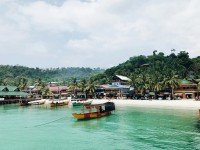
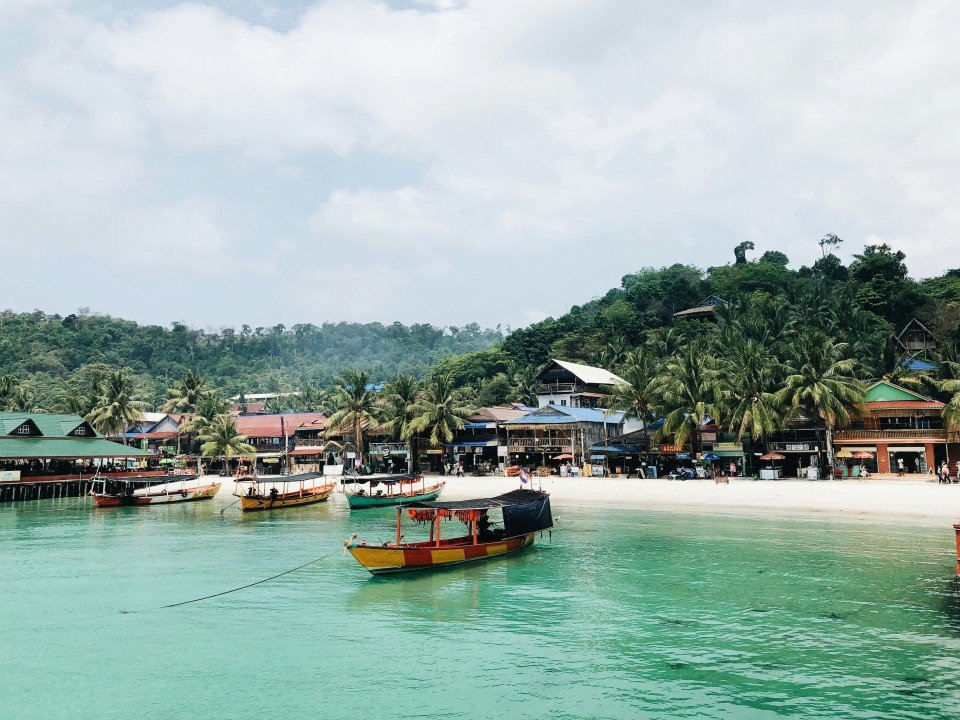
Sihanoukville is a vibrant coastal city known for its stunning beaches and lively atmosphere, making it a popular destination for both locals and tourists. With beautiful stretches of sand like Ochheuteal and Serendipity Beach, visitors can relax, swim, or indulge in various water sports.... Sihanoukville is a vibrant coastal city known for its stunning beaches and lively atmosphere, making it a popular destination for both locals and tourists. With beautiful stretches of sand like Ochheuteal and Serendipity Beach, visitors can relax, swim, or indulge in various water sports. The city also offers a range of dining options, from fresh seafood shacks to upscale restaurants, where one can savour delicious Khmer cuisine. Beyond the beaches, Sihanoukville serves as a gateway to nearby islands, such as Koh Rong and Koh Rong Samloem, which boast pristine landscapes and crystal-clear waters. With its mix of relaxation, adventure, and nightlife, Sihanoukville promises an unforgettable experience for those seeking a taste of Cambodia’s coastal charm. Read More
Phú Quốc
Ho Chi Minh City
Romantically referred to by the French as the Pearl of the Orient, Ho Chi Minh City today is a super-charged city of sensory overload. Motorbikes zoom day and night along the wide boulevards, through the narrow back alleys and past vendors pushing handcarts hawking goods of all description... Romantically referred to by the French as the Pearl of the Orient, Ho Chi Minh City today is a super-charged city of sensory overload. Motorbikes zoom day and night along the wide boulevards, through the narrow back alleys and past vendors pushing handcarts hawking goods of all descriptions. Still called Saigon by most residents, this is Vietnam's largest city and the engine driving the country's current economic resurgence, but despite its frenetic pace, it's a friendlier place than Hanoi and locals will tell you the food—simple, tasty, and incorporating many fresh herbs—is infinitely better than in the capital.This is a city full of surprises. The madness of the city's traffic—witness the oddball things that are transported on the back of motorcycles—is countered by tranquil pagodas, peaceful parks, quirky coffee shops, and whole neighborhoods hidden down tiny alleyways, although some of these quiet spots can be difficult to track down. Life in Ho Chi Minh City is lived in public: on the back of motorcycles, on the sidewalks, and in the parks. Even when its residents are at home, they're still on display. With many living rooms opening onto the street, grandmothers napping, babies being rocked, and food being prepared, are all in full view of passersby.Icons of the past endure in the midst of the city’s headlong rush into capitalism. The Hotel Continental, immortalized in Graham Greene's The Quiet American, continues to stand on the corner of old Indochina's most famous thoroughfare, the rue Catinat, known to American G.I.s during the Vietnam War as Tu Do (Freedom) Street and renamed Dong Khoi (Uprising) Street by the Communists. The city still has its ornate opera house and its old French city hall, the Hôtel de Ville. The broad colonial boulevards leading to the Saigon River and the gracious stucco villas are other remnants of the French colonial presence. Grisly reminders of the more recent past can be seen at the city's war-related museums. Residents, however, prefer to look forward rather than back and are often perplexed by tourists' fascination with a war that ended 40 years ago.The Chinese influence on the country is still very much in evidence in the Cholon district, the city's Chinatown, but the modern office towers and international hotels that mark the skyline symbolize Vietnam's fixation on the future. Read More
Ho Chi Minh City
Romantically referred to by the French as the Pearl of the Orient, Ho Chi Minh City today is a super-charged city of sensory overload. Motorbikes zoom day and night along the wide boulevards, through the narrow back alleys and past vendors pushing handcarts hawking goods of all description... Romantically referred to by the French as the Pearl of the Orient, Ho Chi Minh City today is a super-charged city of sensory overload. Motorbikes zoom day and night along the wide boulevards, through the narrow back alleys and past vendors pushing handcarts hawking goods of all descriptions. Still called Saigon by most residents, this is Vietnam's largest city and the engine driving the country's current economic resurgence, but despite its frenetic pace, it's a friendlier place than Hanoi and locals will tell you the food—simple, tasty, and incorporating many fresh herbs—is infinitely better than in the capital.This is a city full of surprises. The madness of the city's traffic—witness the oddball things that are transported on the back of motorcycles—is countered by tranquil pagodas, peaceful parks, quirky coffee shops, and whole neighborhoods hidden down tiny alleyways, although some of these quiet spots can be difficult to track down. Life in Ho Chi Minh City is lived in public: on the back of motorcycles, on the sidewalks, and in the parks. Even when its residents are at home, they're still on display. With many living rooms opening onto the street, grandmothers napping, babies being rocked, and food being prepared, are all in full view of passersby.Icons of the past endure in the midst of the city’s headlong rush into capitalism. The Hotel Continental, immortalized in Graham Greene's The Quiet American, continues to stand on the corner of old Indochina's most famous thoroughfare, the rue Catinat, known to American G.I.s during the Vietnam War as Tu Do (Freedom) Street and renamed Dong Khoi (Uprising) Street by the Communists. The city still has its ornate opera house and its old French city hall, the Hôtel de Ville. The broad colonial boulevards leading to the Saigon River and the gracious stucco villas are other remnants of the French colonial presence. Grisly reminders of the more recent past can be seen at the city's war-related museums. Residents, however, prefer to look forward rather than back and are often perplexed by tourists' fascination with a war that ended 40 years ago.The Chinese influence on the country is still very much in evidence in the Cholon district, the city's Chinatown, but the modern office towers and international hotels that mark the skyline symbolize Vietnam's fixation on the future. Read More
Singapore
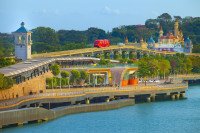
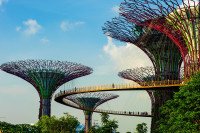
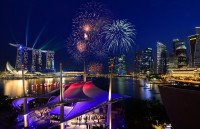
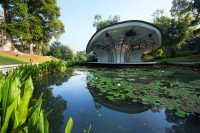
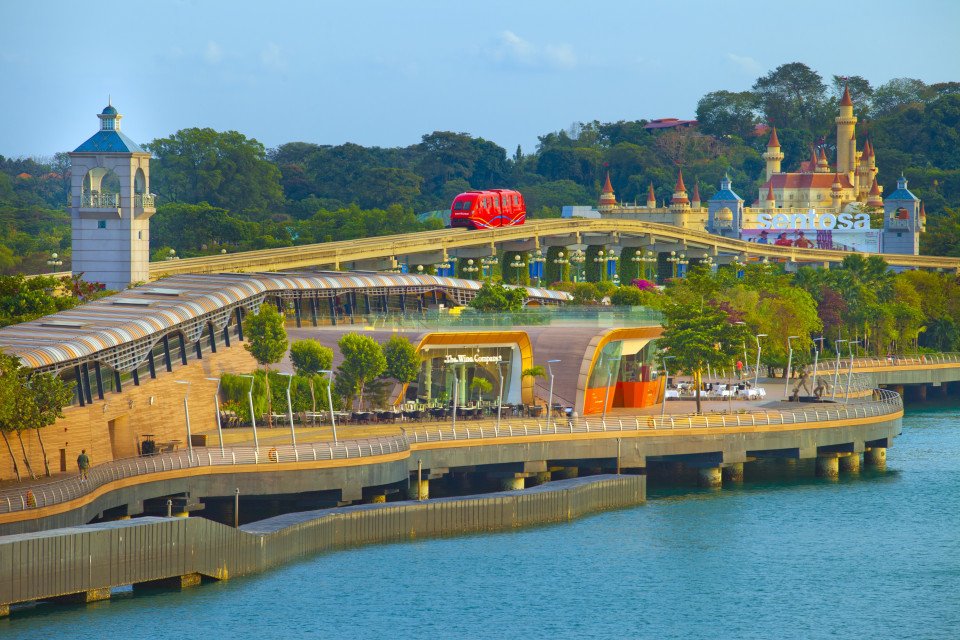
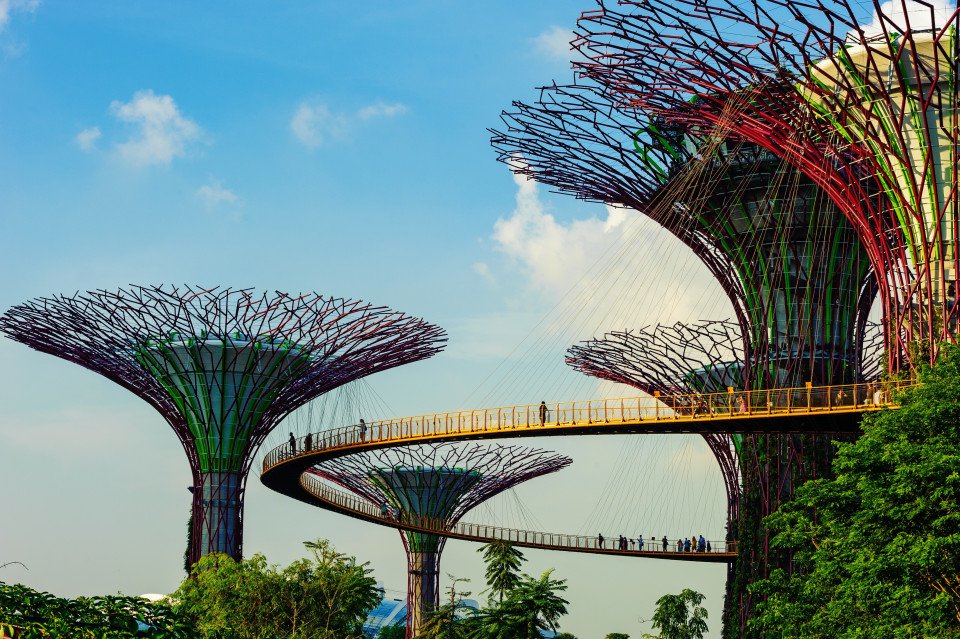
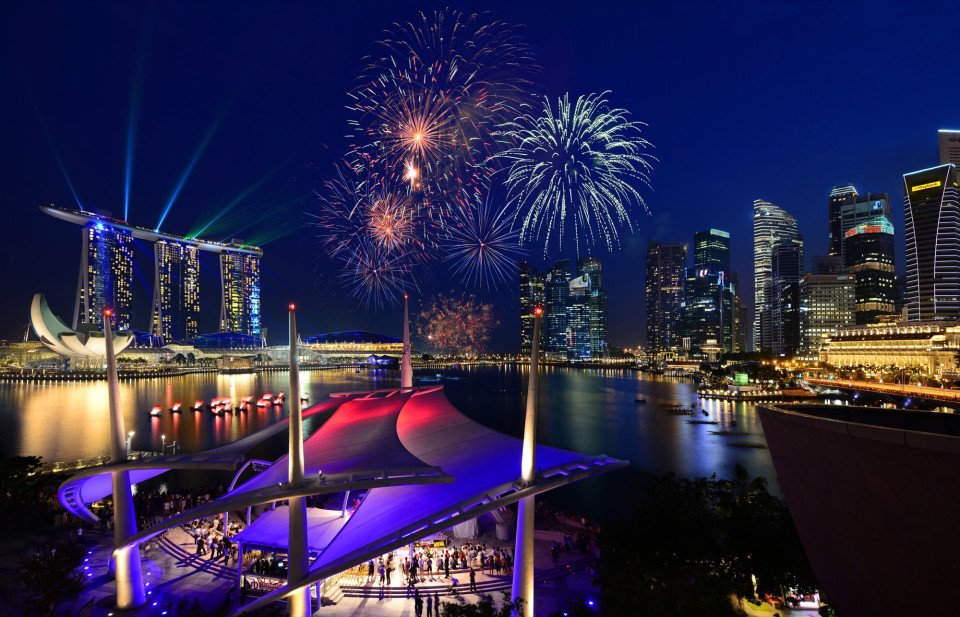
The main island of Singapore is shaped like a flattened diamond, 42 km (26 miles) east to west and 23 km (14 miles) north to south. Near the northern peak is the causeway leading to West Malaysia—Kuala Lumpur is less than four hours away by car. It is at the southern foot where you will fi... The main island of Singapore is shaped like a flattened diamond, 42 km (26 miles) east to west and 23 km (14 miles) north to south. Near the northern peak is the causeway leading to West Malaysia—Kuala Lumpur is less than four hours away by car. It is at the southern foot where you will find most of the city-state’s action, with its gleaming office towers, working docks, and futuristic "supertrees," which are solar-powered and serve as vertical gardens. Offshore are Sentosa and over 60 smaller islands, most uninhabited, that serve as bases for oil refining or as playgrounds and beach escapes from the city. To the east is Changi International Airport, connected to the city by metro, bus, and a tree-lined parkway. Of the island's total land area, more than half is built up, with the balance made up of parkland, farmland, plantations, swamp areas, and rain forest. Well-paved roads connect all parts of the island, and Singapore city has an excellent, and constantly expanding, public transportation system. The heart of Singapore's history and its modern wealth are in and around the Central Business District. The area includes the skyscrapers in the Central Business District, the 19th-century Raffles Hotel, the convention centers of Marina Square, on up to the top of Ft. Canning. Although most of old Singapore has been knocked down to make way for the modern city, most colonial landmarks have been preserved in the CBD, including early-19th-century buildings designed by the Irish architect George Coleman. Read More
Singapore
The main island of Singapore is shaped like a flattened diamond, 42 km (26 miles) east to west and 23 km (14 miles) north to south. Near the northern peak is the causeway leading to West Malaysia—Kuala Lumpur is less than four hours away by car. It is at the southern foot where you will fi... The main island of Singapore is shaped like a flattened diamond, 42 km (26 miles) east to west and 23 km (14 miles) north to south. Near the northern peak is the causeway leading to West Malaysia—Kuala Lumpur is less than four hours away by car. It is at the southern foot where you will find most of the city-state’s action, with its gleaming office towers, working docks, and futuristic "supertrees," which are solar-powered and serve as vertical gardens. Offshore are Sentosa and over 60 smaller islands, most uninhabited, that serve as bases for oil refining or as playgrounds and beach escapes from the city. To the east is Changi International Airport, connected to the city by metro, bus, and a tree-lined parkway. Of the island's total land area, more than half is built up, with the balance made up of parkland, farmland, plantations, swamp areas, and rain forest. Well-paved roads connect all parts of the island, and Singapore city has an excellent, and constantly expanding, public transportation system. The heart of Singapore's history and its modern wealth are in and around the Central Business District. The area includes the skyscrapers in the Central Business District, the 19th-century Raffles Hotel, the convention centers of Marina Square, on up to the top of Ft. Canning. Although most of old Singapore has been knocked down to make way for the modern city, most colonial landmarks have been preserved in the CBD, including early-19th-century buildings designed by the Irish architect George Coleman. Read More
Semarang
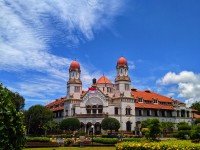
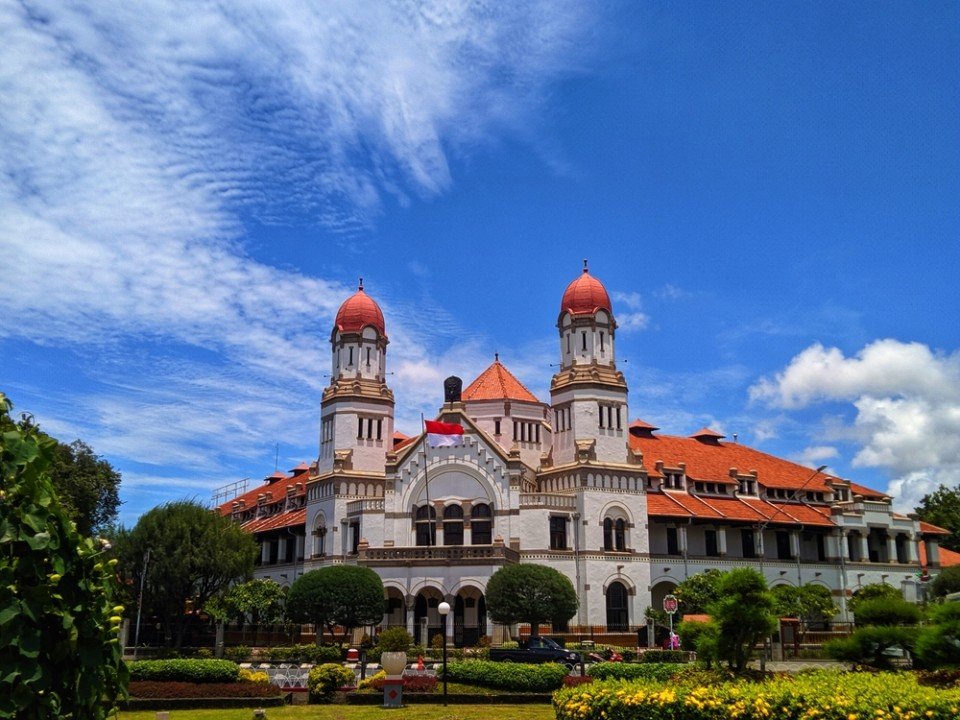
Semarang is one of the oldest cities in Indonesia, situated on Java's north coast between the shore of the Java Sea and a small ridge of mountains. Ceded to the Dutch West India Company in 1677 by King Amangkurat I in payment of his debts, it became their headquarters and the seat of the D... Semarang is one of the oldest cities in Indonesia, situated on Java's north coast between the shore of the Java Sea and a small ridge of mountains. Ceded to the Dutch West India Company in 1677 by King Amangkurat I in payment of his debts, it became their headquarters and the seat of the Dutch governor of the northeast provinces. Semarang's usefulness as a port waned due to the gradual silting up of the harbor; by the 19th century, Surabaya had eclipsed Semarang as Java's premier port. With a population of over one million, a third of whom are thought to be of Chinese extraction, Semarang is the largest city in Central Java and its administrative capital. The city consists of two parts: the coastal lowland where most of the commercial activities are found; and the hilly residential area. Although more a business center than a city for tourists, Semarang serves as a popular gateway to the mountainous interior of Central Java and to fabled Borobudur. Read More
Surabaya
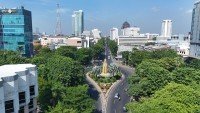
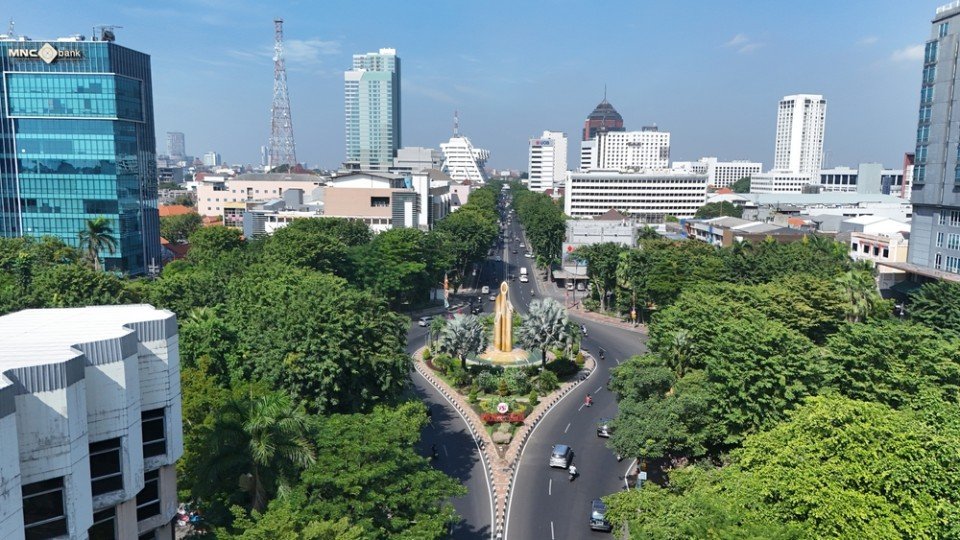
Surabaya, Indonesia’s second-largest city, is a vibrant hub of culture, commerce, and history. Known as the "City of Heroes," Surabaya played a significant role in Indonesia's struggle for independence and boasts numerous historical landmarks, including the iconic Heroes Monument. Th... Surabaya, Indonesia’s second-largest city, is a vibrant hub of culture, commerce, and history. Known as the "City of Heroes," Surabaya played a significant role in Indonesia's struggle for independence and boasts numerous historical landmarks, including the iconic Heroes Monument. The city features a lively mix of modern skyscrapers and traditional markets, with the bustling Arab Quarter showcasing a rich tapestry of culture and cuisine. Surabaya is famous for its delicious local dishes, such as rawon (a rich beef soup) and rujak cingur (a unique salad), making it a foodie’s delight. Additionally, the city's strategic location makes it a gateway to the beautiful islands of East Java, including the breathtaking Mount Bromo. With its dynamic atmosphere and rich heritage, Surabaya offers a unique glimpse into Indonesia's diverse culture. Read More
Benoa, Bali
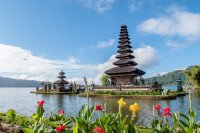
Bali really is as alluring as everyone says. This island, slightly bigger than Delaware, has it all: beaches, volcanoes, terraced rice fields, forests, renowned resorts, surfing, golf, and world-class dive sites. But what sets Bali apart from other nearby tropical destinations is Balinese... Bali really is as alluring as everyone says. This island, slightly bigger than Delaware, has it all: beaches, volcanoes, terraced rice fields, forests, renowned resorts, surfing, golf, and world-class dive sites. But what sets Bali apart from other nearby tropical destinations is Balinese tradition, and villagers dedicated to celebrating it. The hundreds of temples, dances, rituals, and crafts linked to their ancient Hindu faith aren't a show for tourists, but a living, breathing culture in which visitors are warmly received by the Balinese, who cherish their own identities. Read More
Benoa, Bali
Bali really is as alluring as everyone says. This island, slightly bigger than Delaware, has it all: beaches, volcanoes, terraced rice fields, forests, renowned resorts, surfing, golf, and world-class dive sites. But what sets Bali apart from other nearby tropical destinations is Balinese... Bali really is as alluring as everyone says. This island, slightly bigger than Delaware, has it all: beaches, volcanoes, terraced rice fields, forests, renowned resorts, surfing, golf, and world-class dive sites. But what sets Bali apart from other nearby tropical destinations is Balinese tradition, and villagers dedicated to celebrating it. The hundreds of temples, dances, rituals, and crafts linked to their ancient Hindu faith aren't a show for tourists, but a living, breathing culture in which visitors are warmly received by the Balinese, who cherish their own identities. Read More
Benoa, Bali
Bali really is as alluring as everyone says. This island, slightly bigger than Delaware, has it all: beaches, volcanoes, terraced rice fields, forests, renowned resorts, surfing, golf, and world-class dive sites. But what sets Bali apart from other nearby tropical destinations is Balinese... Bali really is as alluring as everyone says. This island, slightly bigger than Delaware, has it all: beaches, volcanoes, terraced rice fields, forests, renowned resorts, surfing, golf, and world-class dive sites. But what sets Bali apart from other nearby tropical destinations is Balinese tradition, and villagers dedicated to celebrating it. The hundreds of temples, dances, rituals, and crafts linked to their ancient Hindu faith aren't a show for tourists, but a living, breathing culture in which visitors are warmly received by the Balinese, who cherish their own identities. Read More
Moyo Island
Moyo Island is a tranquil and picturesque destination located in West Nusa Tenggara, Indonesia, renowned for its stunning natural beauty and pristine landscapes. Known for its lush rainforests, crystal-clear waters, and vibrant marine life, the island offers a perfect retreat for nature lo... Moyo Island is a tranquil and picturesque destination located in West Nusa Tenggara, Indonesia, renowned for its stunning natural beauty and pristine landscapes. Known for its lush rainforests, crystal-clear waters, and vibrant marine life, the island offers a perfect retreat for nature lovers and adventure seekers. Visitors can explore beautiful beaches like Liar Beach, dive or snorkel in vibrant coral reefs, and hike through lush jungles to discover stunning waterfalls, such as the famous Mata Jitu Waterfall. Moyo Island is also home to diverse wildlife, making it a great spot for birdwatching. With its serene atmosphere and unspoiled beauty, Moyo Island provides an idyllic escape from the hustle and bustle of everyday life, making it a hidden gem for those seeking relaxation and adventure in Indonesia. Read More
Makassar
Derawan Islands
Boheydulang Island
Sandakan, Sabah
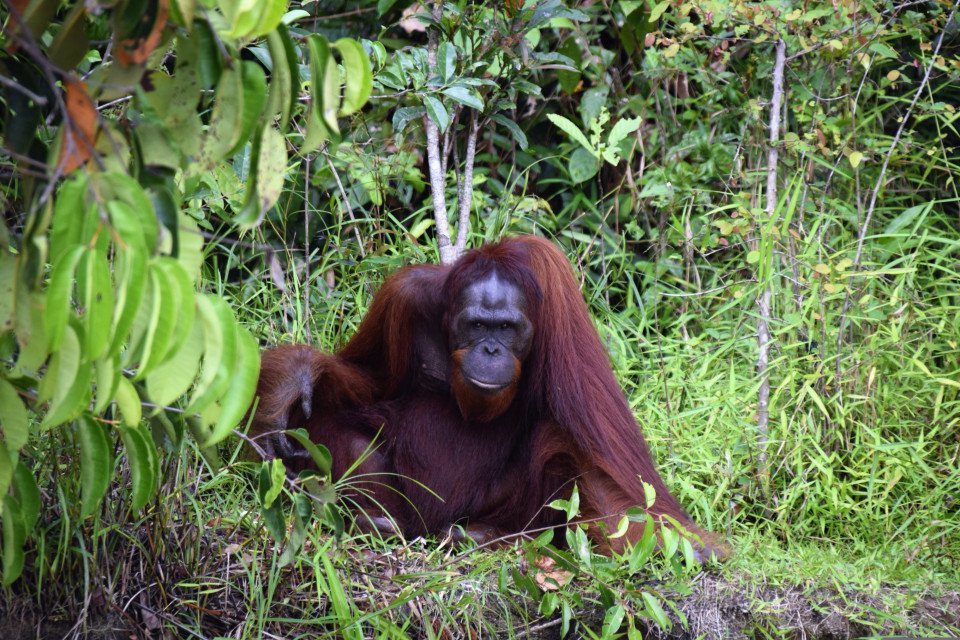
Borneo's forbidding interior made it less attractive to early traders and explorers than neighboring areas, so what is now the state of Sabah remained unexploited by the British until the late 19th century, although traders long visited for exotic items such as bird's nests (for the celebr... Borneo's forbidding interior made it less attractive to early traders and explorers than neighboring areas, so what is now the state of Sabah remained unexploited by the British until the late 19th century, although traders long visited for exotic items such as bird's nests (for the celebrated Chinese soup). In 1963, Sabah joined Sarawak, Malaya, and Singapore (which later seceded) in forming the Federation of Malaysia. Known as the "Land Below the Wind" because it's south of the typhoon belt, Sabah occupies Borneo's northern tip. It shares its southwestern border with Sarawak and the rest of its southern border with the Indonesian province of East Kalimantan. Today vast tracts of forest have been replaced by oil-palm plantations, and a sizable portion of remaining forest land is protected in national parks or conservation areas.On the shore of a deep bay, Sandakan was the capital of British North Borneo and one of the most important towns in Southeast Asia from the 1880s through the 1930s. But Japanese occupation during World War II and allied bombing virtually destroyed the town, and the capital was transferred to Jesselton (now Kota Kinabalu) in 1946. Sandakan enjoyed a revival in the 1970s as the center of the region's logging industry. Logging has since declined, but Sandakan is still worth visiting for its rich history and proximity to some of Borneo's most accessible wildlife attractions. Sandakan's downtown, much of it built on landfill, is squeezed between a steep promontory and Sandakan Bay. In recent years, this city of 450,000 (counting its extensive suburbs) has begun redeveloping its downtown waterfront into a shopping and nightlife hub. Its working harbor area for passengers and cargo is 6 km (4 miles) west of downtown. Read More
Puerto Princesa, Palawan
The Spanish arrived at this beautiful corner of the world in March of 1872, founding the city, that would eventually become the Capital of Palawan. In 2011, the area received a huge boost, when New7 announced its list of the 7 Wonders of Nature – counting 500 million votes in the process.... The Spanish arrived at this beautiful corner of the world in March of 1872, founding the city, that would eventually become the Capital of Palawan. In 2011, the area received a huge boost, when New7 announced its list of the 7 Wonders of Nature – counting 500 million votes in the process. Puerto Princesa’s stunning underground river - complete with a cavernous, sunken lagoon - beat off wonderful sites like the Great Barrier Reef, to claim a spot on the final, prestigious list. Set sail across the glowing green water, on a journey into the gaping mouth of the limestone caves at Puerto Princesa. Known for being one of the least densely populated, cleanest and most environmentally friendly cities in the Philippines, there’s a raft of natural wonders to explore - from diving hotspots to towering limestone cliffs, and the entrancing underworld of the underground river. Read More
Puerto Princesa, Palawan
The Spanish arrived at this beautiful corner of the world in March of 1872, founding the city, that would eventually become the Capital of Palawan. In 2011, the area received a huge boost, when New7 announced its list of the 7 Wonders of Nature – counting 500 million votes in the process.... The Spanish arrived at this beautiful corner of the world in March of 1872, founding the city, that would eventually become the Capital of Palawan. In 2011, the area received a huge boost, when New7 announced its list of the 7 Wonders of Nature – counting 500 million votes in the process. Puerto Princesa’s stunning underground river - complete with a cavernous, sunken lagoon - beat off wonderful sites like the Great Barrier Reef, to claim a spot on the final, prestigious list. Set sail across the glowing green water, on a journey into the gaping mouth of the limestone caves at Puerto Princesa. Known for being one of the least densely populated, cleanest and most environmentally friendly cities in the Philippines, there’s a raft of natural wonders to explore - from diving hotspots to towering limestone cliffs, and the entrancing underworld of the underground river. Read More
El Nido/Puerto Princesa
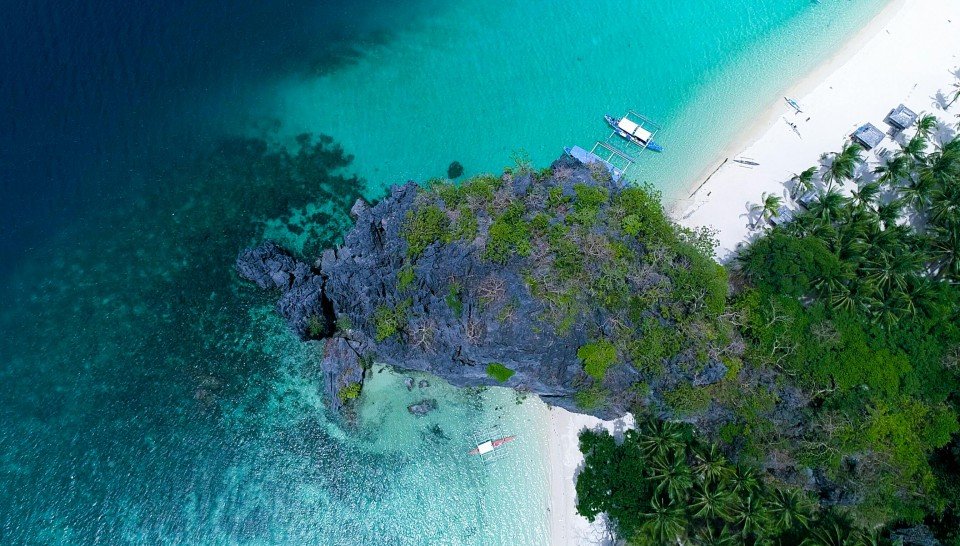
El Nido and Puerto Princesa, both located in Palawan, Philippines, are celebrated for their breathtaking natural beauty and rich ecosystems. El Nido is renowned for its stunning limestone cliffs, crystal-clear lagoons, and pristine beaches, making it a top destination for island-hopping ad... El Nido and Puerto Princesa, both located in Palawan, Philippines, are celebrated for their breathtaking natural beauty and rich ecosystems. El Nido is renowned for its stunning limestone cliffs, crystal-clear lagoons, and pristine beaches, making it a top destination for island-hopping adventures. Visitors can explore hidden coves, snorkel in vibrant coral gardens, and relax on idyllic shores, while the picturesque Bacuit Archipelago offers some of the most Instagrammable landscapes in the world. Meanwhile, Puerto Princesa, the capital of Palawan, is famous for its remarkable Underground River, a UNESCO World Heritage site where guided boat tours navigate an impressive cave system. The city also boasts lush parks, vibrant markets, and a rich cultural heritage, providing a perfect blend of adventure and relaxation. Together, El Nido and Puerto Princesa showcase the stunning diversity of Palawan, making it a must-visit destination for nature lovers and adventure seekers alike. Read More
Boracay Island
Boracay Island, located in the Philippines, is famous for its stunning white-sand beaches and vibrant nightlife. The island’s flagship White Beach is renowned for its powdery sand and crystal-clear waters, making it a popular destination for sunbathers and water sports enthusiasts al... Boracay Island, located in the Philippines, is famous for its stunning white-sand beaches and vibrant nightlife. The island’s flagship White Beach is renowned for its powdery sand and crystal-clear waters, making it a popular destination for sunbathers and water sports enthusiasts alike. Beyond the beach, visitors can explore vibrant local markets, indulge in delicious Filipino cuisine, and enjoy a variety of activities, from parasailing to island hopping. As the sun sets, Boracay transforms into a lively hub of bars and restaurants, offering a dynamic atmosphere for nightlife lovers. With its breathtaking landscapes and welcoming spirit, Boracay Island promises an unforgettable tropical getaway. Read More
Corregidor Island
Manila
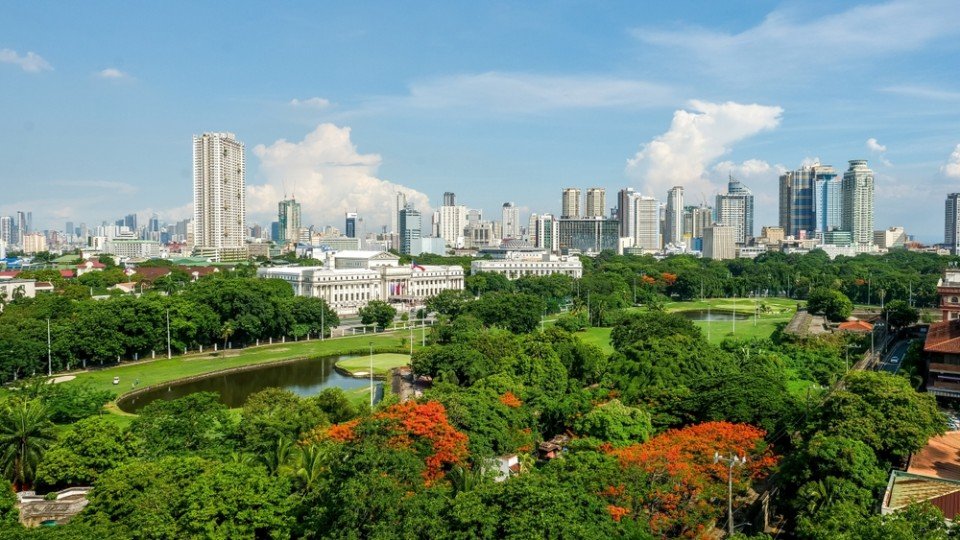
MANILA, the capital city of the Philippines, was founded in, 1571 by Spanish conquistador Miguel López de Legazpi. It is one of the oldest cities in the country and was the seat of power for most of the colonial rules of the Philippines. It is situated on the eastern shore of Manila Bay an... MANILA, the capital city of the Philippines, was founded in, 1571 by Spanish conquistador Miguel López de Legazpi. It is one of the oldest cities in the country and was the seat of power for most of the colonial rules of the Philippines. It is situated on the eastern shore of Manila Bay and contains a multitude of landmarks, some of which date back to the 16th century. It is home to the baroque 16th-century San Agustin Church as well as Fort Santiago, a storied citadel and military prison. In the 19th century Manila became one of the most modern cities in Asia. Before the Spanish–American War, Manila saw the rise of the Philippine Revolution. Under the American rule following the Spanish-American War, the United States changed the official language from Spanish to English. Towards the end of World War II, during the Battle of Manila, most of the city was flattened by intensive aerial bombardment. Today, tourism is a vital industry in Manila. Major shopping malls and bazaars thrive around Manila. Read More
Manila
MANILA, the capital city of the Philippines, was founded in, 1571 by Spanish conquistador Miguel López de Legazpi. It is one of the oldest cities in the country and was the seat of power for most of the colonial rules of the Philippines. It is situated on the eastern shore of Manila Bay an... MANILA, the capital city of the Philippines, was founded in, 1571 by Spanish conquistador Miguel López de Legazpi. It is one of the oldest cities in the country and was the seat of power for most of the colonial rules of the Philippines. It is situated on the eastern shore of Manila Bay and contains a multitude of landmarks, some of which date back to the 16th century. It is home to the baroque 16th-century San Agustin Church as well as Fort Santiago, a storied citadel and military prison. In the 19th century Manila became one of the most modern cities in Asia. Before the Spanish–American War, Manila saw the rise of the Philippine Revolution. Under the American rule following the Spanish-American War, the United States changed the official language from Spanish to English. Towards the end of World War II, during the Battle of Manila, most of the city was flattened by intensive aerial bombardment. Today, tourism is a vital industry in Manila. Major shopping malls and bazaars thrive around Manila. Read More
Romblon
The scattering of islands that make up Romblon Province are some of the Philippines’ most heavenly – and even better, the secret’s not yet out. White is a common theme here, whether it’s the polished sheen of pure white marble, sculpted by the region’s master craftsmen, or the sugar-white... The scattering of islands that make up Romblon Province are some of the Philippines’ most heavenly – and even better, the secret’s not yet out. White is a common theme here, whether it’s the polished sheen of pure white marble, sculpted by the region’s master craftsmen, or the sugar-white sands of the deserted, idyllic beaches that lie hidden on the province’s islands. Rent a habal-habal scooter to putter through jungle, discovering your own slices of idyllic sand, or take moonlit walks through forests that glitter with fireflies at night. Read More
Coron Island
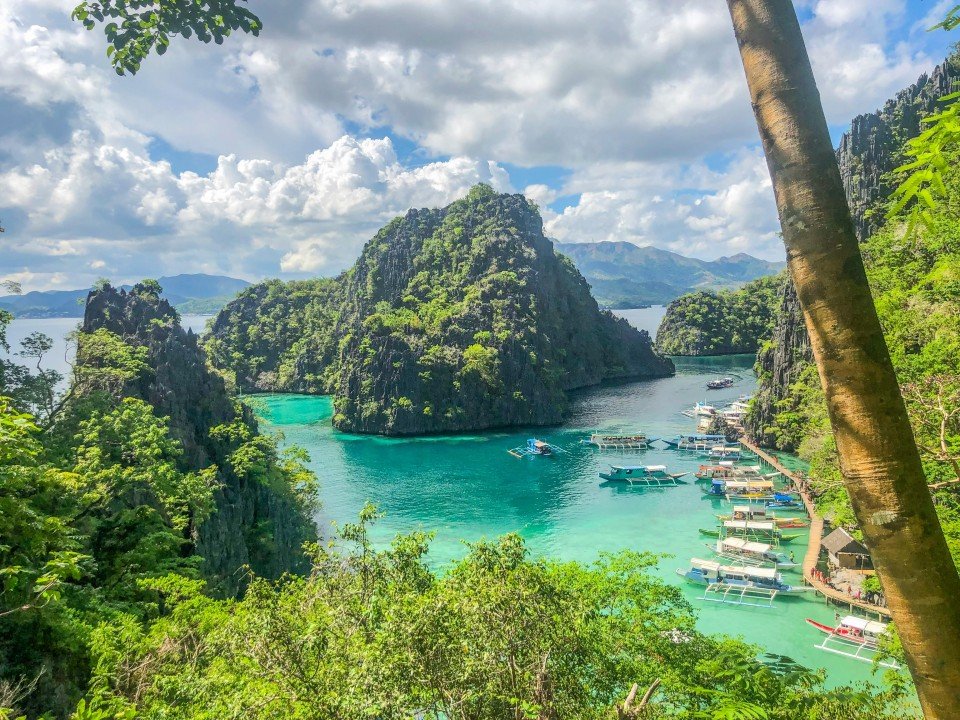
Spoken of with awed reverence in scuba-diving circles, Coron's dramatic rock protrusions, which jut from emerald seas and glorious sweeps of sand, make it a destination that you can't help but dive into. The perfect base for an adventure holiday, Coron's exquisite setting means you'll face... Spoken of with awed reverence in scuba-diving circles, Coron's dramatic rock protrusions, which jut from emerald seas and glorious sweeps of sand, make it a destination that you can't help but dive into. The perfect base for an adventure holiday, Coron's exquisite setting means you'll face taxing choices on a daily basis - to spend the day relaxing on the soft sand, or to pound through the jungle on horseback? Whether you choose relaxation or all-out-action, you're sure to fall head over heels for Coron's beauty. Read More
El Nido/Puerto Princesa
El Nido and Puerto Princesa, both located in Palawan, Philippines, are celebrated for their breathtaking natural beauty and rich ecosystems. El Nido is renowned for its stunning limestone cliffs, crystal-clear lagoons, and pristine beaches, making it a top destination for island-hopping ad... El Nido and Puerto Princesa, both located in Palawan, Philippines, are celebrated for their breathtaking natural beauty and rich ecosystems. El Nido is renowned for its stunning limestone cliffs, crystal-clear lagoons, and pristine beaches, making it a top destination for island-hopping adventures. Visitors can explore hidden coves, snorkel in vibrant coral gardens, and relax on idyllic shores, while the picturesque Bacuit Archipelago offers some of the most Instagrammable landscapes in the world. Meanwhile, Puerto Princesa, the capital of Palawan, is famous for its remarkable Underground River, a UNESCO World Heritage site where guided boat tours navigate an impressive cave system. The city also boasts lush parks, vibrant markets, and a rich cultural heritage, providing a perfect blend of adventure and relaxation. Together, El Nido and Puerto Princesa showcase the stunning diversity of Palawan, making it a must-visit destination for nature lovers and adventure seekers alike. Read More
Puerto Princesa, Palawan
The Spanish arrived at this beautiful corner of the world in March of 1872, founding the city, that would eventually become the Capital of Palawan. In 2011, the area received a huge boost, when New7 announced its list of the 7 Wonders of Nature – counting 500 million votes in the process.... The Spanish arrived at this beautiful corner of the world in March of 1872, founding the city, that would eventually become the Capital of Palawan. In 2011, the area received a huge boost, when New7 announced its list of the 7 Wonders of Nature – counting 500 million votes in the process. Puerto Princesa’s stunning underground river - complete with a cavernous, sunken lagoon - beat off wonderful sites like the Great Barrier Reef, to claim a spot on the final, prestigious list. Set sail across the glowing green water, on a journey into the gaping mouth of the limestone caves at Puerto Princesa. Known for being one of the least densely populated, cleanest and most environmentally friendly cities in the Philippines, there’s a raft of natural wonders to explore - from diving hotspots to towering limestone cliffs, and the entrancing underworld of the underground river. Read More
Kota Kinabalu, Sabah
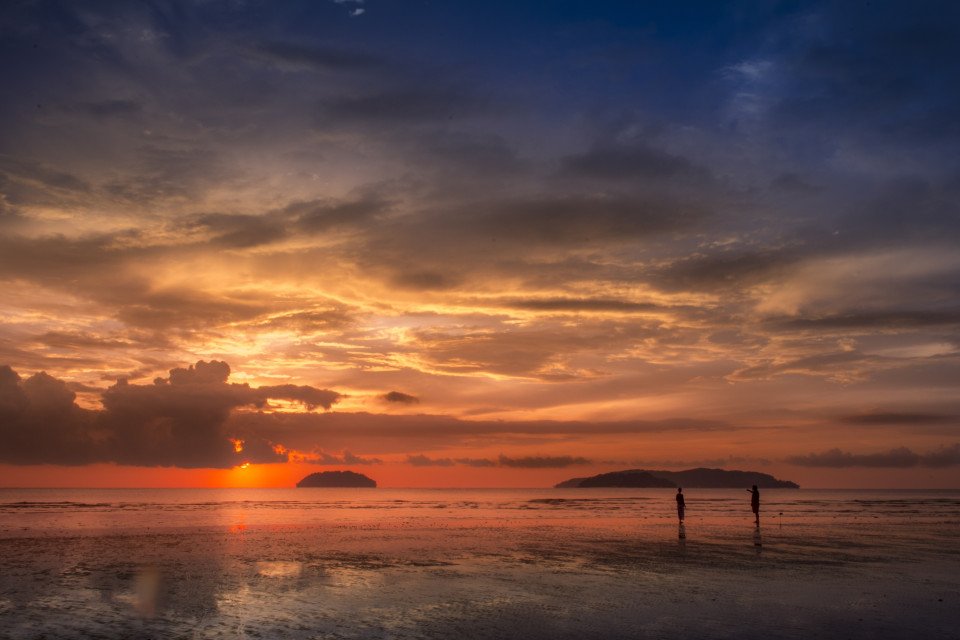
The capital of Sabah, Borneo's northernmost state, Kota Kinabalu is wedged between a tropical rainforest and the South China Sea. Many explorers use it as a launching point to venture off and see the surrounding jungle and marine life. Mt. Kinabalu challenges climbers daily, and top diving... The capital of Sabah, Borneo's northernmost state, Kota Kinabalu is wedged between a tropical rainforest and the South China Sea. Many explorers use it as a launching point to venture off and see the surrounding jungle and marine life. Mt. Kinabalu challenges climbers daily, and top diving spots reel in underwater adventurers. The city is made up of a dense grid of concrete buildings built over reclaimed land along the coast. Several waterfront seafood restaurants and a diverse mix of hotels appeal to the travelers passing through, mostly off to explore the region. Read More
Kota Kinabalu, Sabah
The capital of Sabah, Borneo's northernmost state, Kota Kinabalu is wedged between a tropical rainforest and the South China Sea. Many explorers use it as a launching point to venture off and see the surrounding jungle and marine life. Mt. Kinabalu challenges climbers daily, and top diving... The capital of Sabah, Borneo's northernmost state, Kota Kinabalu is wedged between a tropical rainforest and the South China Sea. Many explorers use it as a launching point to venture off and see the surrounding jungle and marine life. Mt. Kinabalu challenges climbers daily, and top diving spots reel in underwater adventurers. The city is made up of a dense grid of concrete buildings built over reclaimed land along the coast. Several waterfront seafood restaurants and a diverse mix of hotels appeal to the travelers passing through, mostly off to explore the region. Read More
Nha Trang
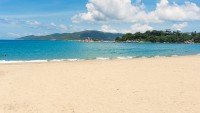
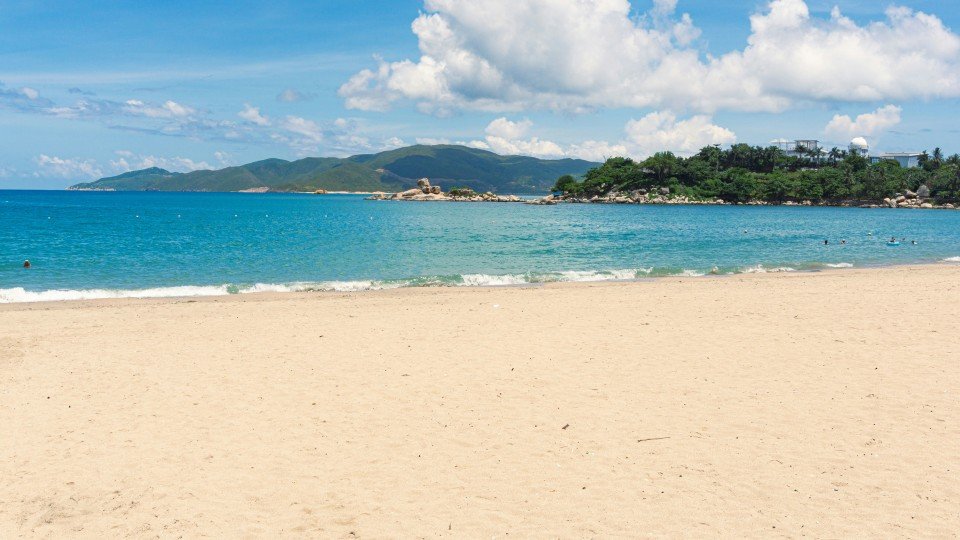
Nha Trang is a stunning coastal city known for its beautiful beaches and vibrant atmosphere. With its long stretches of golden sand and clear blue waters, it’s a popular destination for sun-seekers and water sports enthusiasts alike. The city boasts a lively promenade filled with caf... Nha Trang is a stunning coastal city known for its beautiful beaches and vibrant atmosphere. With its long stretches of golden sand and clear blue waters, it’s a popular destination for sun-seekers and water sports enthusiasts alike. The city boasts a lively promenade filled with cafes, restaurants, and bars, offering a taste of local cuisine and nightlife. Visitors can explore the impressive Po Nagar Cham Towers, which reflect the region's rich history, or indulge in relaxing spa treatments that Nha Trang is famous for. With a backdrop of lush mountains and a laid-back vibe, Nha Trang provides the perfect blend of relaxation and adventure for all types of travellers. Read More
Ho Chi Minh City
Romantically referred to by the French as the Pearl of the Orient, Ho Chi Minh City today is a super-charged city of sensory overload. Motorbikes zoom day and night along the wide boulevards, through the narrow back alleys and past vendors pushing handcarts hawking goods of all description... Romantically referred to by the French as the Pearl of the Orient, Ho Chi Minh City today is a super-charged city of sensory overload. Motorbikes zoom day and night along the wide boulevards, through the narrow back alleys and past vendors pushing handcarts hawking goods of all descriptions. Still called Saigon by most residents, this is Vietnam's largest city and the engine driving the country's current economic resurgence, but despite its frenetic pace, it's a friendlier place than Hanoi and locals will tell you the food—simple, tasty, and incorporating many fresh herbs—is infinitely better than in the capital.This is a city full of surprises. The madness of the city's traffic—witness the oddball things that are transported on the back of motorcycles—is countered by tranquil pagodas, peaceful parks, quirky coffee shops, and whole neighborhoods hidden down tiny alleyways, although some of these quiet spots can be difficult to track down. Life in Ho Chi Minh City is lived in public: on the back of motorcycles, on the sidewalks, and in the parks. Even when its residents are at home, they're still on display. With many living rooms opening onto the street, grandmothers napping, babies being rocked, and food being prepared, are all in full view of passersby.Icons of the past endure in the midst of the city’s headlong rush into capitalism. The Hotel Continental, immortalized in Graham Greene's The Quiet American, continues to stand on the corner of old Indochina's most famous thoroughfare, the rue Catinat, known to American G.I.s during the Vietnam War as Tu Do (Freedom) Street and renamed Dong Khoi (Uprising) Street by the Communists. The city still has its ornate opera house and its old French city hall, the Hôtel de Ville. The broad colonial boulevards leading to the Saigon River and the gracious stucco villas are other remnants of the French colonial presence. Grisly reminders of the more recent past can be seen at the city's war-related museums. Residents, however, prefer to look forward rather than back and are often perplexed by tourists' fascination with a war that ended 40 years ago.The Chinese influence on the country is still very much in evidence in the Cholon district, the city's Chinatown, but the modern office towers and international hotels that mark the skyline symbolize Vietnam's fixation on the future. Read More
Ho Chi Minh City
Romantically referred to by the French as the Pearl of the Orient, Ho Chi Minh City today is a super-charged city of sensory overload. Motorbikes zoom day and night along the wide boulevards, through the narrow back alleys and past vendors pushing handcarts hawking goods of all description... Romantically referred to by the French as the Pearl of the Orient, Ho Chi Minh City today is a super-charged city of sensory overload. Motorbikes zoom day and night along the wide boulevards, through the narrow back alleys and past vendors pushing handcarts hawking goods of all descriptions. Still called Saigon by most residents, this is Vietnam's largest city and the engine driving the country's current economic resurgence, but despite its frenetic pace, it's a friendlier place than Hanoi and locals will tell you the food—simple, tasty, and incorporating many fresh herbs—is infinitely better than in the capital.This is a city full of surprises. The madness of the city's traffic—witness the oddball things that are transported on the back of motorcycles—is countered by tranquil pagodas, peaceful parks, quirky coffee shops, and whole neighborhoods hidden down tiny alleyways, although some of these quiet spots can be difficult to track down. Life in Ho Chi Minh City is lived in public: on the back of motorcycles, on the sidewalks, and in the parks. Even when its residents are at home, they're still on display. With many living rooms opening onto the street, grandmothers napping, babies being rocked, and food being prepared, are all in full view of passersby.Icons of the past endure in the midst of the city’s headlong rush into capitalism. The Hotel Continental, immortalized in Graham Greene's The Quiet American, continues to stand on the corner of old Indochina's most famous thoroughfare, the rue Catinat, known to American G.I.s during the Vietnam War as Tu Do (Freedom) Street and renamed Dong Khoi (Uprising) Street by the Communists. The city still has its ornate opera house and its old French city hall, the Hôtel de Ville. The broad colonial boulevards leading to the Saigon River and the gracious stucco villas are other remnants of the French colonial presence. Grisly reminders of the more recent past can be seen at the city's war-related museums. Residents, however, prefer to look forward rather than back and are often perplexed by tourists' fascination with a war that ended 40 years ago.The Chinese influence on the country is still very much in evidence in the Cholon district, the city's Chinatown, but the modern office towers and international hotels that mark the skyline symbolize Vietnam's fixation on the future. Read More
Côn Đảo
Singapore
The main island of Singapore is shaped like a flattened diamond, 42 km (26 miles) east to west and 23 km (14 miles) north to south. Near the northern peak is the causeway leading to West Malaysia—Kuala Lumpur is less than four hours away by car. It is at the southern foot where you will fi... The main island of Singapore is shaped like a flattened diamond, 42 km (26 miles) east to west and 23 km (14 miles) north to south. Near the northern peak is the causeway leading to West Malaysia—Kuala Lumpur is less than four hours away by car. It is at the southern foot where you will find most of the city-state’s action, with its gleaming office towers, working docks, and futuristic "supertrees," which are solar-powered and serve as vertical gardens. Offshore are Sentosa and over 60 smaller islands, most uninhabited, that serve as bases for oil refining or as playgrounds and beach escapes from the city. To the east is Changi International Airport, connected to the city by metro, bus, and a tree-lined parkway. Of the island's total land area, more than half is built up, with the balance made up of parkland, farmland, plantations, swamp areas, and rain forest. Well-paved roads connect all parts of the island, and Singapore city has an excellent, and constantly expanding, public transportation system. The heart of Singapore's history and its modern wealth are in and around the Central Business District. The area includes the skyscrapers in the Central Business District, the 19th-century Raffles Hotel, the convention centers of Marina Square, on up to the top of Ft. Canning. Although most of old Singapore has been knocked down to make way for the modern city, most colonial landmarks have been preserved in the CBD, including early-19th-century buildings designed by the Irish architect George Coleman. Read More
Laem Chabang
Ko Kut
Sihanoukville
Phú Quốc
At Sea
Ho Chi Minh City
Ho Chi Minh City
At Sea
Singapore
Singapore
At Sea
Semarang
Surabaya
Benoa, Bali
Benoa, Bali
Benoa, Bali
Moyo Island
Makassar
At Sea
Derawan Islands
Boheydulang Island
Sandakan, Sabah
Puerto Princesa, Palawan
El Nido/Puerto Princesa
Boracay Island
Corregidor Island
Manila
Manila
Romblon
Coron Island
El Nido/Puerto Princesa
Puerto Princesa, Palawan
Kota Kinabalu, Sabah
At Sea
Nha Trang
Ho Chi Minh City
Ho Chi Minh City
Côn Đảo
At Sea
Singapore
Laem Chabang
Laem Chabang
There are two Bangkoks, the ancient soul of Thailand with its long and fascinating history and the frantic, modern metropolis that embraces the latest trends both Eastern and Western. The two blend together remarkably well—even the most jarring juxtapositions of old and new somehow make se... There are two Bangkoks, the ancient soul of Thailand with its long and fascinating history and the frantic, modern metropolis that embraces the latest trends both Eastern and Western. The two blend together remarkably well—even the most jarring juxtapositions of old and new somehow make sense. Bangkok is not only the biggest city in Thailand, but also the most mesmerizing, with some of the country's most beautiful temples and shrines. The city's energy is palpable, especially at night, when traffic opens up a bit, its famous markets get going, and everything seems lit up—from its proudest monuments to its seediest streets. When Ayutthaya was besieged and pillaged by the Burmese in 1766, Thonburi became Thailand's capital. The Thais call Bangkok Krung Thep (City of Angels), and in 1782 King Rama I moved his capital here, just across the Chao Praya River. Laem Chabang is approximately 130 km (81 mi) from Bangkok. Read More
Ko Kut
Ko Kut
Sihanoukville
Sihanoukville
Sihanoukville is a vibrant coastal city known for its stunning beaches and lively atmosphere, making it a popular destination for both locals and tourists. With beautiful stretches of sand like Ochheuteal and Serendipity Beach, visitors can relax, swim, or indulge in various water sports.... Sihanoukville is a vibrant coastal city known for its stunning beaches and lively atmosphere, making it a popular destination for both locals and tourists. With beautiful stretches of sand like Ochheuteal and Serendipity Beach, visitors can relax, swim, or indulge in various water sports. The city also offers a range of dining options, from fresh seafood shacks to upscale restaurants, where one can savour delicious Khmer cuisine. Beyond the beaches, Sihanoukville serves as a gateway to nearby islands, such as Koh Rong and Koh Rong Samloem, which boast pristine landscapes and crystal-clear waters. With its mix of relaxation, adventure, and nightlife, Sihanoukville promises an unforgettable experience for those seeking a taste of Cambodia’s coastal charm. Read More
Phú Quốc
Phú Quốc
At Sea
Ho Chi Minh City
Ho Chi Minh City
Romantically referred to by the French as the Pearl of the Orient, Ho Chi Minh City today is a super-charged city of sensory overload. Motorbikes zoom day and night along the wide boulevards, through the narrow back alleys and past vendors pushing handcarts hawking goods of all description... Romantically referred to by the French as the Pearl of the Orient, Ho Chi Minh City today is a super-charged city of sensory overload. Motorbikes zoom day and night along the wide boulevards, through the narrow back alleys and past vendors pushing handcarts hawking goods of all descriptions. Still called Saigon by most residents, this is Vietnam's largest city and the engine driving the country's current economic resurgence, but despite its frenetic pace, it's a friendlier place than Hanoi and locals will tell you the food—simple, tasty, and incorporating many fresh herbs—is infinitely better than in the capital.This is a city full of surprises. The madness of the city's traffic—witness the oddball things that are transported on the back of motorcycles—is countered by tranquil pagodas, peaceful parks, quirky coffee shops, and whole neighborhoods hidden down tiny alleyways, although some of these quiet spots can be difficult to track down. Life in Ho Chi Minh City is lived in public: on the back of motorcycles, on the sidewalks, and in the parks. Even when its residents are at home, they're still on display. With many living rooms opening onto the street, grandmothers napping, babies being rocked, and food being prepared, are all in full view of passersby.Icons of the past endure in the midst of the city’s headlong rush into capitalism. The Hotel Continental, immortalized in Graham Greene's The Quiet American, continues to stand on the corner of old Indochina's most famous thoroughfare, the rue Catinat, known to American G.I.s during the Vietnam War as Tu Do (Freedom) Street and renamed Dong Khoi (Uprising) Street by the Communists. The city still has its ornate opera house and its old French city hall, the Hôtel de Ville. The broad colonial boulevards leading to the Saigon River and the gracious stucco villas are other remnants of the French colonial presence. Grisly reminders of the more recent past can be seen at the city's war-related museums. Residents, however, prefer to look forward rather than back and are often perplexed by tourists' fascination with a war that ended 40 years ago.The Chinese influence on the country is still very much in evidence in the Cholon district, the city's Chinatown, but the modern office towers and international hotels that mark the skyline symbolize Vietnam's fixation on the future. Read More
Ho Chi Minh City
Ho Chi Minh City
Romantically referred to by the French as the Pearl of the Orient, Ho Chi Minh City today is a super-charged city of sensory overload. Motorbikes zoom day and night along the wide boulevards, through the narrow back alleys and past vendors pushing handcarts hawking goods of all description... Romantically referred to by the French as the Pearl of the Orient, Ho Chi Minh City today is a super-charged city of sensory overload. Motorbikes zoom day and night along the wide boulevards, through the narrow back alleys and past vendors pushing handcarts hawking goods of all descriptions. Still called Saigon by most residents, this is Vietnam's largest city and the engine driving the country's current economic resurgence, but despite its frenetic pace, it's a friendlier place than Hanoi and locals will tell you the food—simple, tasty, and incorporating many fresh herbs—is infinitely better than in the capital.This is a city full of surprises. The madness of the city's traffic—witness the oddball things that are transported on the back of motorcycles—is countered by tranquil pagodas, peaceful parks, quirky coffee shops, and whole neighborhoods hidden down tiny alleyways, although some of these quiet spots can be difficult to track down. Life in Ho Chi Minh City is lived in public: on the back of motorcycles, on the sidewalks, and in the parks. Even when its residents are at home, they're still on display. With many living rooms opening onto the street, grandmothers napping, babies being rocked, and food being prepared, are all in full view of passersby.Icons of the past endure in the midst of the city’s headlong rush into capitalism. The Hotel Continental, immortalized in Graham Greene's The Quiet American, continues to stand on the corner of old Indochina's most famous thoroughfare, the rue Catinat, known to American G.I.s during the Vietnam War as Tu Do (Freedom) Street and renamed Dong Khoi (Uprising) Street by the Communists. The city still has its ornate opera house and its old French city hall, the Hôtel de Ville. The broad colonial boulevards leading to the Saigon River and the gracious stucco villas are other remnants of the French colonial presence. Grisly reminders of the more recent past can be seen at the city's war-related museums. Residents, however, prefer to look forward rather than back and are often perplexed by tourists' fascination with a war that ended 40 years ago.The Chinese influence on the country is still very much in evidence in the Cholon district, the city's Chinatown, but the modern office towers and international hotels that mark the skyline symbolize Vietnam's fixation on the future. Read More
At Sea
Singapore
Singapore
The main island of Singapore is shaped like a flattened diamond, 42 km (26 miles) east to west and 23 km (14 miles) north to south. Near the northern peak is the causeway leading to West Malaysia—Kuala Lumpur is less than four hours away by car. It is at the southern foot where you will fi... The main island of Singapore is shaped like a flattened diamond, 42 km (26 miles) east to west and 23 km (14 miles) north to south. Near the northern peak is the causeway leading to West Malaysia—Kuala Lumpur is less than four hours away by car. It is at the southern foot where you will find most of the city-state’s action, with its gleaming office towers, working docks, and futuristic "supertrees," which are solar-powered and serve as vertical gardens. Offshore are Sentosa and over 60 smaller islands, most uninhabited, that serve as bases for oil refining or as playgrounds and beach escapes from the city. To the east is Changi International Airport, connected to the city by metro, bus, and a tree-lined parkway. Of the island's total land area, more than half is built up, with the balance made up of parkland, farmland, plantations, swamp areas, and rain forest. Well-paved roads connect all parts of the island, and Singapore city has an excellent, and constantly expanding, public transportation system. The heart of Singapore's history and its modern wealth are in and around the Central Business District. The area includes the skyscrapers in the Central Business District, the 19th-century Raffles Hotel, the convention centers of Marina Square, on up to the top of Ft. Canning. Although most of old Singapore has been knocked down to make way for the modern city, most colonial landmarks have been preserved in the CBD, including early-19th-century buildings designed by the Irish architect George Coleman. Read More
Singapore
Singapore
The main island of Singapore is shaped like a flattened diamond, 42 km (26 miles) east to west and 23 km (14 miles) north to south. Near the northern peak is the causeway leading to West Malaysia—Kuala Lumpur is less than four hours away by car. It is at the southern foot where you will fi... The main island of Singapore is shaped like a flattened diamond, 42 km (26 miles) east to west and 23 km (14 miles) north to south. Near the northern peak is the causeway leading to West Malaysia—Kuala Lumpur is less than four hours away by car. It is at the southern foot where you will find most of the city-state’s action, with its gleaming office towers, working docks, and futuristic "supertrees," which are solar-powered and serve as vertical gardens. Offshore are Sentosa and over 60 smaller islands, most uninhabited, that serve as bases for oil refining or as playgrounds and beach escapes from the city. To the east is Changi International Airport, connected to the city by metro, bus, and a tree-lined parkway. Of the island's total land area, more than half is built up, with the balance made up of parkland, farmland, plantations, swamp areas, and rain forest. Well-paved roads connect all parts of the island, and Singapore city has an excellent, and constantly expanding, public transportation system. The heart of Singapore's history and its modern wealth are in and around the Central Business District. The area includes the skyscrapers in the Central Business District, the 19th-century Raffles Hotel, the convention centers of Marina Square, on up to the top of Ft. Canning. Although most of old Singapore has been knocked down to make way for the modern city, most colonial landmarks have been preserved in the CBD, including early-19th-century buildings designed by the Irish architect George Coleman. Read More
At Sea
Semarang
Semarang
Semarang is one of the oldest cities in Indonesia, situated on Java's north coast between the shore of the Java Sea and a small ridge of mountains. Ceded to the Dutch West India Company in 1677 by King Amangkurat I in payment of his debts, it became their headquarters and the seat of the D... Semarang is one of the oldest cities in Indonesia, situated on Java's north coast between the shore of the Java Sea and a small ridge of mountains. Ceded to the Dutch West India Company in 1677 by King Amangkurat I in payment of his debts, it became their headquarters and the seat of the Dutch governor of the northeast provinces. Semarang's usefulness as a port waned due to the gradual silting up of the harbor; by the 19th century, Surabaya had eclipsed Semarang as Java's premier port. With a population of over one million, a third of whom are thought to be of Chinese extraction, Semarang is the largest city in Central Java and its administrative capital. The city consists of two parts: the coastal lowland where most of the commercial activities are found; and the hilly residential area. Although more a business center than a city for tourists, Semarang serves as a popular gateway to the mountainous interior of Central Java and to fabled Borobudur. Read More
Surabaya
Surabaya
Surabaya, Indonesia’s second-largest city, is a vibrant hub of culture, commerce, and history. Known as the "City of Heroes," Surabaya played a significant role in Indonesia's struggle for independence and boasts numerous historical landmarks, including the iconic Heroes Monument. Th... Surabaya, Indonesia’s second-largest city, is a vibrant hub of culture, commerce, and history. Known as the "City of Heroes," Surabaya played a significant role in Indonesia's struggle for independence and boasts numerous historical landmarks, including the iconic Heroes Monument. The city features a lively mix of modern skyscrapers and traditional markets, with the bustling Arab Quarter showcasing a rich tapestry of culture and cuisine. Surabaya is famous for its delicious local dishes, such as rawon (a rich beef soup) and rujak cingur (a unique salad), making it a foodie’s delight. Additionally, the city's strategic location makes it a gateway to the beautiful islands of East Java, including the breathtaking Mount Bromo. With its dynamic atmosphere and rich heritage, Surabaya offers a unique glimpse into Indonesia's diverse culture. Read More
Benoa, Bali
Benoa, Bali
Bali really is as alluring as everyone says. This island, slightly bigger than Delaware, has it all: beaches, volcanoes, terraced rice fields, forests, renowned resorts, surfing, golf, and world-class dive sites. But what sets Bali apart from other nearby tropical destinations is Balinese... Bali really is as alluring as everyone says. This island, slightly bigger than Delaware, has it all: beaches, volcanoes, terraced rice fields, forests, renowned resorts, surfing, golf, and world-class dive sites. But what sets Bali apart from other nearby tropical destinations is Balinese tradition, and villagers dedicated to celebrating it. The hundreds of temples, dances, rituals, and crafts linked to their ancient Hindu faith aren't a show for tourists, but a living, breathing culture in which visitors are warmly received by the Balinese, who cherish their own identities. Read More
Benoa, Bali
Benoa, Bali
Bali really is as alluring as everyone says. This island, slightly bigger than Delaware, has it all: beaches, volcanoes, terraced rice fields, forests, renowned resorts, surfing, golf, and world-class dive sites. But what sets Bali apart from other nearby tropical destinations is Balinese... Bali really is as alluring as everyone says. This island, slightly bigger than Delaware, has it all: beaches, volcanoes, terraced rice fields, forests, renowned resorts, surfing, golf, and world-class dive sites. But what sets Bali apart from other nearby tropical destinations is Balinese tradition, and villagers dedicated to celebrating it. The hundreds of temples, dances, rituals, and crafts linked to their ancient Hindu faith aren't a show for tourists, but a living, breathing culture in which visitors are warmly received by the Balinese, who cherish their own identities. Read More
Benoa, Bali
Benoa, Bali
Bali really is as alluring as everyone says. This island, slightly bigger than Delaware, has it all: beaches, volcanoes, terraced rice fields, forests, renowned resorts, surfing, golf, and world-class dive sites. But what sets Bali apart from other nearby tropical destinations is Balinese... Bali really is as alluring as everyone says. This island, slightly bigger than Delaware, has it all: beaches, volcanoes, terraced rice fields, forests, renowned resorts, surfing, golf, and world-class dive sites. But what sets Bali apart from other nearby tropical destinations is Balinese tradition, and villagers dedicated to celebrating it. The hundreds of temples, dances, rituals, and crafts linked to their ancient Hindu faith aren't a show for tourists, but a living, breathing culture in which visitors are warmly received by the Balinese, who cherish their own identities. Read More
Moyo Island
Moyo Island
Moyo Island is a tranquil and picturesque destination located in West Nusa Tenggara, Indonesia, renowned for its stunning natural beauty and pristine landscapes. Known for its lush rainforests, crystal-clear waters, and vibrant marine life, the island offers a perfect retreat for nature lo... Moyo Island is a tranquil and picturesque destination located in West Nusa Tenggara, Indonesia, renowned for its stunning natural beauty and pristine landscapes. Known for its lush rainforests, crystal-clear waters, and vibrant marine life, the island offers a perfect retreat for nature lovers and adventure seekers. Visitors can explore beautiful beaches like Liar Beach, dive or snorkel in vibrant coral reefs, and hike through lush jungles to discover stunning waterfalls, such as the famous Mata Jitu Waterfall. Moyo Island is also home to diverse wildlife, making it a great spot for birdwatching. With its serene atmosphere and unspoiled beauty, Moyo Island provides an idyllic escape from the hustle and bustle of everyday life, making it a hidden gem for those seeking relaxation and adventure in Indonesia. Read More
Makassar
Makassar
At Sea
Derawan Islands
Derawan Islands
Boheydulang Island
Boheydulang Island
Sandakan, Sabah
Sandakan, Sabah
Borneo's forbidding interior made it less attractive to early traders and explorers than neighboring areas, so what is now the state of Sabah remained unexploited by the British until the late 19th century, although traders long visited for exotic items such as bird's nests (for the celebr... Borneo's forbidding interior made it less attractive to early traders and explorers than neighboring areas, so what is now the state of Sabah remained unexploited by the British until the late 19th century, although traders long visited for exotic items such as bird's nests (for the celebrated Chinese soup). In 1963, Sabah joined Sarawak, Malaya, and Singapore (which later seceded) in forming the Federation of Malaysia. Known as the "Land Below the Wind" because it's south of the typhoon belt, Sabah occupies Borneo's northern tip. It shares its southwestern border with Sarawak and the rest of its southern border with the Indonesian province of East Kalimantan. Today vast tracts of forest have been replaced by oil-palm plantations, and a sizable portion of remaining forest land is protected in national parks or conservation areas.On the shore of a deep bay, Sandakan was the capital of British North Borneo and one of the most important towns in Southeast Asia from the 1880s through the 1930s. But Japanese occupation during World War II and allied bombing virtually destroyed the town, and the capital was transferred to Jesselton (now Kota Kinabalu) in 1946. Sandakan enjoyed a revival in the 1970s as the center of the region's logging industry. Logging has since declined, but Sandakan is still worth visiting for its rich history and proximity to some of Borneo's most accessible wildlife attractions. Sandakan's downtown, much of it built on landfill, is squeezed between a steep promontory and Sandakan Bay. In recent years, this city of 450,000 (counting its extensive suburbs) has begun redeveloping its downtown waterfront into a shopping and nightlife hub. Its working harbor area for passengers and cargo is 6 km (4 miles) west of downtown. Read More
Puerto Princesa, Palawan
The Spanish arrived at this beautiful corner of the world in March of 1872, founding the city, that would eventually become the Capital of Palawan. In 2011, the area received a huge boost, when New7 announced its list of the 7 Wonders of Nature – counting 500 million votes in the process.... The Spanish arrived at this beautiful corner of the world in March of 1872, founding the city, that would eventually become the Capital of Palawan. In 2011, the area received a huge boost, when New7 announced its list of the 7 Wonders of Nature – counting 500 million votes in the process. Puerto Princesa’s stunning underground river - complete with a cavernous, sunken lagoon - beat off wonderful sites like the Great Barrier Reef, to claim a spot on the final, prestigious list. Set sail across the glowing green water, on a journey into the gaping mouth of the limestone caves at Puerto Princesa. Known for being one of the least densely populated, cleanest and most environmentally friendly cities in the Philippines, there’s a raft of natural wonders to explore - from diving hotspots to towering limestone cliffs, and the entrancing underworld of the underground river. Read More
Puerto Princesa, Palawan
The Spanish arrived at this beautiful corner of the world in March of 1872, founding the city, that would eventually become the Capital of Palawan. In 2011, the area received a huge boost, when New7 announced its list of the 7 Wonders of Nature – counting 500 million votes in the process.... The Spanish arrived at this beautiful corner of the world in March of 1872, founding the city, that would eventually become the Capital of Palawan. In 2011, the area received a huge boost, when New7 announced its list of the 7 Wonders of Nature – counting 500 million votes in the process. Puerto Princesa’s stunning underground river - complete with a cavernous, sunken lagoon - beat off wonderful sites like the Great Barrier Reef, to claim a spot on the final, prestigious list. Set sail across the glowing green water, on a journey into the gaping mouth of the limestone caves at Puerto Princesa. Known for being one of the least densely populated, cleanest and most environmentally friendly cities in the Philippines, there’s a raft of natural wonders to explore - from diving hotspots to towering limestone cliffs, and the entrancing underworld of the underground river. Read More
El Nido/Puerto Princesa
El Nido and Puerto Princesa, both located in Palawan, Philippines, are celebrated for their breathtaking natural beauty and rich ecosystems. El Nido is renowned for its stunning limestone cliffs, crystal-clear lagoons, and pristine beaches, making it a top destination for island-hopping ad... El Nido and Puerto Princesa, both located in Palawan, Philippines, are celebrated for their breathtaking natural beauty and rich ecosystems. El Nido is renowned for its stunning limestone cliffs, crystal-clear lagoons, and pristine beaches, making it a top destination for island-hopping adventures. Visitors can explore hidden coves, snorkel in vibrant coral gardens, and relax on idyllic shores, while the picturesque Bacuit Archipelago offers some of the most Instagrammable landscapes in the world. Meanwhile, Puerto Princesa, the capital of Palawan, is famous for its remarkable Underground River, a UNESCO World Heritage site where guided boat tours navigate an impressive cave system. The city also boasts lush parks, vibrant markets, and a rich cultural heritage, providing a perfect blend of adventure and relaxation. Together, El Nido and Puerto Princesa showcase the stunning diversity of Palawan, making it a must-visit destination for nature lovers and adventure seekers alike. Read More
Boracay Island
Boracay Island
Boracay Island, located in the Philippines, is famous for its stunning white-sand beaches and vibrant nightlife. The island’s flagship White Beach is renowned for its powdery sand and crystal-clear waters, making it a popular destination for sunbathers and water sports enthusiasts al... Boracay Island, located in the Philippines, is famous for its stunning white-sand beaches and vibrant nightlife. The island’s flagship White Beach is renowned for its powdery sand and crystal-clear waters, making it a popular destination for sunbathers and water sports enthusiasts alike. Beyond the beach, visitors can explore vibrant local markets, indulge in delicious Filipino cuisine, and enjoy a variety of activities, from parasailing to island hopping. As the sun sets, Boracay transforms into a lively hub of bars and restaurants, offering a dynamic atmosphere for nightlife lovers. With its breathtaking landscapes and welcoming spirit, Boracay Island promises an unforgettable tropical getaway. Read More
Corregidor Island
Corregidor Island
Manila
Manila
MANILA, the capital city of the Philippines, was founded in, 1571 by Spanish conquistador Miguel López de Legazpi. It is one of the oldest cities in the country and was the seat of power for most of the colonial rules of the Philippines. It is situated on the eastern shore of Manila Bay an... MANILA, the capital city of the Philippines, was founded in, 1571 by Spanish conquistador Miguel López de Legazpi. It is one of the oldest cities in the country and was the seat of power for most of the colonial rules of the Philippines. It is situated on the eastern shore of Manila Bay and contains a multitude of landmarks, some of which date back to the 16th century. It is home to the baroque 16th-century San Agustin Church as well as Fort Santiago, a storied citadel and military prison. In the 19th century Manila became one of the most modern cities in Asia. Before the Spanish–American War, Manila saw the rise of the Philippine Revolution. Under the American rule following the Spanish-American War, the United States changed the official language from Spanish to English. Towards the end of World War II, during the Battle of Manila, most of the city was flattened by intensive aerial bombardment. Today, tourism is a vital industry in Manila. Major shopping malls and bazaars thrive around Manila. Read More
Manila
Manila
MANILA, the capital city of the Philippines, was founded in, 1571 by Spanish conquistador Miguel López de Legazpi. It is one of the oldest cities in the country and was the seat of power for most of the colonial rules of the Philippines. It is situated on the eastern shore of Manila Bay an... MANILA, the capital city of the Philippines, was founded in, 1571 by Spanish conquistador Miguel López de Legazpi. It is one of the oldest cities in the country and was the seat of power for most of the colonial rules of the Philippines. It is situated on the eastern shore of Manila Bay and contains a multitude of landmarks, some of which date back to the 16th century. It is home to the baroque 16th-century San Agustin Church as well as Fort Santiago, a storied citadel and military prison. In the 19th century Manila became one of the most modern cities in Asia. Before the Spanish–American War, Manila saw the rise of the Philippine Revolution. Under the American rule following the Spanish-American War, the United States changed the official language from Spanish to English. Towards the end of World War II, during the Battle of Manila, most of the city was flattened by intensive aerial bombardment. Today, tourism is a vital industry in Manila. Major shopping malls and bazaars thrive around Manila. Read More
Romblon
Romblon
The scattering of islands that make up Romblon Province are some of the Philippines’ most heavenly – and even better, the secret’s not yet out. White is a common theme here, whether it’s the polished sheen of pure white marble, sculpted by the region’s master craftsmen, or the sugar-white... The scattering of islands that make up Romblon Province are some of the Philippines’ most heavenly – and even better, the secret’s not yet out. White is a common theme here, whether it’s the polished sheen of pure white marble, sculpted by the region’s master craftsmen, or the sugar-white sands of the deserted, idyllic beaches that lie hidden on the province’s islands. Rent a habal-habal scooter to putter through jungle, discovering your own slices of idyllic sand, or take moonlit walks through forests that glitter with fireflies at night. Read More
Coron Island
Coron Island
Spoken of with awed reverence in scuba-diving circles, Coron's dramatic rock protrusions, which jut from emerald seas and glorious sweeps of sand, make it a destination that you can't help but dive into. The perfect base for an adventure holiday, Coron's exquisite setting means you'll face... Spoken of with awed reverence in scuba-diving circles, Coron's dramatic rock protrusions, which jut from emerald seas and glorious sweeps of sand, make it a destination that you can't help but dive into. The perfect base for an adventure holiday, Coron's exquisite setting means you'll face taxing choices on a daily basis - to spend the day relaxing on the soft sand, or to pound through the jungle on horseback? Whether you choose relaxation or all-out-action, you're sure to fall head over heels for Coron's beauty. Read More
El Nido/Puerto Princesa
El Nido and Puerto Princesa, both located in Palawan, Philippines, are celebrated for their breathtaking natural beauty and rich ecosystems. El Nido is renowned for its stunning limestone cliffs, crystal-clear lagoons, and pristine beaches, making it a top destination for island-hopping ad... El Nido and Puerto Princesa, both located in Palawan, Philippines, are celebrated for their breathtaking natural beauty and rich ecosystems. El Nido is renowned for its stunning limestone cliffs, crystal-clear lagoons, and pristine beaches, making it a top destination for island-hopping adventures. Visitors can explore hidden coves, snorkel in vibrant coral gardens, and relax on idyllic shores, while the picturesque Bacuit Archipelago offers some of the most Instagrammable landscapes in the world. Meanwhile, Puerto Princesa, the capital of Palawan, is famous for its remarkable Underground River, a UNESCO World Heritage site where guided boat tours navigate an impressive cave system. The city also boasts lush parks, vibrant markets, and a rich cultural heritage, providing a perfect blend of adventure and relaxation. Together, El Nido and Puerto Princesa showcase the stunning diversity of Palawan, making it a must-visit destination for nature lovers and adventure seekers alike. Read More
Puerto Princesa, Palawan
The Spanish arrived at this beautiful corner of the world in March of 1872, founding the city, that would eventually become the Capital of Palawan. In 2011, the area received a huge boost, when New7 announced its list of the 7 Wonders of Nature – counting 500 million votes in the process.... The Spanish arrived at this beautiful corner of the world in March of 1872, founding the city, that would eventually become the Capital of Palawan. In 2011, the area received a huge boost, when New7 announced its list of the 7 Wonders of Nature – counting 500 million votes in the process. Puerto Princesa’s stunning underground river - complete with a cavernous, sunken lagoon - beat off wonderful sites like the Great Barrier Reef, to claim a spot on the final, prestigious list. Set sail across the glowing green water, on a journey into the gaping mouth of the limestone caves at Puerto Princesa. Known for being one of the least densely populated, cleanest and most environmentally friendly cities in the Philippines, there’s a raft of natural wonders to explore - from diving hotspots to towering limestone cliffs, and the entrancing underworld of the underground river. Read More
Kota Kinabalu, Sabah
The capital of Sabah, Borneo's northernmost state, Kota Kinabalu is wedged between a tropical rainforest and the South China Sea. Many explorers use it as a launching point to venture off and see the surrounding jungle and marine life. Mt. Kinabalu challenges climbers daily, and top diving... The capital of Sabah, Borneo's northernmost state, Kota Kinabalu is wedged between a tropical rainforest and the South China Sea. Many explorers use it as a launching point to venture off and see the surrounding jungle and marine life. Mt. Kinabalu challenges climbers daily, and top diving spots reel in underwater adventurers. The city is made up of a dense grid of concrete buildings built over reclaimed land along the coast. Several waterfront seafood restaurants and a diverse mix of hotels appeal to the travelers passing through, mostly off to explore the region. Read More
Kota Kinabalu, Sabah
The capital of Sabah, Borneo's northernmost state, Kota Kinabalu is wedged between a tropical rainforest and the South China Sea. Many explorers use it as a launching point to venture off and see the surrounding jungle and marine life. Mt. Kinabalu challenges climbers daily, and top diving... The capital of Sabah, Borneo's northernmost state, Kota Kinabalu is wedged between a tropical rainforest and the South China Sea. Many explorers use it as a launching point to venture off and see the surrounding jungle and marine life. Mt. Kinabalu challenges climbers daily, and top diving spots reel in underwater adventurers. The city is made up of a dense grid of concrete buildings built over reclaimed land along the coast. Several waterfront seafood restaurants and a diverse mix of hotels appeal to the travelers passing through, mostly off to explore the region. Read More
At Sea
Nha Trang
Nha Trang
Nha Trang is a stunning coastal city known for its beautiful beaches and vibrant atmosphere. With its long stretches of golden sand and clear blue waters, it’s a popular destination for sun-seekers and water sports enthusiasts alike. The city boasts a lively promenade filled with caf... Nha Trang is a stunning coastal city known for its beautiful beaches and vibrant atmosphere. With its long stretches of golden sand and clear blue waters, it’s a popular destination for sun-seekers and water sports enthusiasts alike. The city boasts a lively promenade filled with cafes, restaurants, and bars, offering a taste of local cuisine and nightlife. Visitors can explore the impressive Po Nagar Cham Towers, which reflect the region's rich history, or indulge in relaxing spa treatments that Nha Trang is famous for. With a backdrop of lush mountains and a laid-back vibe, Nha Trang provides the perfect blend of relaxation and adventure for all types of travellers. Read More
Ho Chi Minh City
Ho Chi Minh City
Romantically referred to by the French as the Pearl of the Orient, Ho Chi Minh City today is a super-charged city of sensory overload. Motorbikes zoom day and night along the wide boulevards, through the narrow back alleys and past vendors pushing handcarts hawking goods of all description... Romantically referred to by the French as the Pearl of the Orient, Ho Chi Minh City today is a super-charged city of sensory overload. Motorbikes zoom day and night along the wide boulevards, through the narrow back alleys and past vendors pushing handcarts hawking goods of all descriptions. Still called Saigon by most residents, this is Vietnam's largest city and the engine driving the country's current economic resurgence, but despite its frenetic pace, it's a friendlier place than Hanoi and locals will tell you the food—simple, tasty, and incorporating many fresh herbs—is infinitely better than in the capital.This is a city full of surprises. The madness of the city's traffic—witness the oddball things that are transported on the back of motorcycles—is countered by tranquil pagodas, peaceful parks, quirky coffee shops, and whole neighborhoods hidden down tiny alleyways, although some of these quiet spots can be difficult to track down. Life in Ho Chi Minh City is lived in public: on the back of motorcycles, on the sidewalks, and in the parks. Even when its residents are at home, they're still on display. With many living rooms opening onto the street, grandmothers napping, babies being rocked, and food being prepared, are all in full view of passersby.Icons of the past endure in the midst of the city’s headlong rush into capitalism. The Hotel Continental, immortalized in Graham Greene's The Quiet American, continues to stand on the corner of old Indochina's most famous thoroughfare, the rue Catinat, known to American G.I.s during the Vietnam War as Tu Do (Freedom) Street and renamed Dong Khoi (Uprising) Street by the Communists. The city still has its ornate opera house and its old French city hall, the Hôtel de Ville. The broad colonial boulevards leading to the Saigon River and the gracious stucco villas are other remnants of the French colonial presence. Grisly reminders of the more recent past can be seen at the city's war-related museums. Residents, however, prefer to look forward rather than back and are often perplexed by tourists' fascination with a war that ended 40 years ago.The Chinese influence on the country is still very much in evidence in the Cholon district, the city's Chinatown, but the modern office towers and international hotels that mark the skyline symbolize Vietnam's fixation on the future. Read More
Ho Chi Minh City
Ho Chi Minh City
Romantically referred to by the French as the Pearl of the Orient, Ho Chi Minh City today is a super-charged city of sensory overload. Motorbikes zoom day and night along the wide boulevards, through the narrow back alleys and past vendors pushing handcarts hawking goods of all description... Romantically referred to by the French as the Pearl of the Orient, Ho Chi Minh City today is a super-charged city of sensory overload. Motorbikes zoom day and night along the wide boulevards, through the narrow back alleys and past vendors pushing handcarts hawking goods of all descriptions. Still called Saigon by most residents, this is Vietnam's largest city and the engine driving the country's current economic resurgence, but despite its frenetic pace, it's a friendlier place than Hanoi and locals will tell you the food—simple, tasty, and incorporating many fresh herbs—is infinitely better than in the capital.This is a city full of surprises. The madness of the city's traffic—witness the oddball things that are transported on the back of motorcycles—is countered by tranquil pagodas, peaceful parks, quirky coffee shops, and whole neighborhoods hidden down tiny alleyways, although some of these quiet spots can be difficult to track down. Life in Ho Chi Minh City is lived in public: on the back of motorcycles, on the sidewalks, and in the parks. Even when its residents are at home, they're still on display. With many living rooms opening onto the street, grandmothers napping, babies being rocked, and food being prepared, are all in full view of passersby.Icons of the past endure in the midst of the city’s headlong rush into capitalism. The Hotel Continental, immortalized in Graham Greene's The Quiet American, continues to stand on the corner of old Indochina's most famous thoroughfare, the rue Catinat, known to American G.I.s during the Vietnam War as Tu Do (Freedom) Street and renamed Dong Khoi (Uprising) Street by the Communists. The city still has its ornate opera house and its old French city hall, the Hôtel de Ville. The broad colonial boulevards leading to the Saigon River and the gracious stucco villas are other remnants of the French colonial presence. Grisly reminders of the more recent past can be seen at the city's war-related museums. Residents, however, prefer to look forward rather than back and are often perplexed by tourists' fascination with a war that ended 40 years ago.The Chinese influence on the country is still very much in evidence in the Cholon district, the city's Chinatown, but the modern office towers and international hotels that mark the skyline symbolize Vietnam's fixation on the future. Read More
Côn Đảo
Côn Đảo
At Sea
Singapore
Singapore
The main island of Singapore is shaped like a flattened diamond, 42 km (26 miles) east to west and 23 km (14 miles) north to south. Near the northern peak is the causeway leading to West Malaysia—Kuala Lumpur is less than four hours away by car. It is at the southern foot where you will fi... The main island of Singapore is shaped like a flattened diamond, 42 km (26 miles) east to west and 23 km (14 miles) north to south. Near the northern peak is the causeway leading to West Malaysia—Kuala Lumpur is less than four hours away by car. It is at the southern foot where you will find most of the city-state’s action, with its gleaming office towers, working docks, and futuristic "supertrees," which are solar-powered and serve as vertical gardens. Offshore are Sentosa and over 60 smaller islands, most uninhabited, that serve as bases for oil refining or as playgrounds and beach escapes from the city. To the east is Changi International Airport, connected to the city by metro, bus, and a tree-lined parkway. Of the island's total land area, more than half is built up, with the balance made up of parkland, farmland, plantations, swamp areas, and rain forest. Well-paved roads connect all parts of the island, and Singapore city has an excellent, and constantly expanding, public transportation system. The heart of Singapore's history and its modern wealth are in and around the Central Business District. The area includes the skyscrapers in the Central Business District, the 19th-century Raffles Hotel, the convention centers of Marina Square, on up to the top of Ft. Canning. Although most of old Singapore has been knocked down to make way for the modern city, most colonial landmarks have been preserved in the CBD, including early-19th-century buildings designed by the Irish architect George Coleman. Read More
*This holiday is generally suitable for persons with reduced mobility. For customers with reduced mobility or any medical condition that may require special assistance or arrangements to be made, please notify your Cruise Concierge at the time of your enquiry, so that we can provide specific information as to the suitability of the holiday, as well as make suitable arrangements with the Holiday Provider on your behalf.
Laem Chabang
Ko Kut
Sihanoukville
Phú Quốc
Ho Chi Minh City
Ho Chi Minh City
Singapore
Singapore
Semarang
Surabaya
Benoa, Bali
Benoa, Bali
Benoa, Bali
Moyo Island
Makassar
Derawan Islands
Boheydulang Island
Sandakan, Sabah
Puerto Princesa, Palawan
El Nido/Puerto Princesa
Boracay Island
Corregidor Island
Manila
Manila
Romblon
Coron Island
El Nido/Puerto Princesa
Puerto Princesa, Palawan
Kota Kinabalu, Sabah
Nha Trang
Ho Chi Minh City
Ho Chi Minh City
Côn Đảo
Singapore
*This holiday is generally suitable for persons with reduced mobility. For customers with reduced mobility or any medical condition that may require special assistance or arrangements to be made, please notify your Cruise Concierge at the time of your enquiry, so that we can provide specific information as to the suitability of the holiday, as well as make suitable arrangements with the Holiday Provider on your behalf.
Explore Atlas Adventurer
Dining
With seven distinct dining venues, guests enjoy greater variety, flexibility, and personalization throughout their voyage, from refined, full-service dining to relaxed, open-air options and in-suite service available at any hour.
This expanded culinary offering reflects Atlas’ evolving guest profile and longer, more diverse itineraries, while preserving the intimacy, quality, and thoughtful execution that define the luxury expedition experience.
Excursions
True to Atlas’ expedition spirit, Atlas Adventurer is equipped to deliver extraordinary access and engagement with the world.
These capabilities ensure that guests experience destinations not from a distance, but up close, actively, and meaningfully.
- A fleet of expedition Zodiacs for shore landings and wildlife exploration.
- A dedicated marina platform enabling swimming, kayaking, and water sports directly from the yacht when conditions permit.
- Two luxury motorboats elegantly designed to provide seamless, small group transfers ashore, as well as scenic coastal excursions. These motorboats complement the aft marina platform, allowing guests to engage with the water in comfort and style.
Lounges and Bars
Guests will enjoy five distinct lounges and cocktail bars, each offering a unique atmosphere, from refined evening settings to relaxed daytime spaces overlooking the sea. These venues encourage conversation, discovery, and shared moments, while maintaining the intimacy that defines life onboard Atlas.
Marina Deck
Marina platform with ocean pool, on-deck swimming pool and whirlpools
Deck 8
- Pool Bar
- Spa & Fitness Center
- Pool
- Pool Grill
- Lounge
Deck 7
- Upper Lounge
- Card Room
- Veranda Suite (V1)
- Penthouse Suite (PH1)
- Penthouse Suite (PH2)
Deck 6
- Observation Deck
- Gift Shop
- Conference Room
- Culinary Studio
- Lower Lounge
- Veranda Suite (V2)
- 2-Bedroom Owner's Suite (OS2)
- Concierge Veranda Suite (CV)
Deck 5
- Lounge
- Speciality Dining
- Dining
- Concierge Deluxe Veranda Suite (D2)
- Concierge Veranda Suite (CV)
- Veranda Suite (V3)
Deck 4
- Reception Lobby & Destination Services
- Cafe
- Dining
- Open Dining
- Concierge Panorama Ocean Suite (CP)
- Panorama Ocean Suite (PO)
Deck 3
- Hospital
- Marina
Atlas Adventurer Cabins & Suites
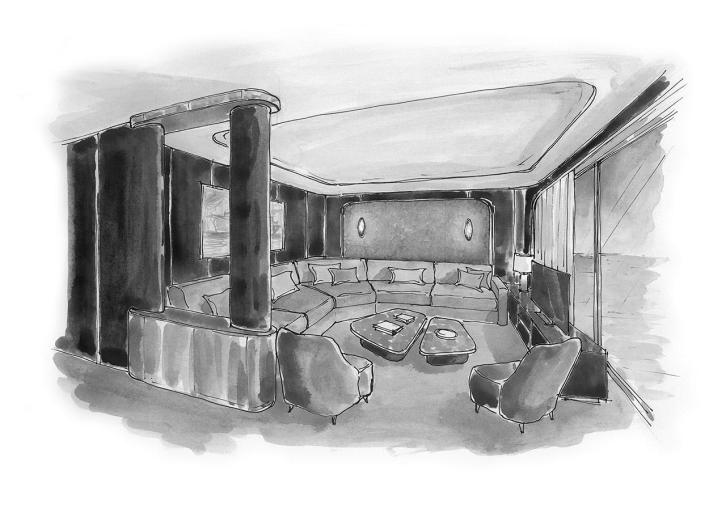


2 Bedroom Owner's Suite
Expansive and elegant, the two-bedroom Owner’s Suite represents the pinnacle of the Reserve Collection. At 1,110 square feet, this exceptional residence at sea features generous living and dining areas, a luxurious marble spa bathroom, and elevated in-suite dining. With personalized butler service and refined amenities throughout, it offers an unparalleled level of space, privacy, and indulgence.
Reserve Collection Amenities
- Personalized service of a butler
- Expanded 24-hour in-suite dining menu
- Complimentary wash-and-fold laundry service
- Plus, Concierge Collection and Signature Collection Amenities
Facilities
- Lounge Area
- Vanity Area
- Room Service Available
- Butler Service
- TV
- Safe
- Hair Dryer
- Telephone
- Desk
Penthouse Suite
Sophisticated and spacious, the Penthouse Suite offers 565 square feet of refined comfort within the Reserve Collection. Thoughtfully designed with a stylish living area, marble spa bathroom, and enhanced in-suite dining, it provides an inviting retreat after a day of exploration. Personalized butler service and elevated amenities ensure a seamless and indulgent experience throughout your journey.
Reserve Collection Amenities
- Personalized service of a butler
- Expanded 24-hour in-suite dining menu
- Complimentary wash-and-fold laundry service
- Plus, Concierge Collection and Signature Collection Amenities
Facilities
- Lounge Area
- Vanity Area
- Room Service Available
- Butler Service
- TV
- Safe
- Hair Dryer
- Telephone
- Desk
Concierge Deluxe Veranda Suite
Spacious and elegantly appointed, the Concierge Deluxe Veranda Suite offers 375 square feet of refined comfort. A generous living area, beautifully curated details, and a private veranda create an inviting setting to relax and take in the views. Elevated Concierge Collection inclusions enhance every moment on board.
Concierge Collection Amenities
- A tastefully prepared welcome
- Priority access to behind-thescenes tour and galley tasting
- Complimentary wash-and-fold laundry service
- 10% savings at onboard boutique
- 10% savings at SeaSpa by L’OCCITANE AMENITIES
- 10% savings on premium WiFi packages
- Enhanced in-suite amenities
- Plus, Signature Collection Amenities
Facilities
- Lounge Area
- Vanity Area
- Room Service Available
- TV
- Wi-Fi (Additional Cost)
- Safe
- Hair Dryer
- Telephone
- Desk
Concierge Veranda Suite
Thoughtfully designed and comfortably spacious, the Concierge Veranda Suite features 290 square feet of well-appointed living space. Step onto your private veranda to enjoy fresh sea air and scenic vistas, while refined finishes and elevated inclusions create a seamless onboard experience.
Concierge Collection Amenities
- A tastefully prepared welcome
- Priority access to behind-thescenes tour and galley tasting
- Complimentary wash-and-fold laundry service
- 10% savings at onboard boutique
- 10% savings at SeaSpa by L’OCCITANE AMENITIES
- 10% savings on premium WiFi packages
- Enhanced in-suite amenities
- Plus, Signature Collection Amenities
Facilities
- Lounge Area
- Vanity Area
- Shower
- Room Service Available
- TV
- Wi-Fi (Additional Cost)
- Safe
- Hair Dryer
- Telephone
- Desk
Concierge Panorama Suite
Bright and inviting, the Concierge Panorama Suite offers 290 square feet of stylish accommodations with expansive panoramic windows. Natural light fills the space, complementing its elegant design and thoughtfully curated details. Elevated Concierge Collection amenities ensure comfort and ease throughout your journey.
Concierge Collection Amenities
- A tastefully prepared welcome
- Priority access to behind-thescenes tour and galley tasting
- Complimentary wash-and-fold laundry service
- 10% savings at onboard boutique
- 10% savings at SeaSpa by L’OCCITANE AMENITIES
- 10% savings on premium WiFi packages
- Enhanced in-suite amenities
- Plus, Signature Collection Amenities
Facilities
- Lounge Area
- Vanity Area
- Shower
- Room Service Available
- TV
- Wi-Fi (Additional Cost)
- Safe
- Hair Dryer
- Telephone
- Desk
Veranda Suite
Serene and stylish, the Veranda Suite offers 290 square feet of thoughtfully designed living space. A private veranda invites you to enjoy fresh sea air and ever-changing views, while refined finishes and Signature amenities create a comfortable, inviting retreat. It’s a seamless blend of relaxation and connection to the world beyond.
Signature Collection Amenities
- Stocked in-room minibar, Nespresso® coffee machine, and Vero Water®
- Luxurious L’OCCITANE bath amenities
- Plush terry bathrobes and slippers
- Binoculars for in-suite use
Facilities
- Lounge Area
- Vanity Area
- Shower
- Room Service Available
- TV
- Wi-Fi (Additional Cost)
- Safe
- Hair Dryer
- Telephone
- Desk
Panorama Ocean Suite
Bright and welcoming, the Panorama Ocean Suite features 290 square feet of elegant accommodations with expansive ocean-facing windows. Natural light enhances the serene design, while Signature amenities provide comfort and ease throughout your journey. It’s an inviting space to unwind while staying connected to the sea.
Signature Collection Amenities
- Stocked in-room minibar, Nespresso® coffee machine, and Vero Water®
- Luxurious L’OCCITANE bath amenities
- Plush terry bathrobes and slippers
- Binoculars for in-suite use
Facilities
- Lounge Area
- Vanity Area
- Shower
- Room Service Available
- TV
- Wi-Fi (Additional Cost)
- Safe
- Hair Dryer
- Telephone
- Desk